

Why Minnesota May Punt on an Inspector General’s Office
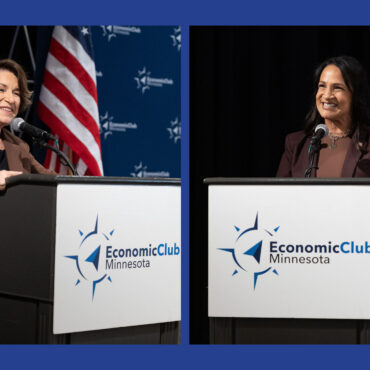
On Thursday Sens. Heather Gustafson, DFL-Vadnais Heights, and Michael Kreun, R-Blaine, trumpeted that a bill to create an inspector general for the state of Minnesota cleared the Senate on a convincing 60-7 vote.
“We have already made significant strides in fighting fraud in Minnesota, but today filled the gap that was desperately missing,” Gustafson told reporters at a press conference after the vote.
“We look forward to its implementation, getting this passed into law, so we can get the fraud out of the headlines here in Minnesota,” Kreun added.
But the bill will probably not become law despite the strong Senate support. The divided House has not made an IG a priority.
“I don’t think there’s a lot of interest in that one,” Speaker Emerita Melissa Hortman, DFL-Brooklyn Park, said in an interview Monday before she met with lawmakers on crafting a state budget with just a week left in the scheduled legislative session.
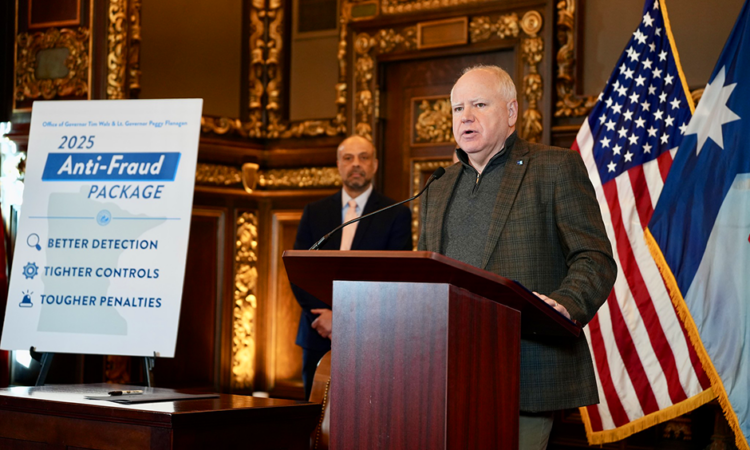
And Gov. Tim Walz has signaled that an IG office may not be the best use of state money.
The lesson here is not that Walz, Hortman and her House colleagues secretly love fraud. They presumably did not get a kick out of the criminal convictions handed down in the Feeding Our Futures case, or eagerly pass around pictures last year of the FBI raiding multiple autism clinics in Minnesota that receive Medicaid money.
What the lesson might be is that Walz and lawmakers face a dilemma: They feel pressure to show the public they are doing something new to fight fraud.
But past governors and Legislatures also felt this pressure and created their own watchdog tools, making new proposals, like an IG, potentially redundant.
What is the Office of Inspector General proposal?
The Gustafson-Kreun bill creates an advisory commission of eight state lawmakers who are effectively the IG hiring committee. They vet and interview candidates before selecting an IG who is then approved in a House and Senate vote.
The IG serves a five-year term, while reporting back to this legislative commission. The office would have an estimated budget of $11.5 million in fiscal years 2026 and 2027, much of it from the hiring of 39 full-time employees to assist in investigations.
The IG is supposed to initiate investigations of state executive branch agencies and programs to identify fraud and then propose recommendations for rooting out said fraud.
Initiating investigations and recommending changes is already the mandate of the Office of Legislative Auditor (OLA), which has been around since 1973.
Related: Why everyone around state government is talking about OLA
One difference between the proposed IG and the actual OLA is that the IG “may establish a law enforcement agency,” the bill reads, “to conduct statewide investigations and to make statewide arrests” when instances of waste, fraud and abuse are uncovered. The OLA cannot make arrests.
The IG can also recommend a state agency freeze funding on a particular program or provision.
When asked at the press conference about how the offices are different, Gustafson said the OLA is “a bit more on the reactive side instead of the proactive side and we would work in conjunction with them.”
Where else would a possible IG overlap with existing parts of government?
I’ll try to keep this short.
The departments of Education, Human Services and Children, Youth Families (agencies that make up about 75% of state spending) already have their own inspectors general, who are also supposed to initiate investigations and recommend changes in policy or procedure.
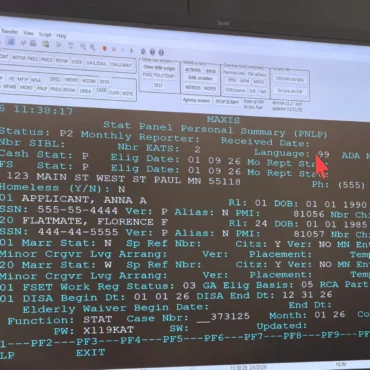
Human Services administers Medical Assistance, Minnesota’s version of the sprawling federal-state Medicaid program. As part of its agreement with the federal Centers for Medicare and Medicaid Services (CMS), DHS is required to identify, investigate and refer suspected fraud cases.
CMS does not let DHS delegate its watchdog duties to another arm of state government.
Also, it is the federally-mandated duty of DHS to terminate relationships with fraudulent health care providers. In other words, DHS already makes decisions on funding freezes.
“It is unclear whether CMS would approve either delegated or supervised investigative jurisdiction over Medicaid,” Shireen Gandhi, temporary commissioner for DHS, wrote in a letter last week to the Senate Finance Committee. “We are not aware of any other state that operates in this manner.”
In response, Kreun amended the IG bill on the Senate floor.
In the revised legislation, CMS must first approve of the Minnesota IG’s jurisdiction over the Medical Assistance program.
Also: The IG cannot do anything that “would prevent the state from receiving federal financial participation for the Medical Assistance program,” the amended bill reads.
“I think we were as accommodating as we could possibly be,” Kreun said at the press conference, adding that “where we couldn’t go” is to outright stop the IG from investigating Medical Assistance since, “Medicaid fraud has been where a lot of the fraud is coming from.”
So, let’s say the federal government OKs a new office investigating Medical Assistance.
In that case, Sen. Melissa Wiklund, DFL-Bloomington, raised concerns about, “How it will work to have multiple entities investigating complex programs.”
Alternatively, the feds could not approve the potential law, and the state suddenly has an IG office legally prohibited from investigating Minnesota’s costliest social service program.

Sen. John Hoffman, DFL-Champlin and chair of the Senate Human Services Committee, said on the Senate floor Thursday that the IG bill “is not ready for prime time.”
At least an IG would have the unique ability to arrest people?
Well, no. The Minnesota Attorney General’s Office has broad latitude to criminally prosecute suspected fraudsters.
In the case of Medical Assistance, the AG’s office already has a Medicaid Fraud Control Unit, whose investigations often come from referrals by DHS. As the Star Tribune reported in January, the unit reported 43 convictions in 2023, a figure higher than Medicaid related-convictions in more populous states, such as Illinois.
In fact, a bill to add funding for the AG Medicaid unit, including boosting the staffing count from 32 to 41 people, passed off the House floor. It may end up as part of the state government budget bill.
Other fraud-related proposals from Walz and lawmakers, including a financial crimes unit at the Bureau of Criminal Apprehension, may also be part of spending bills. But with Walz and lawmakers racing the clock to complete a budget, fraud concerns may be set aside.
This article first appeared on MinnPost and is republished here under a Creative Commons Attribution-NoDerivatives 4.0 International License.