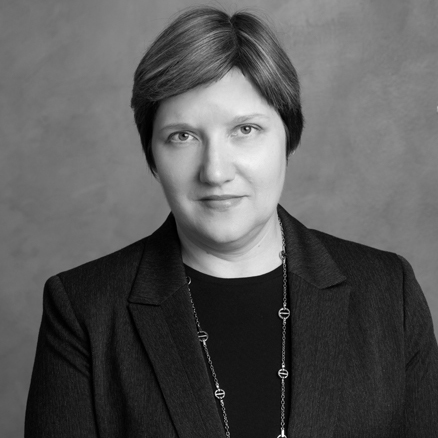



Thrivent CEO’s Quest to Build Financial Security for Millions of People
When a catastrophe strikes, Thrivent president and CEO Terry Rasmussen is known for acting quickly, calmly, and decisively.
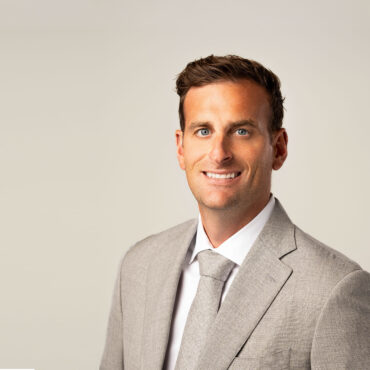
That’s what Paul Johnston observed on Sept. 11, 2001, after terrorists crashed airplanes into the twin towers of the World Trade Center in New York City.
Johnston was on his second day of a new job as vice president and group counsel with American Express, and Rasmussen was his new boss. He was flying from Minneapolis to New York City when his plane landed in Green Bay, Wisconsin, with no explanation.
He called Rasmussen, who told him about the attacks. Then she instructed him to locate the property insurance policy on the World Financial Center, where American Express was housed, across from the burning World Trade Center. She also asked him to gather information on accident insurance coverage for business travelers who carried American Express cards. She knew it was likely that some of the passengers on planes commandeered by terrorists had coverage.
“I [was] still a fairly young lawyer,” Johnston recalls. “She could tell quickly I was hitting a panic mode.” Rasmussen had also told Johnston that she needed him to be on a phone call with the general counsel and CEO of American Express.
“She said, ‘Paul, I trust you. I hired you for your judgment,’ ’’ Johnston recounts of the conversation that’s seared in his memory. The pair’s working relationship, born during a crisis, is still going strong nearly 24 years later. Now Johnston works for Rasmussen as Thrivent’s executive vice president, chief legal officer, general counsel, and secretary.
He’s chosen to work with Rasmussen for so many years because of whom she hires and how she supports and leads employees in the workplace. “She looks for the best, most learning-agile people she can find,” he says.
“She is clear on what she expects from them, gives them the tools to get the job done, and leaves them alone to do the job,” Johnston says. “She checks in on how they’re doing and holds them accountable. It seems so simple, but it’s so empowering.”
In the leadership spotlight
Rasmussen has made a deep imprint on Thrivent, a Fortune 500 not-for-profit financial services organization. She joined Thrivent as general counsel in 2005 and became CEO in late 2018. Rasmussen now leads a business with $193 billion in assets under management in 2024.
She’s one of the most prominent women business leaders in Minnesota. Only two other women are CEOs of Minnesota-based Fortune 500 companies—Corie Barry of Best Buy and Beth Ford of Land O’Lakes. On April 15, Gunjan Kedia will join this elite club when she succeeds Andy Cecere as CEO of U.S. Bancorp.
In January, Rasmussen became the new chair of the H.B. Fuller board, making her one of the few women in the nation to lead the board of a public company.
“She looks for the best, most learning-agile people she can find. She is clear on what she expects from them.”
—Paul Johnston, Chief Legal Officer, Thrivent
In the fall, she’ll begin her term as chair of the American Council of Life Insurers (ACLI), a trade association with about 275 member companies.
The business acumen that Rasmussen has exhibited at Thrivent, as well as her reputation for working well with employees and other stakeholders, has led to the H.B. Fuller and ACLI leadership opportunities.
Consequently, 2025 provides a timely lens to examine how Rasmussen, raised on a farm in west-central Minnesota, is transforming Thrivent and how she became a major business player.
Read more from this issue

Minneapolis-based Thrivent serves about 2.4 million clients, who buy life and health insurance, annuities, and various financial services products through Thrivent advisors. It’s a fraternal benefits organization, which is the result of a 2002 merger of Minneapolis-based Lutheran Brotherhood and the Aid Association for Lutherans in Appleton, Wisconsin.
When Rasmussen became Thrivent’s CEO, she didn’t start crafting a vision and business strategy until she could get her hands on good data about how Thrivent was viewed in the marketplace. The research results were both clear-cut and jarring.
“We were known as either a charity or giving to charity, but we really didn’t even register on the financial services scale,” Rasmussen says. Generosity is a pillar of Thrivent’s culture, but Rasmussen says she knew she needed to elevate the expertise and services provided by Thrivent financial advisors.
Thrivent is distinct from for-profit financial services companies. Members of Thrivent own the organization. Christianity is the commonality within the membership, which originally had been restricted to Lutherans. Thrivent organizes action teams, which volunteer and raise funds at the local community level. In 2024, money raised and donated by Thrivent, its clients, and other people totaled $364 million.
That giving ethos isn’t going to change. “It’s this whole notion of taking care of communities, giving back to and caring for one another,” Rasmussen says. “It’s pretty amazing.”
Thrivent by its 2024 Numbers
Assets under management: $193 billion
Adjusted surplus (ability to pay claims): $17.8 billion
Announced payouts to 2025 clients: $564 million
Thrivent clients: 2.4 million
Rasmussen’s work has focused on helping clients access the full range of services that Thrivent financial advisors can provide, as well as connecting Thrivent with potential new clients.
“We had to reposition ourselves to be [seen] as a serious player in financial services,” she says.
She examined whether there was a need to strengthen the tools that financial advisors had at their disposal to “be that trusted advisor for our clients.”
While reimagining Thrivent’s branding, Rasmussen and her employee teams also were assessing technology needs. “We had to modernize ourselves around our digital capability for clients,” she says, understanding that many clients wanted to take care of some activities on their smartphones.
“We also needed to bring in some talent to actually do that, because digital talent was something we hadn’t really invested in in the past,” she says.
By January 2020, Rasmussen was excited about launching Thrivent’s first national advertising campaign. “In March of 2020, we fly down to Scottsdale [Arizona] and have this big production of our brand reveal,” she says. But by the time Rasmussen returned to Minneapolis, the number of Covid-19 cases in the United States was starting to climb. “We literally got back here and had to start to prepare the organization to have our workforce move home and work remotely,” she says.
A couple of months later, Thrivent had to evacuate its downtown headquarters, which had been sold to Hennepin County. Covid-19 vaccinations weren’t yet available when a cadre of Thrivent employees led the effort of moving materials from the old office into Thrivent’s modern glass-façade, eight-story building at 600 Portland Avenue South. The price tag for the new headquarters was $125 million.
Rasmussen says Thrivent didn’t seriously consider leaving downtown Minneapolis. “Our employee base comes from all over the metro, and this is pretty central,” she says of the new headquarters, which includes an art gallery and Steinway concert grand piano.

Transforming Thrivent
Based on a strong financial performance in 2024, Thrivent announced this past fall that it would make $564 million in dividend and other payments to members in 2025. It’s the third consecutive record payout to Thrivent members.
“We have an award-winning mutual fund complex,” Rasmussen says. “If you ask our chief investment officer [David Royal], our small caps and mid-caps, those two funds have been best in class for 10 years.”
As a financial services provider, she says, “we’ve got the results to show that we can deliver great value.” She also emphasized that Thrivent recorded double-digit sales growth in 2024.
Rasmussen says Thrivent has served its members well for 122 years, but now it needs to offer those services in “a modern way.”
She outlines three major shifts that are driving Thrivent’s transformation to be an attractive and effective financial services provider for Christians across the United States.
“The first shift is going from being insurance agents to financial advisors that deliver purpose-based advice,” Rasmussen says. To ensure that the Thrivent advisors can fully deliver what their clients need, she says the advisors are using a Thrivent financial planning platform that recently won a national ThinkAdvisor Luminaries Award for its innovation.
“Others in the industry have tried to transition from a traditional life insurer to a more relationship-based, advice type of organization,” says Johnston, Thrivent’s chief legal officer. “They’ve stumbled because it’s difficult to make that shift.”
In Rasmussen’s case, he says, she’s persevered by encouraging, persuading, and pushing people in the organization to attain deep advisor-client relationships. After years of hard work, Johnston says, people within Thrivent “see the joy of what we’re building coming to fruition from an experience perspective and from a growth perspective.”
The second shift involves giving clients multi-channel opportunities to communicate with Thrivent, which centers on digitizing the client experience.
“Our clients can do a lot of things on their phones that they couldn’t do before,” Rasmussen says. “They can make premium payments. They can move money. They can do some simple transactions that you would expect to be able to do without having to call your advisor.”
The third transformational shift is refreshing Thrivent’s brand so that a broader audience grasps the range of services it provides.
“We need to tell our story more clearly on who we are and what we do, not only to our current clients but also to communities we haven’t traditionally served,” Johnston says.
“We’re pretty well known in the Upper Midwest among Lutherans,” Rasmussen says. “We’re not well known in the South and in more demographically diverse communities.”
Thrivent has used a “Follow Your Heart” marketing campaign that showcased its clients. “A new campaign, for the first time, brings together our financial expertise and our generosity message,” Rasmussen says.
On March 17, Thrivent unveiled a new marketing tagline, “Where Money Means More,” which will be used in TV ads and other media. Thrivent’s marketing budget is rising from $32 million in 2024 to over $50 million this year.
A free-range farm girl
Terry Rasmussen’s path to the C-suite in downtown Minneapolis wasn’t preordained. She was raised on a farm near the county line of Minnesota’s Wilkin and Otter Tail counties. The Rasmussen farm near Carlisle, Minnesota, wasn’t too far from the Interstate 94 exit at Rothsay, which features a huge prairie chicken as a roadside attraction.
Rasmussen grew up as the middle child of Sid and Clarice Rasmussen, who both had 100% Norwegian heritage. They lived into their 90s and were married for 69 years. Sid was a farmer, and Clarice was a schoolteacher.
“Our closest neighbor was at least a mile away,” she says. So Rasmussen, along with her older sister, Cynthia, and younger brother, Blaine, considered the farm a large playground when they were in grade school.
“We would ride our horses all over the place and explore,” Rasmussen says. “We were what I affectionately call now free-range children.”
Rasmussen recalls getting running water installed in their home in fourth or fifth grade, and she notes that the family didn’t have a television set in her early childhood. But she didn’t feel like she was lacking anything she needed or wanted.
“We’d have these fancy play productions as kids,” she says. Because of her mother’s teaching background, she adds, “she was always stimulating our imagination.”
Rasmussen’s adult daughter, Camille, likens Rasmussen’s childhood to what you’d see on episodes of Little House on the Prairie. In fact, Rasmussen’s life did have another commonality with the show. For grades one to six, she attended a one-room schoolhouse. Rasmussen was in a grade with only one other student until she reached the sixth grade.
For middle school and high school, she took a bus to regional center Fergus Falls, where she enjoyed math and science classes. She confesses that she wasn’t close to being the best student in her grade.
 Five Facts About Terry Rasmussen
- She grew up on a Minnesota farm and is 100% Norwegian.
- In grade school, she attended a one-room school in west-central Minnesota.
- She’s an attorney who enjoys solving problems, which fueled her career at American Express and Thrivent.
- She’s chair of the H.B. Fuller board, one of the few women in the nation to lead a public company board.
- She loves to travel and recently visited Antarctica.
Finding her career path
Her sister planned to become an artist, and her brother wanted to be a farmer. “Then there was me, kind of clueless,” Rasmussen says with a laugh.
She was feeling adrift, with no concrete career plan, so her father encouraged her to become a dental hygienist. “He said, ‘The money’s good. You never have to work weekends. And jobs are plentiful.’ ’’ As a teenager, her father’s case made sense, so she completed a two-year program at the North Dakota State School of Science in Wahpeton and then moved to Wisconsin to begin work as a dental hygienist.
Her foray into Wisconsin was exceedingly brief, because Rasmussen discovered in Wahpeton that what she loved to do was learn about new topics and concepts. She returned to the Red River Valley to earn a bachelor’s degree in accounting at what was then Moorhead State University.
She proceeded to attend law school at the University of North Dakota in Grand Forks. It was there that she developed a passion for hockey, met her future husband (fellow law school student Jon Trangsrud), and acquired the critical thinking skills that have been invaluable in legal and business positions.
Right out of law school, she was accepted into the U.S. Attorney General’s Honors Program as a trial attorney for the Department of Justice tax division. While she was in Washington, D.C., she gained courtroom trial experience that she says wouldn’t have been available to her as a first-year associate in a private law firm.
She got early exposure to financial services after she moved back to the Midwest and joined the Oppenheimer law firm in Minneapolis. “It was a combination of litigation and corporate transactions,” she says. Then she accepted her uncle’s invitation to work with him at a bank in Northeast Minneapolis. “What I discovered there is I’d rather be a small fish in a big pond with the idea of growing than a big fish in a small pond,” Rasmussen says.
Her opportunity to perform on a big stage surfaced when American Express was looking for a bank and trust lawyer. When she joined American Express in 1990, many businesses were in trouble. The U.S. economy entered a recession during 1990 that extended into 1991. “I happened to have a fairly good understanding of the bankruptcy code and creditors’ rights, and so I started supporting the investment department there,” Rasmussen says. She looked for ways to create value in the distressed companies.
“I did that for a while, and it caught the attention of people higher up in the organization,” she says. “When opportunities came up, they asked me. And I’d say, ‘Sure, I’d like to do that.’ ’’
It was the beginning of her climb within American Express, where she built a strong career over 15 years that included her role as vice president and managing counsel.
“One of the most important things is to see yourself in leadership,” Rasmussen says. Early in her tenure at American Express, Louise Parent was named general counsel. “I got to know Louise, and what an incredible role model,” Rasmussen says. “She was among the earliest of women to be a general counsel of a Fortune 500.”
Rasmussen says her career at American Express benefitted from access to a supportive company women’s network, as well as male and female mentors and sponsors. That system instilled confidence in her, and colleagues were more than willing to “prepare you for interactions with senior management, so you always looked good.”
Her sponsors helped channel challenging work to her. She built a reputation for getting the job done. “If you have a tough problem, give it to her and she’ll figure it out” is how she was perceived, Rasmussen says.
The knowledge and the leadership experience Rasmussen gained at American Express put her in a prime position to become Thrivent’s general counsel. As an attorney, Rasmussen says she’s always had a “business mindset” and she felt good about the work she did as Thrivent’s general counsel “to help the business move forward.”
The potential to become Thrivent’s CEO developed when then-CEO Brad Hewitt asked her to become Thrivent’s president and oversee running the core life, health, and annuities business. She accepted the challenge, strengthened the business by focusing on the needs of Thrivent’s financial advisors, and said yes to Thrivent’s board when they offered her the CEO position in 2018.
“She’s humble, she’s genuine, and at the same time she’s just brilliant and a quick study.”
—Celeste Mastin, President and CEO, H.B. Fuller
Roles beyond Thrivent
In 2024, only 10.4% of CEOs of Fortune 500 companies were women. More men than women still sit on public company boards, and few women chair public company boards.
Terry Rasmussen ascended to the role of board chair of St. Paul-based H.B. Fuller on Jan. 1. She succeeded prominent attorney Lee Mitau, who had been chair of the adhesives company board since 2006.
“She brings with her the understanding of what it takes to run a very large company,” says Celeste Mastin, president and CEO of H.B. Fuller, which had revenue of $3.6 billion in fiscal year 2024.
“Terry is really a capital markets expert, and that was one of the things that I was so excited about having her not only on the board but as our chair,” Mastin says. “We’re shifting our portfolio toward higher-margin, faster-growing market segments. Terry has a tremendous background in understanding how to drive a transformation and how to message a strategy that’s been very helpful to me.”
Mastin respects Rasmussen’s intellect and views her as a confident leader, but she also describes Rasmussen’s style as refreshing. “She’s humble, she’s genuine, and at the same time she’s just brilliant and a quick study.”
Paul Quaranto, chairman and CEO of Boston Mutual Life Insurance Co., says that when he first met Rasmussen, he thought she was somewhat quiet and reserved. “That may be some of that very Minnesota, Midwest background,” Quaranto says.
Then he got to know her well through co-chairing the consumer issues committee and other work they did within the American Council of Life Insurers (ACLI). During the early months of the pandemic, Quaranto, who played college hockey, discovered over Zoom that he and Rasmussen both have the same historic photo in their homes of NHL legend Bobby Orr scoring a goal.
“She is incredibly engaging and incredibly giving,” Quaranto says, and the respect she’s earned in the life insurance industry led to her election as ACLI chair for a term that begins in October.
“She’s transformed Thrivent into a truly relevant, very big financial services organization today, without really deviating from [what] it wants to be at the core” as a fraternal nonprofit, he says.
As the chair of the ACLI, he says, Rasmussen will be “the face of the industry,” which is an important part of the nation’s economy. Customers of life insurance companies want to “secure some level of financial peace of mind,” and Rasmussen will be talking to Congress and the Trump administration to advocate for a regulatory environment that supports serving clients, Quaranto says.
Closer to home, Jasmine Jirele, a peer of Rasmussen’s, is also active on the ACLI board. Jirele is president and CEO of Allianz Life Insurance Co. of North America, based in Golden Valley.
“When you talk to [Rasmussen] about an issue, you can tell she’s a problem solver,” Jirele says. “She’s thoughtful and she listens. She’s willing to take in different perspectives.”
Jirele says Rasmussen is a good fit for top leadership in ACLI because she’s willing to challenge the industry when needed. She notes that Rasmussen also is a fierce advocate for consumers when there are proposed regulatory changes that could adversely affect policyholders on prices or restrict their access to certain products.
In the Twin Cities and in the insurance industry, Rasmussen makes time for “connecting people and helping people,” Jirele says. Rasmussen reached out to Jirele in 2021 after she was named CEO of Allianz. “A lot of aspects of running a company as a CEO can be a little bit lonely,” Jirele says. “It’s nice to know someone you consider a colleague and a friend who you can bounce things off of.”
When young women ask Rasmussen for career advice, she says: “You’ve got to love what you do.” In her case, she found organizational cultures and challenging jobs that she loved at American Express and Thrivent.
But she also made time for having a family and enjoying outside pursuits. Rasmussen and her husband have two adult children. Son Cullen is a doctor in Wisconsin, while daughter Camille is pursuing a business career with CVS in New York City.
Rasmussen is a lover of art and music and a veteran member of the Walker Art Center board. She smiles when she recalls the “amazing experience” she had taking voice lessons in Minneapolis from the late opera singer Audrey Stottler. Rasmussen and her husband are also world travelers. They recently visited Antarctica, and Rasmussen has set foot on all seven continents.
“Don’t let others define success for you,” she says to women early in their careers. “Only you should define success for yourself. The most important advice is don’t be afraid to try things. With each experience, you get to know yourself a little bit better. You get to find out what does really excite you, what gives you joy and purpose.”