

Promise Act Opens Round Two of Grant Applications
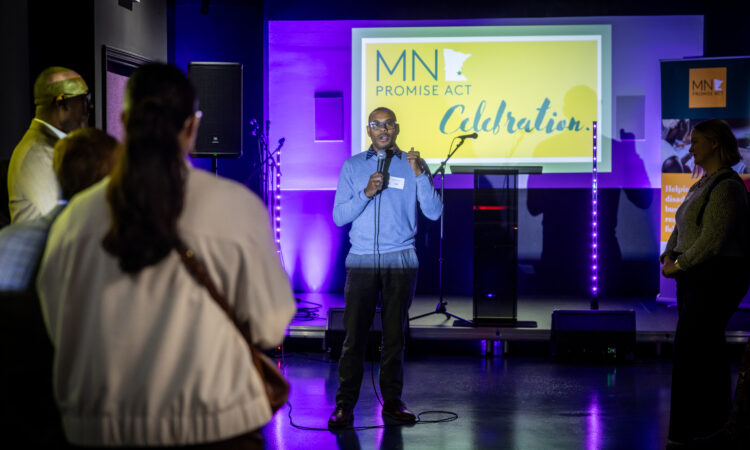
On Sept. 24, the Neighborhood Development Center (NDC) announced the second round of the Promise Act grant is open to applicants through Dec. 14.
This marks the continuation of a 2023 program, overseen by the Department of Employment and Economic Development, to distribute $94.3 million in grants. Of those funds, $72 million was allotted for NDC to administer. The objective is to support businesses and nonprofits in communities defined as having been affected by structural racial discrimination, civil unrest, lack of access to capital, loss of population or an aging population, or lack of regional economic diversification.
Startups were not eligible for the grant in round one but can now apply to Promise, which stands for “Providing Resources & Opportunity & Maximizing Investments in Striving Entrepreneurs.” Also, Uptown is now a region of eligibility, in addition to North Minneapolis and parts of South Minneapolis and St. Paul.
Apart from the 5% NDC set aside for operating and technical costs, the state funds are planned to be distributed over the course of multiple rounds before the act expires on June 30, 2027.
“We don’t plan to wait that long, but if it takes that long, then that’s as long as it takes,” says Shahir Ahmed, NDC’s vice president of business services. “We are vigorously attempting to get these grant dollars out as soon as possible.”
Round two will formally conclude in March 2026, after which Ahmed says the group will come together to mull over the work so far and make adjustments. Then, if needed, round three will commence somewhere around mid- to late summer in 2026.
“The goal is to move the needle for the entrepreneur,” Ahmed says about the program. Among other applications, grant money rewarded can be used for day-to-day working capital, like payroll, rent, equipment, or inventory. “These grant dollars are not going to solve all of [the entrepreneurs’] pain points, but it will give them a good jolt along their journey. That’s exactly what they need in this day and time.”
As for how much grant money an applicant can receive, that is determined based on the business’ annual gross revenue, Ahmed explains. For example, a business that grosses $100,000 or less is eligible for a grant of up to $10,000.
The application process is a competitive one. NDC’s early data suggests fewer than 30% of applicants will get a grant, Ahmed says.
Round one saw 6,336 applications. Only about half were deemed eligible, and 1,316 were selected through a randomized selection process. By the end of round one in June, one year after the program launched, 652 grants were awarded, totaling $9.58 million.
Breaking it down further, 296 South Minneapolis businesses received $4.05 million, 198 St. Paul businesses received $3.34 million, and 158 North Minneapolis businesses received $2.19 million.
About $61 million remains to be distributed.
As for ineligible applicants or those not selected, Ahmed says NDC and its partners “continue to build a pathway” for them, noting the nonprofit has worked with low-income entrepreneurs looking to start or expand their business since it was established in 1993.