

Minnesota Lawmakers End Session with No Budget in Place
How long do we have to be here for?
The Minnesota Legislature adjourned Monday night for 2025 having failed to accomplish its biggest task: passing a budget bill that will fund the state government for the next two years.
Gov. Tim Walz will now have to call a special session of the Legislature, which could last multiple days as lawmakers struggle to resolve major differences.
Lawmakers are also struggling to resolve minor differences, or really differences of any size, shape or variety.
Seemingly noncontroversial bills have crawled their way through the Legislature amid heated, and – in the opinion of Senate President Bobby Joe Champion, DFL-Minneapolis – excessively loud floor debates.
Meanwhile, bills to fund the Departments of Education, Human Services and Transportation, which merely make up over 80% of state spending, feel light years away from passing through the House and Senate.
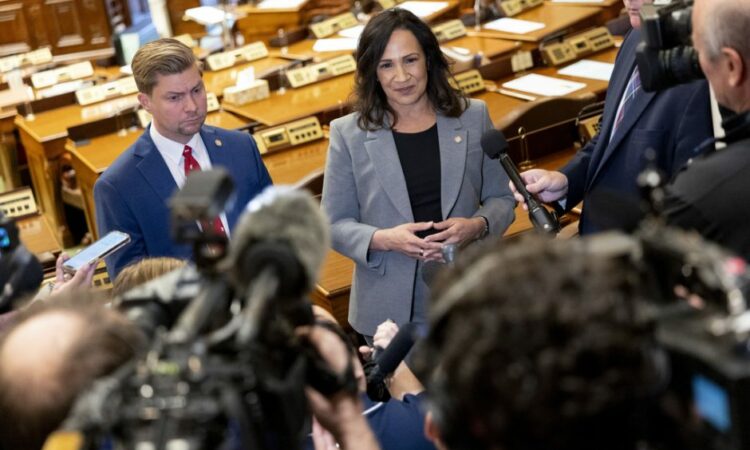
“The chaplain this morning said we should temper our deep frustration and remember the work we do for the people of Minnesota,” Senate Majority Leader Erin Murphy, DFL-St. Paul, told reporters Monday. “But my mouth is full of cuss words.”
Here is where we stand on completing a budget, which will probably cost $66 to $67 billion over the next two years, according to Anha Minge, the state budget director.
I thought lawmakers had a budget deal?
Walz and legislative leaders crowed last week that they reached a pact on how much money should go into each spending bill, while also achieving compromises on key spending and policy flashpoints.
But their agreement left a number of contentious issues hanging.
One is whether to let undocumented immigrants apply for MinnesotaCare, the state program that helps pay for the health care of low-to-moderate income Minnesotans.
The deal announced last week ceded to Republican arguments by barring undocumented immigrant adults from accessing this program, while keeping access in place for children.
But an array of DFL lawmakers have made clear they will vote ‘no’ on limiting MinnesotaCare for undocumented immigrants.
“We will not acquiesce to the Republicans’ cruel agenda of taking things away from people,” Emma Greenman, DFL-Minneapolis, said at a press conference Monday.
(Greenman also pledged to fight against spending cuts for working people, “Whether that takes us the next 10 hours or the next four weeks.” The state government will shut down if budget bills aren’t passed by June 30.)
In response to this intraparty dissent, Murphy wants to lop off the undocumented immigrant issue from a larger spending package.
“I think it’s got to be a standalone bill,” Murphy told reporters in her Senate office.
But Senate Minority Leader Mark Johnson, R-Grand Forks, was noncommittal on whether his caucus would sign off on a larger health care spending bill coupled with a standalone that limits MinnesotaCare for undocumented immigrants.
In fact, Johnson was noncommittal about a lot of things Monday, noting that while he partook in closed-door budget talks, he never greenlighted any deal.
Asked how long a special session might take, Johnson replied, “Oh, I have no idea. It just depends on how well those committees and different jurisdictions get along.”
At least legislative leaders admit they spoke with Walz about MinnesotaCare for undocumented immigrants.
Other issues were apparently never hashed out.
For example, last week Speaker Lisa Demuth, R-Cold Spring, told reporters, “We have made great strides in protecting the funding for non-public education,” a reference to a Walz proposal to cut private school aid.
On Monday, Demuth said an agreement regarding aid to private school students “was not part of the deal.”
However, there were “never the votes” to kill private school aid, Demuth said, so perhaps it was not part of the deal but she still isn’t worried about it?
Nonetheless, cutting private school aid is part of the Senate education spending bill, a $26 billion measure wallowing in the mud in the Senate (more on this in a second).
So, did last week’s agreement accomplish anything besides the spending targets?
Yes. The clearest instance is a compromise on letting hourly school workers apply for unemployment benefits when school is out in the summer.
The issue had stymied advancing the mammoth K-12 education spending bills.
But the handful of Minnesotans turning away from the lopsided Knicks-Celtics game Friday night to MN House Info Video were treated to the chamber unanimously passing $100 million in one-time funding for the unemployment insurance program.
Under the deal, the state would take away $77.2 million from a project to build an express train between Minneapolis and Duluth, and $22.8 million from special education aid.
The bill took more time to pass in the Senate.
On Sunday afternoon, Sen. Jason Rarick, R-Pine City, proposed amending the unemployment insurance bill by effectively adding onto it the entire $26 billion House Education Finance spending package, a creative way of killing dozens of birds with one stone.
“We can get 40% of the state budget done before we get into a special session,” Rarick said. “That is a signal to the people of Minnesota that we can get our work done.”
Sen. Mary Kunesh, DFL-New Brighton, called the Rarick amendment “sloppy,” “lazy,” “irresponsible,” and “banana pants.”
“The bill would basically take the entire Senate out of the ability to create an education finance bill,” Kunesh said.
The amendment failed, and the legislation eventually passed despite misgivings about moving transportation money onto the education bill.
Got it. So the education spending bill is now ready to go?
Absolutely not.
The Legislature will adjourn Monday night with the House having passed its K-12 finance package and the Senate still not having even debated its version of the spending bill on the Senate floor.
So, the bill must still clear the Senate and then be reconciled in a conference committee where the myriad differences on funding for everything from special education transportation to replacing Native American-themed mascots must be worked out.
Wow. Walz must be worried.
In a seven-minute press conference Monday afternoon, Walz, appearing in blue jeans and white sneakers, told reporters he is totally not worried.
“This is very typical,” Walz said, noting that agreements on big spending packages “always come last.”
While, yes, Walz has to call a special session, the governor said, “It’s going to be mostly perfunctory” with the biggest challenge perhaps the logistical paperwork that comes with accurately printing the bills.
What happens now?
Walz gave his remarks prior to meeting with legislative leaders behind closed doors.
In lieu of conference committees, where lawmakers publicly meet to go over differences in spending bills, legislators will now privately meet, likely with the governor or his staff, to go over differences in spending bills.
These meetings, termed “working groups” during Monday’s press avails, will (presumably) lead to deals on spending for health care, education, transportation, taxes and any other bills the House and Senate do not pass before the midnight deadline.
Then those bills will be presented and passed in a special session, the date of which is selected by the governor.
If the important dealmaking among lawmakers is going on privately, what is going on publicly?
In fairness, lawmakers have been working evenings and weekends the past week passing smaller spending bills.
Their toil has led to theatrical moments like when Sen. John Hoffman, DFL-Champlin, took to the Senate floor to argue that a spending bill was defunding the Taste of Minnesota.
“It’s the most diverse cultural event in the state of Minnesota,” Hoffman wailed into his microphone as Senate President Champion visibly winced.
“When we speak louder on the mics, it’s rough on the ears of senators,” Champion said when Hoffman was through.
It also led to more serious moments of frustration.
On Sunday evening, both DFLers and Republicans expressed anger that the governor announced the closing of Stillwater Correctional Facility without going through the legislative process.
“The Legislature should not abdicate its responsibility and oversight in this matter,” said Michael Kreun, R-Blaine.
Erin Maye Quade, DFL-Apple Valley, said she agreed with closing the prison, but understood her colleague’s frustration.
“We have to have a better process,” she said.
This article first appeared on MinnPost and is republished here under a Creative Commons Attribution-NoDerivatives 4.0 International License.