

Guest Commentary: The Next Generation of Builders in Minnesota
Young Minnesotans are launching their careers at a time of immense disruption and great opportunity. And that affords Minnesota a better shot at retaining them.
For decades, investment capital, talent, and headlines centered around the coastal tech hubs. And for years, we’ve seen ambitious graduates and entrepreneurs leave Minnesota for Silicon Valley, Austin, New York, Miami, or other fast-growing startup hubs. But times are changing. The rise of artificial intelligence is creating an environment where smaller, nimbler, focused teams can build meaningful products and services in a matter of days or weeks. As AI creates upheaval and uncertainty by eliminating jobs, especially those at the entry level, it has also allowed for this flexibility.
Many Minnesotans between the ages of 18 and 30 are highly motivated, technologically fluent, and, in many ways, better educated than prior generations. They also seem to be increasingly skeptical of traditional career paths. In just the last few months, we’ve seen large corporations and legacy institutions opt to no longer provide the same sense of stability or opportunity they once did, often driven by increased automation of business processes and practices. As a result, many young workers are becoming more entrepreneurial, creating opportunities for themselves rather than waiting for permission from traditional gatekeepers.
A stronger startup ecosystem in Minnesota would give talented young people a reason to build companies here, instead of taking their drive elsewhere. Reducing that talent drain matters if we want Minnesota to remain economically competitive.
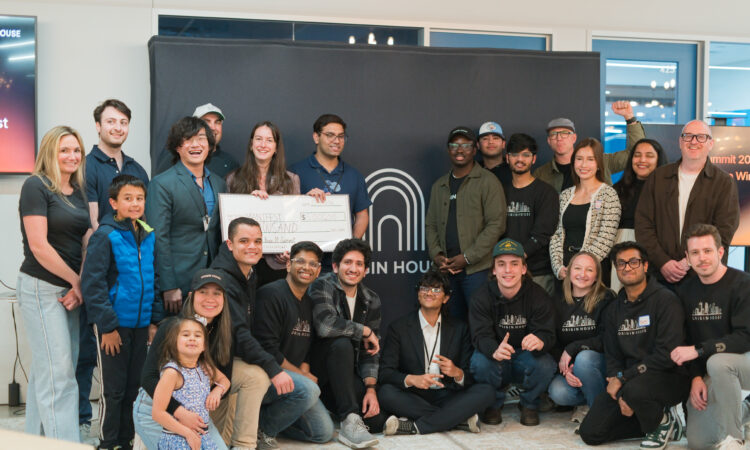
I recently saw the potential of the state’s startup ecosystem at Origin House, where I am board chairman. Earlier this year, Origin House launched as a venture studio aiming to provide physical space in the North Loop, in addition to resources, networking, mentorship, and capital for this next wave of Minnesota builders and entrepreneurs. As part of the launch, Origin House hosted a 24-hour hackathon event where 120 participants were tasked with creating solutions to real-world business problems. The teams used AI to design practical tools for medical, logistics, retail, and small-business operations. The Hackathon event proved that you don’t need a massive corporate budget to build something useful nowadays. Rather, you need a few fearless, hardworking, and sharp minds who can look at long-standing business problems with a fresh set of eyes.
Compelling startup ecosystems emerge when innovation feels connected to its local identity, rather than imported from somewhere else. Houston, Texas, is experiencing a version of this today. Rather than trying to imitate Silicon Valley, it is leaning into its already successful energy, health care, aerospace, and industrial technology sectors. The Twin Cities has the opportunity to do the same by embracing its own commercial DNA.
New ideas emerge when talented people come together consistently to collaborate. The best innovation is not created through marketing campaigns, ribbon cuttings, or flashy office spaces. It develops when go-getters choose to stay in a place long enough to build relationships and trust, mentor one another, and work together in the trenches.
It’s a state tradition, as Minnesota has always been a state that builds. Long before startup ecosystems or venture capital became investing lingo, this state was creating industries that helped shape America: Mills, mines, factories, farms, and other industries were accelerated by transportation networks that navigated across rivers, railways, lakes, and highways. The state was, and continues to be, a powerhouse across manufacturing, health care, retail, agriculture, logistics, construction, and skilled trades.
With its legacy industrial infrastructure and deep pool of motivated talents, Minnesota has a real opportunity to establish itself as the country’s bastion of “Main Street” entrepreneurship in 2026 and beyond.