

How a MN Flower Wholesaler Stays Alive Through Winter
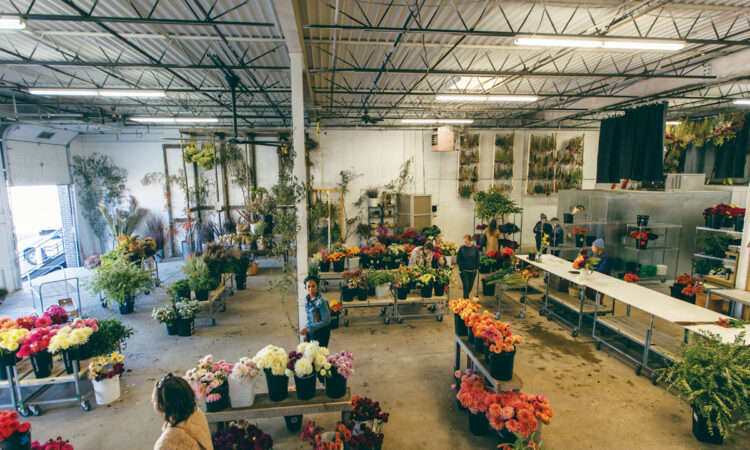
You’ve got to be a floral professional to visit the Twin Cities Flower Exchange in Minneapolis, but you’ve likely seen its products in the form of a bridal bouquet, event centerpiece, or bunch of seasonal stems at a local coop. The wholesale exchange connects Midwestern growers with local floral businesses, selling sustainably grown flowers, which means no chemicals.
Christine Hoffman founded the marketplace in 2017 as a follow-up to her retail floral studio in St. Paul, Foxglove Market. “When I started Foxglove, there were only two local flower farmers. Now, there are hundreds of them. The importance of local has grown.”
Summers have gotten so busy for Twin Cites Flower Exchange that Hoffman needed more space. But she had to figure out how to pay the rent during Minnesota winters. “We only get about six months of flowers here,” Hoffman says.
Earlier this year, she decided to let a national wholesaler acquire the business and keep running it under that umbrella. But that company pulled out after three weeks, saying it wasn’t a good fit, which left Hoffman in the lurch.
“That experience re-inspired me to celebrate what makes this business work. I am really recommitted to local flowers.”
Now Hoffman is treating her airy new space in Northeast as a hub for the industry. She’s renting space to independent floral designers for production and hosting workshops and gatherings. “It’s beneficial in all sorts of ways to have this space used all year.”
Insight
80% of cut flowers sold in the U.S. are imported, according to the University of Minnesota Department of Horticultural Science. That means bouquets often travel thousands of miles to reach U.S. markets, creating a large carbon footprint and requiring large chemical and water inputs during production.
A version of this article appeared in print with the head line “Flower Power.”