

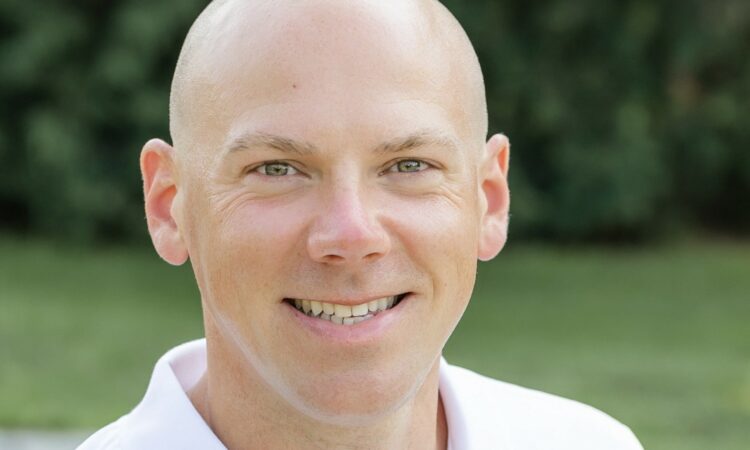
First Take: Truax Patient Services’ New CEO
Truax Patient Services, a Bemidji-based privately held pharmacy, underwent a transition of leadership in October following a majority acquisition by a group of investors. Chris Knutson, previously the co-founder of the Edina-based TeamGenius tech startup, took over as CEO.
Knutson had been thinking about buying a company. He’d exited TeamGenius as it was acquired by Human Powered Health, also based in Edina, in 2022. With just about no health care experience, he says the sector was not at the top of his list, but his interest rose the more he learned.
Following a 15-month process, the Truax deal closed. The previous owners still own a significant chunk of the business, but new leadership will take on the task of growing it, Knutson says.
Truax was founded in 2012 as a mail-order pharmacy to run patient assistance programs for small and mid-size drug manufacturers. It has since expanded while still targeting small and mid-size manufacturers “who want to get closer to patients and build a direct-to-patient channel,” Knutson says, adding, “We support a lot of people with insurance barriers to getting their medication.”
Some customers who go to retail pharmacies after receiving prescriptions may cease the treatment they’ve been prescribed because the out-of-pocket spending at retail is way too high, Knutson says. The goal of Truax is to allow manufacturers to set prices for consumers.
Truax has worked extensively with Emergent BioSolutions, the Maryland-based manufacturer of Narcan, and was one of the original distribution partners offering public-interest pricing for the opioid overdose medication, Knutson says. “[Truax] was shipping millions of doses a year—and still continues to—all over the country, supporting state and local governments, police departments, criminal justice systems, farm reduction coalitions, all sorts of groups who want to buy large volumes and then distribute them to the boots-on-the-ground teams to save lives,” he says.
The business also has evolved into a cash-pay model and does not accept payments via insurance. Knutson says this is the core of the business.
Knutson did not disclose revenue or sales but said the pharmacy’s cash program has grown about 1,500% over the last five years and that Truax is currently dispensing 800-1,000 prescriptions per day.
“There’s a lot happening in the broader environment that makes this an attractive place to be,” Knutson says of the cash-pay pharmacy model. “There’s TrumpRx. There’s a lot of regulations and scrutiny over pharmacy benefit managers. And there’s just a lot of desire for more transparency, more direct access, cheaper prices, cash prices—a lot of movement in the space. So, that’s certainly something we want to expand upon.”
This interview has been edited and condensed for clarity.
How was the acquisition process?
Every single state has their own board of pharmacy with completely different rules. We had to navigate all the requirements of each state. Some are really complicated; some are really straightforward. A lot of the reason the deal took a long time was kind of navigating all of that, as well as structuring a holding company and figuring out tax consequences for the seller—all of those kinds of things.
What are your goals and plans for the future of Truax? Where do you want to take the business?
A lot of what we’re focused on is just building more capacity. My background in technology is a good fit here for this business in terms of implementing more software platforms, automation, and AI solutions. [We] certainly don’t want to replace the human aspect. That’s a big part of why patients love us and why manufacturers partner with us. You call and you get a live person who answers the phone within a couple of rings. But there’s a lot on the back end that can be automated with no impact to the patient experience. And then we’re able to add more capacity and be able to fill more prescriptions, investing a lot more in sales and partnerships.
But really, what we’re certainly not in this [for is] to flip the business like a private equity group might, where they strip down all the infrastructure and then try to sell it a year or two from now. We’re in this long term. It’s a really strong business from the cash-flow and profit standpoint. So, we’d like to expand upon that or, maybe, look to sell it down the road, but certainly not taking an approach to a quick flip of this business.
What about scaling up the business? What does that look like?
I’m a big believer in “First, do no harm.” We do want to scale the business, and that could [happen] a lot of different ways. There are certainly different categories of service that we could get into. We’re adding additional capabilities right now, like cold chains [drugs that need to be shipped cold and maintain a particular temperature range throughout the entire transit]. We’ve just added that capability.
And then a lot of it is just [to] build the capacity so that we can take on more contracts. We’ve turned down contracts in the past because we didn’t have the capacity to deliver. And that’s a great problem to have. And that’s a big part of why we bought this: We see opportunities to improve the operation from an efficiency standpoint and capacity standpoint, and then there’s a lot of opportunity in this space for us to win more contracts and deliver more prescriptions. So, it’s relatively straightforward from that standpoint.
We have seen this report come out, that there have been several pharmacy closures in Minnesota recently, especially independent pharmacies. Is that something that you guys are at all worried about?
Our model is very different from a retail pharmacy. The retail pharmacy business model is really struggling right now. Reimbursements are challenging. A lot of retail pharmacies dispense drugs that they lose money on in the end. We have a very different business model, and so we’re insulated from that sort of downside that you’re hearing.