

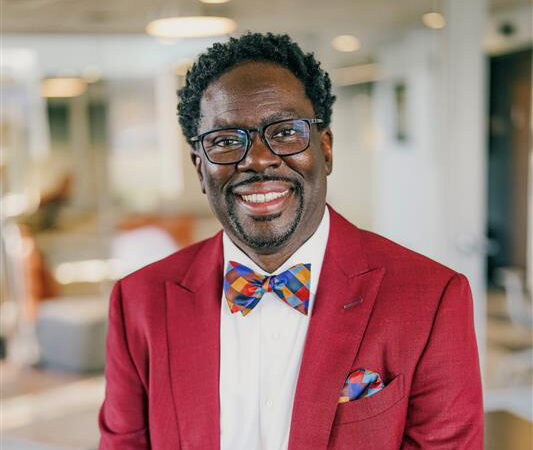
First Take: James Pierce, MDI’s First Chief Information Officer

For James Pierce and his family, the true meaning of life is to plant trees under whose shade one does not expect to sit.
It’s a mentality he brings to his work as a council member for the Edina City Council, as well as his new job as the first-ever chief information officer for MDI, a Minneapolis-based plastic manufacturing company.
After spending 30 years working in technology for agribusiness giant Cargill Inc., Pierce decided to take his love for helping others to a smaller firm where he believed he could make a lasting impression. MDI officially announced his appointment in mid-December.
In an interview with TCB, Pierce talks through what he hopes to accomplish in his new role, his people-first approach, and his thoughts on improving MDI’s use of tech.
This conversation has been edited and condensed for clarity.
Outside of your day job, you’re also a council member for the Edina City Council. How do you find the balance between your elected role and your work at MDI?
The two jobs do require a big time committment, but I think they’re complementary in a way. There are instances at MDI where I might have additional experience because I’ve dealt with grants and things like that through my city council role. So if we’re talking about legislation, for instance, I have some familiarity with that.
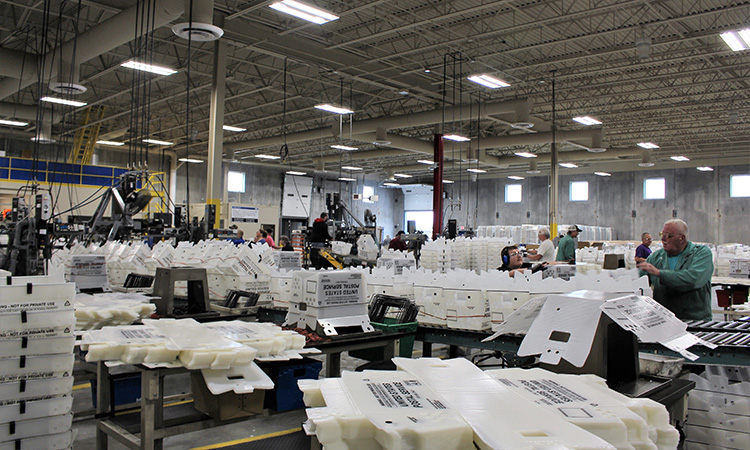
Photo courtesy of the Minnesota Department of Iron Range Resources & Rehabilitation
In the announcement about your appointment, MDI said it’s demonstrating a “commitment to innovative tech.” What does that mean to you?
People often think about nonprofits as not having resources to leverage technology and innovation, but at MDI, we use technology in a way to employ people. If you go to our plant up north, for example, we use robotics. MDI’s embrace of technology was one of the things that fascinated me when I learned about the job – just how much technology they use on the shop floor. And one of the reasons that MDI needed a CIO is becuase we do believe there’s a way to leverage technology more to serve more people. We’re looking into ways to leverage data and analytics to serve our customers and help us serve our employees better, for example. I’ve put forth a functional target architecture for data and analytics for us to use.
MDI’s mission is to employ people with disabilities. What do you think is one of the assumptions people have about workers with disabilities, and what do you intend to do to counter that?
One of the biggest misconceptions about people with disabilities is that they don’t have the capacity to do that same jobs as others. In almost every case, that’s not true. But what could be true is that people may need additional accommodations so they are able to do those jobs. For example, one of our plants has a wielding machine people typically must stand to use. Our engineers built a platform so that an individual in a wheelchair could do that job from their wheelchair. Those kinds of accommodations help people with disabilities do these jobs. MDI tries to encourage those who have disabilities to recognize that they can do these jobs.
What are you looking forward to most in your new job?
It’s incredibly meaningful to me to know that MDI’s mission is to utilize technology in a way to serve more people. I strongly believe in social enterprises like MDI; we’re trying to prioritize social, environmental, and community goals alongside financial performance. We’re a well-run business, but a large majority of those profits go back into serving more people. It gives you a different sense of fulfillment. I’m excited to be a part of that.
Anything else you’d like to share about yourself with the business community?
On a personal level, I really believe that what gives life meaning is trying to find a way to serve others. Working in tech, it’s often easier to start with technology first, but my approach is to start with people first. People, process, data. Do we have the right people to do the things we’re trying to do? Do we have the right processes? Are those the right processes for our success? Do we have the right data? Once we have people, process, and data right, the technology just comes out of that. It’s not as complicated as we make it if we focus on people first.