


Is There an Entrepreneurial Case for a Minneapolis Bathhouse?
Earlier this year, the Minneapolis City Council struck from city code a ban on bathhouses that was enacted in the AIDS era as a public health measure. The impetus was a determined effort from an activist community (how most city legislation gets done in the current era) to right what it saw as a historic wrong.
For purposes of this article, the “bathhouses” that were banned weren’t the stylish water-based branded spas that are trending nationally and locally. These were no-frills spaces where men gathered for sex. Not exclusively for sex—they could also work out and shower or steam as they might at any gym or health club.
The city’s 1988 ban was an artifact of a time when semi-public sex was viewed as a transmission vector for HIV. Minneapolis City Council vice-president Brian Coyle, who was openly gay and later died of AIDS, was an advocate. Nearly 40 years later, AIDS is better understood and treatable (though still by no means desirable). And men interested in impromptu assignations have any variety of apps to facilitate them. So what’s the business case?
Perhaps surprisingly, there seems to be one. Bathhouses, at least on a limited scale, survive in Chicago, Portland, Oregon, and Indianapolis, among other places. In Canada, Vancouver has three. San Francisco rescinded its ban half a decade ago and has established a new regulatory structure, which could be a template for a Twin Cities approach.
TCB spoke to a local entrepreneur who is crunching the numbers. He asked to remain anonymous. “The revenue model is challenging,” he says, “but I think there’s a case to be made.”
Dylan Boyer, director of development for AIDS outreach nonprofit The Aliveness Project, has been the effort’s highest-profile public advocate. He says a licensed and regulated space has the potential to act as a vector for safe sex, health testing, and social interaction for marginalized populations. “They are places to build community,” he told TCB. Boyer says 300 new AIDS cases were diagnosed in Minnesota last year, precisely among the population a bathhouse attracts. “These activities have been happening in parks, public spaces,” he notes. “Health outreach cannot reach those spaces.” Boyer anticipates city or grant funding to support the public health functions but acknowledges there needs to be a viable business model.
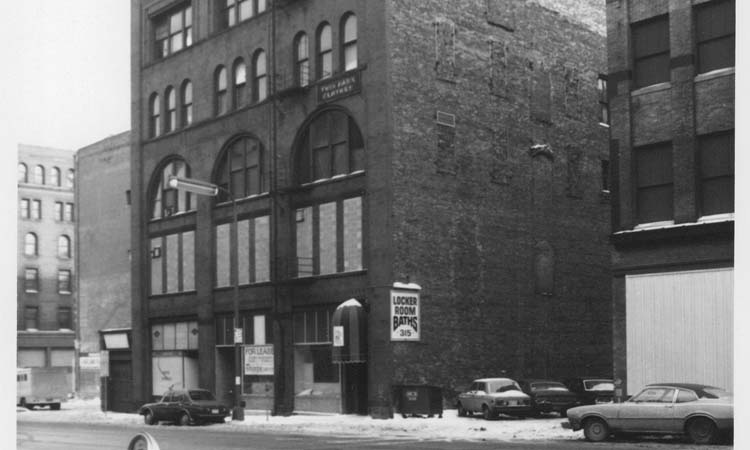
The local entrepreneur is considering something far more inviting than the seedy 315 Baths in the Warehouse District, the city’s last bathhouse before the ban. “If I’m going to do it, it’s going to be as upscale as a Life Time,” he says, referring to the popular health club franchise. “Luxury-level hygiene products, stonework and water features, a spa, fitness area, café, a wellness center.” He estimates a development cost of $5 million to $6 million for a 30,000-square-foot venue, including buying a building, which would obviate potentially awkward landlord issues. He estimates generating $250,000 to $400,000 in tax revenue in the current regulatory environment.
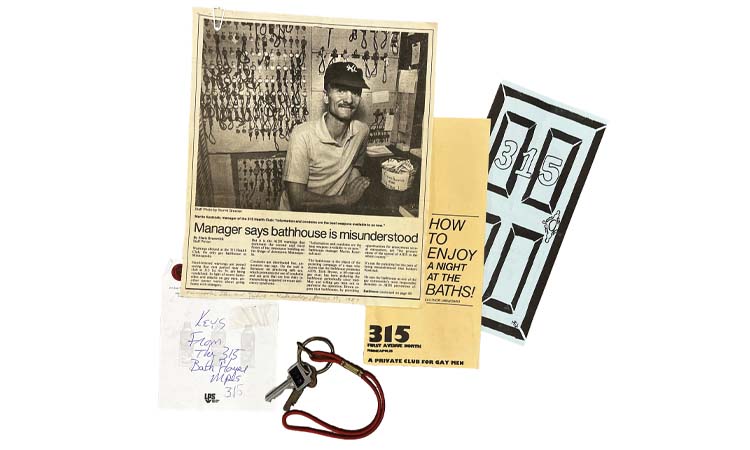
There are sticking points, to be sure.
Read more from this issue

Zoning is one. City Hall must make rules on where a bathhouse can locate and how it must operate. Travelers are a key part of the business model for a thriving bathhouse, so most are located near downtowns. A representative of the mayor’s office notes Mayor Jacob Frey is a supporter, but as “an economic vehicle to build the local economy, not to burden taxpayers,” noting the costs borne by the city would need to be recouped with licensing fees. The source estimated rulemaking would take well into next year.
The other issue is inclusivity. Historically, North American bathhouses are men-only spaces either by design or by demand. “When I talk with gay and bi men looking for a bathhouse,” notes the entrepreneur, “being with people who are or identify as female makes them uncomfortable.” But, the city source noted, “the mayor aligns with the vision that this space should not be gender-exclusive.”
Boyer would like that written into code. He considers the trans and non-binary community as disenfranchised in the current environment and is not supportive of a venue that is designed to serve only cisgender men.
The entrepreneur is hoping to persuade the city not to corral bathhouses into peripheral or challenged locations that feel seedy or unsafe, and, despite his enthusiasm, he says he won’t be pressured into a business model doomed not to cash flow.
Noting St. Paul never had a bathhouse ban, he quips, “If it was a sure thing, there’d be one in St. Paul today.”