

Are Prebuilt Units the Future of Hospital Expansion?
In the wake of Covid-19, hospitals across the country have faced rising demands that have led to ever-growing crowding and capacity restraints. To combat both limited space and limited staffing, hospitals have looked to new and creative ways to build out without disrupting patients.
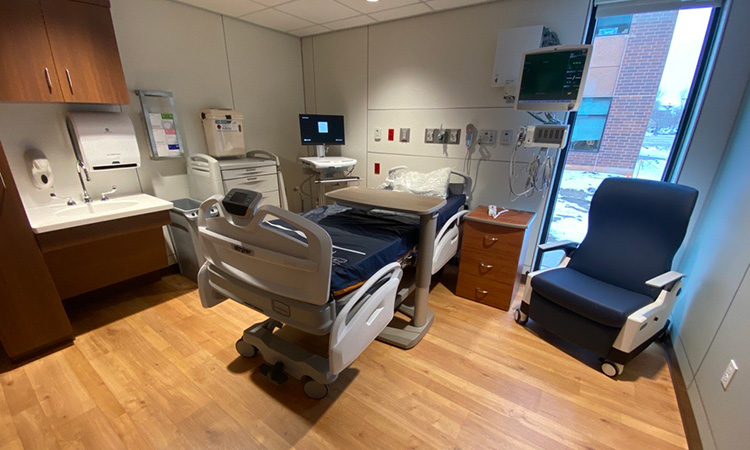
One way this has been done is through modular, prebuilt spaces. This week at St. John’s Hospital in Maplewood, M Health Fairview showcased one of these spaces, a new 16-bed “short-stay and observation unit.” With the expansion, the hospital has also hired 65 new staff.
The expansion was necessary, hospital leaders said at a Thursday news conference. St. John’s has seen a 5% rise in inpatient visits and a 12% increase in emergency department visits since 2022. This demand is expected to continue to grow in the future.
Though the need for more space and staffing is immediate and impending, hospitals often grapple with many industry-specific challenges when trying to build out, Danielle Gathje, vice president of hospital operations, told TCB. Hospitals need to consider how construction could impact patients.“That’s lots of pounding and hammering that happens right outside the patient room and can be very disruptive.” There’s also an increased risk of infection whenever any dust, debris, or foot traffic is added to a health care environment.
There are regulatory hurdles, too: Minnesota law places a moratorium on adding new hospital beds or building new hospitals without legislative approval. The St. John’s project, however, apparently didn’t require lawmakers’ approval.
To avoid the logistical problems, M Health Fairview’s project was built through “essentially an assembly line,” with the majority of construction happening off-site, Gathje said. The project was completed through a collaboration with Appleton, Wisconsin-based construction firm The Boldt Company, and Minneapolis-based design firm HGA. All 16 units, 90% of the project, were built in Appleton. Construction of the units began offsite in September. Crews delivered the prebuilt unit to St. John’s in late November to complete construction and furnishing.
Pre-built spaces have been on the rise across the health care industry recently, Gathje noted. “Sometimes you see it just in segments. Sometimes you see it in different wall configurations.” This kind of build offers efficiency, speed, and quality control. A typical project of this size would usually take 18 to 20 months, she noted. This project took only six months to complete.
This kind of construction is part of a necessary shift in health care spaces, she said, adding that each hospital needs to assess its own unique needs. “We’ve been used to a lot of the same, right? We learned a lot during Covid. One of the things that we learned during Covid was cohorting patients was a way to identify the best way to take care of them.”
In St. John’s case, the hospital identified a need for this “short-stay unit.” But what exactly is a short-stay unit?
The unit fills a demand for patients in need of a hospital stay that is longer than an emergency visit, but shorter than a multiple-day stay. The short-term stay unit is designed for people who need rapid intervention rapid diagnosis, and will likely be at the hospital for 24 to 48 hours, doctor Will Nicholson explained at a news conference and ribbon cutting announcing the new space. Nicholson is the vice president of medical affairs for M Health Fairview’s St. John’s, Woodwinds, and Bethesda hospitals.
This new unit is part of a larger systematic adjustment happening in the hospital, Nicholson added. “Going forward, based on the demand of the community, we do have an expansion plan that looks at how our population is aging, how medical complexity is increasing,” Nicholson said. “This campus then has to evolve as well.”
As hospitals adjust to these demands, so do construction companies.
“We’re facing a very real need for patient bed space in our country right now.” David Thomack, chief operating officer with Boldt, said in a statement. The Bolt Company specializes in modular and pre-built construction. “Every day that is spent in planning, design, or construction is another day that hospitals and patients must do without those beds. Using a modular approach, we’re delivering that space in half the time traditional construction would take, without sacrificing durability, quality or affordability, allowing healthcare providers to see patients months sooner.”