


Analysis: New Players Alter Dynamics of Fairview, U of M Talks
Emotions were raw in July 2023 when Sanford Health and Fairview Health Services dropped plans to merge after prominent leaders of the University of Minnesota were among the vocal opponents to the combination.
Fairview owns the U of M hospitals, supplies patients to university physicians, and it also makes annual payments to the U. Informed observers argue that the U of M and Fairview have been locked into a symbiotic relationship that could be better for both parties.
On Wednesday, the University of Minnesota released details of a new proposal to merge the clinical enterprises of the University of Minnesota, Minneapolis-based Fairview Health Services, and Duluth-based Essentia Health into a new health system.
Also Wednesday, Fairview’s top management sent a letter to its employees that stated it opposed a merger but was “open to a partnership.” Fairview’s leadership wrote that “operating as an independent nonprofit organization is the best way forward.”
The current U of M-Fairview relationship is governed by an operating agreement that’s set to expire at the end of 2026. That deadline may create a sense of urgency for the two parties to renegotiate terms under the existing structure or to move to a new health care model.
The University of Minnesota’s new proposal is essentially a three-party merger, but in its current form that proposal should be viewed as an opening gambit. It would be a mistake for the U of M to underestimate Fairview’s bargaining strength in the talks.
One business leader, who has no ties to the potential three partners, told Twin Cities Business that Fairview has the strongest leverage in these negotiations.
“It has no obligation to sell the University of Minnesota hospitals,” the business leader said. “The University of Minnesota doctors will need the patient volume from Fairview, so they will continue practicing at Fairview.”
It’s important to note that new leaders—at Fairview and the U of M—are involved in shaping the contours of a new relationship between the health system and university. Three people who were in place when the merger with Sanford collapsed are no longer negotiating terms or devising strategies for reaching an agreement.
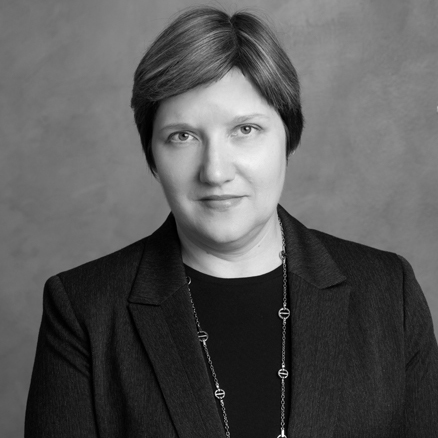
John Heinmiller has succeeded attorney Richard Ostlund as the board chair of Fairview Health Services. Heinmiller built a reputation as a sharp and capable leader while he was CFO of St. Jude Medical.
His corporate biography states he expanded St. Jude’s portfolio by overseeing 20 acquisitions that totaled about $9 billion. In 2017, he had a leadership role in negotiating St. Jude Medical’s merger with Abbott Laboratories. That transaction was valued at $31 billion.
On Wednesday, Heinmiller co-authored a letter with Fairview CEO James Hereford that was sent to Fairview employees. The letter was quite detailed, so it likely allayed a portion of the concerns of Fairview employees, many of whom are probably looking forward to a final resolution of the Fairview-U of M talks.
The letter, which was released to the media, also revealed that Heinmiller and Hereford will not be forced into a deal that they believe disadvantages Fairview.
They’re also willing to go into overtime, if that’s what it takes, to secure an agreement that satisfies Fairview’s needs.
“While we continue to seek resolution on the sale of the academic assets, we know there are concerns about what would happen at the beginning of 2027 if the current contract has ended and a new contract is not in place,” Hereford and Heinmiller wrote. If that unfolds, they said that access for academic physicians and the patients served would continue at the University of Minnesota Medical Center and at all Fairview facilities.
If the contract expiration date passes, the two Fairview leaders indicated the health system would operate much like it does today.
Directly quoting from the Fairview letter, here is how Hereford and Heinmiller said they would operate:
- “Fairview would continue to own and operate the academic hospitals, and academic physicians would continue to practice there.
- We would continue to pay for provider services at market rates.
- Academic faculty would still have the opportunity to practice in our community hospitals. They are an open medical staff model and academic faculty can continue to practice in those sites.
- Clinical trials and research would continue.
- Training and education that currently happens today would continue to occur.
- Fairview would continue to provide academic support at an amount commensurate with a future partnership.”
Hereford and Heinmiller emphasized in their letter that Fairview’s “current level of financial support for the [U of M] Medical School is unsustainable.”
Fairview’s chilly response to the merger idea raises the stakes for Dr. Rebecca Cunningham. She became the 18th president of the University of Minnesota on July 1. She holds a medical doctorate from Jefferson Medical College.
That distinguishes Cunningham from her two predecessors. Neither Jeff Ettinger, a former Hormel CEO who served as interim president through the first half of 2024, nor Joan Gabel, U of M president from mid-2019 to mid-2023, had health care backgrounds.
Cunningham has an opportunity to leverage her health care knowledge and draw lessons from other academic health systems in the United States.
Her primary goal will be figuring out how to make a big difference in health care in Minnesota. “Our state’s health care providers and leaders, as well as everyday Minnesotans, have said loud and clear that we need a health care transformation in Minnesota to increase access to care and keep patients close to home with high quality care,” Cunningham said in a Jan. 24 statement.
At that time, the U of M unveiled its vision for a new health system framework, and it revealed that Duluth-based Essentia Health would be part of the endeavor.
To help her construct financial models for a new health system approach, Cunningham hired Gregg Goldman to become the U of M’s new executive vice president for finance and operations.
In an October news release, he was described as a finance and operations leader with more than three decades of experience who had worked with leading research universities with university medical centers. The release noted that Goldman’s done work related to hospital acquisitions and mergers.
Goldman has held leadership positions in finance at the University of California-Los Angeles, University of California-Irvine, University of Southern California, and the University of Arizona.
Myron Frans, who was a key U of M negotiator in talks with Fairview, retired in 2024 as senior vice president of finance and operations. He also had a keen understanding of the Minnesota state budget, including funding for health care and higher education. Before joining the U of M in 2020 in his finance role, he served as a commissioner in the gubernatorial administrations of Mark Dayton and Tim Walz.
Now it’s Goldman’s turn to work with Cunningham and other stakeholders on creating an effective model for academic health care in Minnesota.
“Gregg knows what this role entails, because he’s done this work at universities similar to our own—public university systems with university medical centers that make a significant impact in their home states as well as around the globe,” Cunningham said when Goldman’s selection was announced.
In a six-page summary the University of Minnesota released Wednesday, U leaders wrote: “Importantly, Essentia and UM will speak with one voice in negotiating with Fairview. We are prepared to move forward on a relatively rapid timeline.”
The U of M closed out its proposal summary by stating: “We look forward to engaging with Fairview to design a practical transaction process, including obtaining all the necessary regulatory reviews/approvals, with the goal of closing on the transaction by the end of 2025.”
The U of M argued that it’s the Fairview board’s “fiduciary duty” to commit to the merger plan advocated by university officials and Essentia.
Based on the fact that Fairview possesses considerable leverage, and the merger plan was developed by the U of M and Essentia, it’s very difficult to envision why Fairview would quickly abandon its stated desire to remain an independent organization.
Several candid discussions—including the new players on both sides—will be needed before a framework could be constructed that gains buy-in from all affected parties.