

Native Tribes Are Building Power for Their People
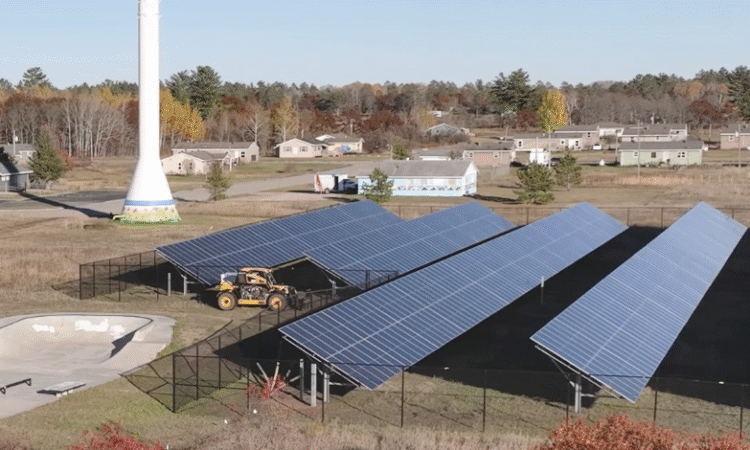
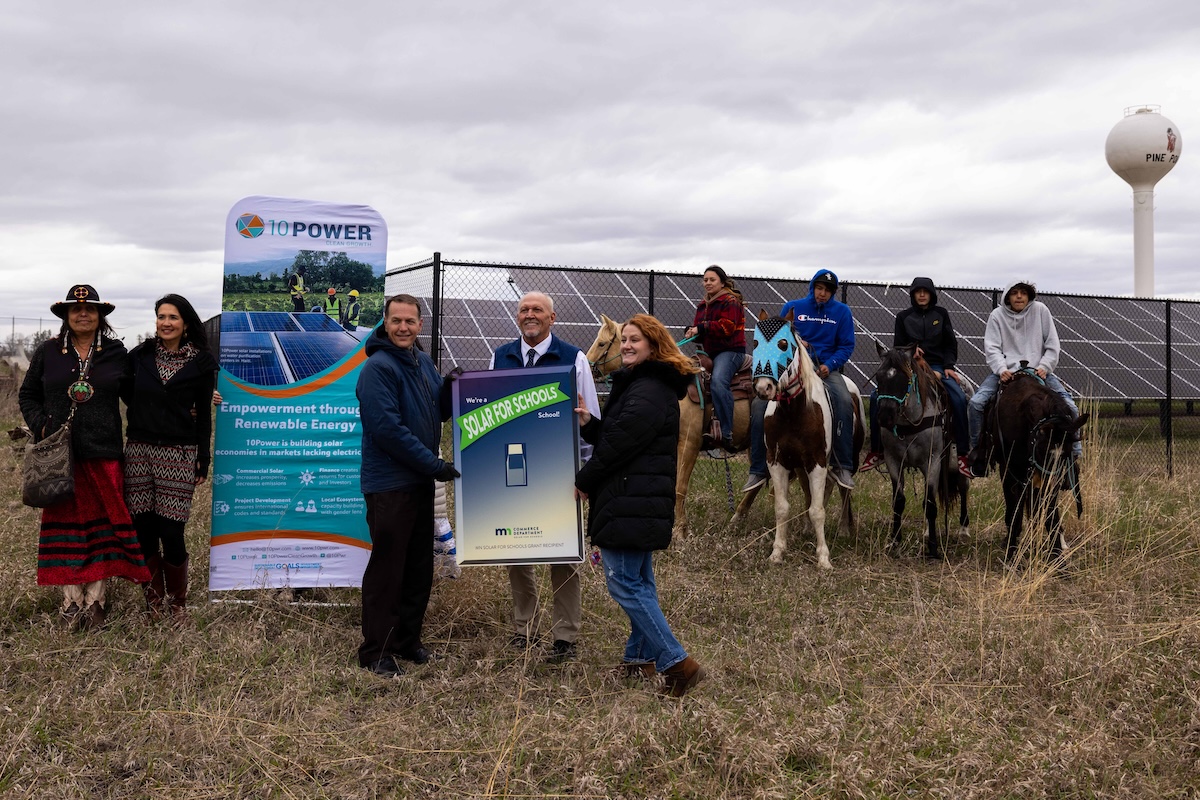
On April 22, the White Earth Reservation in northern Minnesota activated what it calls a “resilience hub”—a solar and electric battery system located at the tribal school and community center in the White Earth village of Pine Point. The word “resilience” in the name was very intentionally chosen.
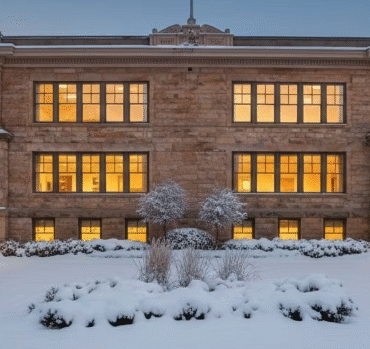
According to Pine Point resident and Anishinaabe social activist Winona LaDuke, residents in her village often experience disconnection from their electric service, particularly during strong storms. LaDuke notes that the school, where her children and grandchildren have been pupils, is “the largest electricity consumer in the village.” She adds that “if we can reduce their energy bill and then use that as a foundation for more energy self-sufficiency for the village, we’re good.”
Tribal communities in Minnesota and elsewhere are increasingly pursuing renewable energy development on their lands, although there are no official measures of how many projects have been built or are being considered.
Clean energy technology is also providing opportunities for Native entrepreneurship. But funding projects like Pine Point, which has always been challenging for capital-strapped Indigenous communities, is likely to get more difficult.
Driving Forces
The developer and builder of the Pine Point project was 10Power, a San Francisco-based social enterprise that partners with tribes and other “frontline communities” (that is, people most likely to be negatively affected by climate change).
Once 10Power completes its work, the community then owns and operates the finished installation.
“We see a lot of disparity in terms of energy access and energy costs within tribal communities,” 10Power CEO Sandra Kwak says. “Reservations have the highest levels of energy poverty—14% of households on reservations don’t have access to electricity.”
In addition, many tribal communities “have really high energy burdens,” where households “are spending some of the highest levels of personal income on energy” in the United States. These situations provide “a big opportunity for tribal governments for adopting renewable energy and creating a framework for tribal sovereignty,” Kwak says.
They’ve also created opportunities for innovative businesses such as Minneapolis-based Solar Bear, whose founder and CEO, Robert Blake, is an enrolled member of the Red Lake Nation of Anishinaabe.
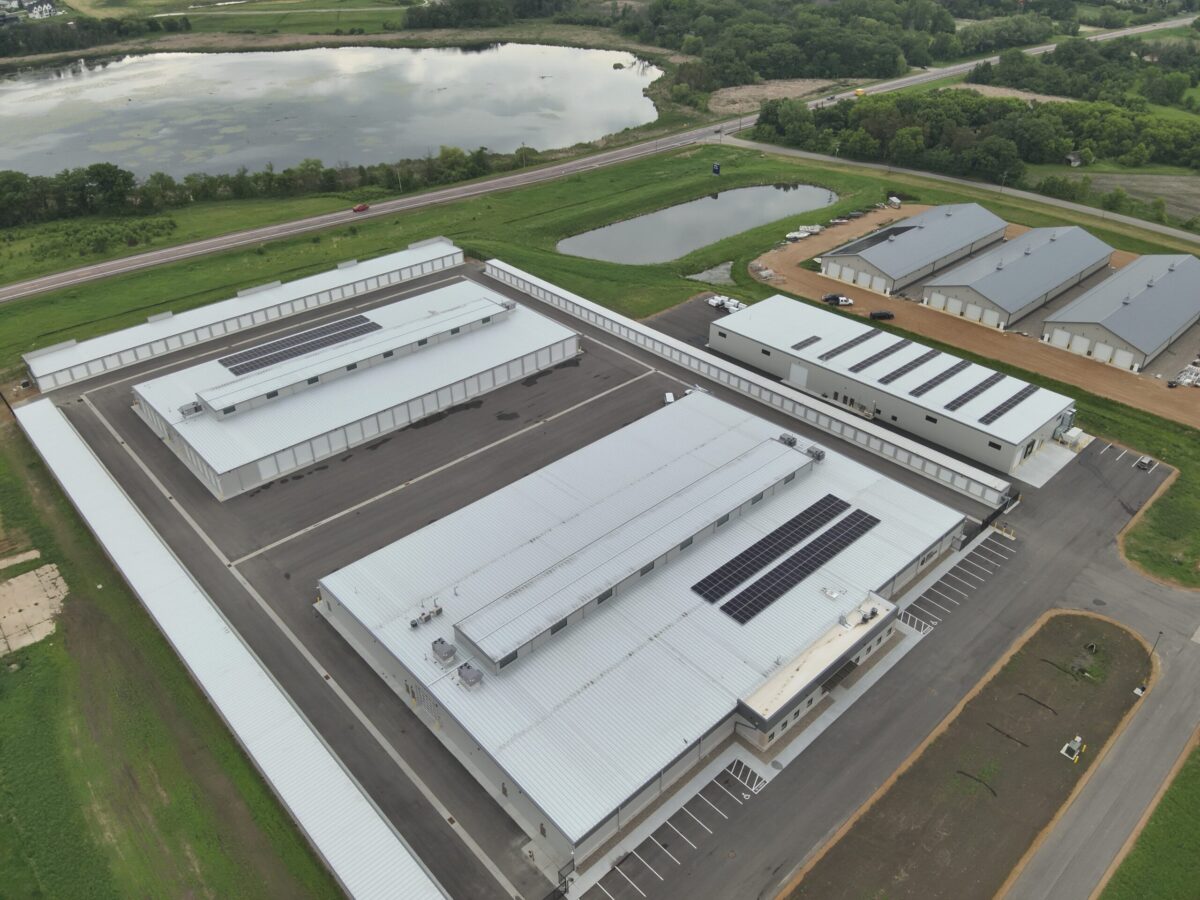
In 2017, Blake installed a 78-kilowatt solar project for the tribe’s government center. Since then, Solar Bear has developed five more renewable energy projects for the tribal community. It also recently completed several multiple-kilowatt photovoltaic systems on four buildings for the Shakopee Mdewakanton Sioux Community. In addition, Solar Bear has developed projects for non-tribal clients. Later this year, it will begin installing solar panels atop the Minnesota Marine Art Museum in Winona.
In early June, Solar Bear broke ground on its sixth Red Lake project: a 3-megawatt solar installation that Solar Bear will complete next year. The project will produce electricity for use throughout the reservation. Blake notes that it took nearly four years, from conception to groundbreaking, to get his latest Red Lake project powered up. “It takes a lot to get these projects developed—land, surveying, engineering,” he says. “Then you build it! And that’s the easiest part.”
One of the biggest challenges for these projects is finding the money to build them.
Finding Financing
When it came to financing renewable energy projects like Pine Point, “we were really in an amazing place with the [2022] Inflation Reduction Act,” Kwak says. “A lot of capital, including grants, equity, and debt financing,” as well as technical assistance, became more readily available for remote rural communities, including most tribal lands.
Further funding came from the solar investment tax credits that tribes (as well as schools, churches, and nonprofits) could tap. “But they’re being sunsetted on July 4,” Kwak notes. “We’re trying to help as many projects as possible to safe-harbor the tax credit” before it goes dark. That would give tribes and other qualifiers four years to develop a solar project. The credit provides 30–50% rebates on costs once the project is complete. “That makes the energy savings pay back even faster, which especially helps community-serving organizations to have more capital to put in their other services,” such as education, Kwak says.
10Power has long put together “blended capital stacks” that combine philanthropic investments with equity and debt financing. For the Pine Point project, 10Power and White Earth assembled a stack from sources including Minnesota’s Solar for Schools program, the Tribal Solar Accelerator Fund, and other nonprofits. 10Power also secured a recoverable grant “that’s basically treated as a low-interest loan,” Kwak says. If other sources of funding (such as a solar investment tax credit) disappear, “then it turns into a grant.”
A blended capital stack allowed 10Power to develop and build Pine Point “at no cost to the community,” Kwak says. “This enables the school and the tribe to own the project outright, as opposed to having a third-party investor own it.”
Solar Bear’s Blake believes that many tribal communities are starting to prioritize investment in energy development. “Gaming is a billion-dollar industry,” he says. “Energy is a trillion-dollar industry.”
He adds, “The younger people in these communities are really excited about renewable energy.” An organization hoping to help power that enthusiasm is the Midwest Tribal Energy Resources Association (MTERA), a Milwaukee-based nonprofit that represents tribal nations in Minnesota, Michigan, and Wisconsin. MTERA is developing strategies and resources to further renewable energy projects in Native communities.
The small rural electric cooperatives that serve the areas around tribal lands haven’t always been enthusiastic about these projects. In mid-June, Minnesota Administrative Law Judge Joseph Meyer ruled that Montevideo-based Minnesota Valley Cooperative Light and Power Association cannot reduce the power it supplies to a casino operated by the Upper Sioux Community south of Granite Falls. The cutback appears to have been in response to the tribe’s installation of a 2.5-megawatt solar array two years ago. According to an MPR report, the ruling “could reshape how electric cooperatives across Minnesota treat customers who want to generate their own electricity.”
UPDATE: On June 19, leaders of 26 rural electric cooperatives sent a joint letter to Minnesota Public Utilities Commission (MPUC) siding with the Administrative Law Judge’s decision. It notes that the Upper Sioux Community solar-energy and battery-storage project “is intended solely to partially offset member usage, not to generate excess power for sale to other members or the cooperative.” And regarding the issue of “whether a member/consumer has the right to self-generate, we believe the answer is yes.”
Blending Technology and Culture
Blake believes that clean energy development is “a natural fit for Native people.”
“I think it comes down to the traditional values we have around the environment and around Mother Earth, and what we feel is our responsibility about protecting the environment,” he says. By healing the environment, “we’ll start healing our relationship with ourselves and our relationships with one another.”
This attitude can help Native people “attack the social ills that plague our communities,” he says. “This work can help make our communities healthier.”
Besides launching Solar Bear, Blake founded Native Sun Community Power Development, a Minneapolis-based nonprofit that provides workforce development and training for Native people seeking careers in renewable energy.
Native Sun has provided financial and other support to 8th Fire Solar, a Anishinaabe community development initiative that Winona LaDuke founded in 2017 in Pine Point. One of its programs is manufacturing solar panels and solar-thermal collectors. Rooted in a mission of blending “cultural knowledge and STEM principles,” 8th Fire Solar also provides training for Native people in clean energy careers and helps communities establish electric vehicle (EV) infrastructure.
8th Fire Solar’s primary market is tribal communities in Minnesota; it also has done work in South Dakota and New Mexico. Much of this work involves the installation of solar-thermal heating systems. In addition, 8th Fire Solar conducts training in photovoltaic technology at the White Earth Tribal College. It also formed a joint venture with 10Power to handle the Pine Point resilience hub’s operations and maintenance.
“One of our more exciting projects,” says 8th Fire Solar program coordinator Gwe Gasco, was completed about a year and a half ago on the Lower Sioux Community near Morton. There, 8th Fire installed a solar-thermal system on a new hempcrete building. More recently, the nonprofit received a grant to install free solar-thermal systems in homes occupied by elders in various tribal communities. “We also teach them how to maintain the system, which is really simple,” Gasco says. Through this project, “we can train people how to install these systems, and they can buy panels from us at a lower price. It’s a win-win on all fronts.”
Facing Old Roadblocks
Can Native communities keep winning the energy development game? The sunsetting of the Inflation Reduction Act’s solar energy tax credits on July 4 means that “we’re basically going back to an environment where there are more roadblocks for tribes to develop projects,” Kwak says. “But we will overcome.”
She notes that “there has been a lot of great work that’s been done in recent years around tribal utility commissions—and even energy commissions—within tribal councils.” Many tribes have designated a “point person” within their housing committees who is focused on energy development. “I think that will help keep the momentum going,” Kwak says.
Looking ahead, Kwak says 10Power is “hoping to see more benefits for residential customers.” She says the community at Pine Point has indicated “they would love to get solar for their homes.” LaDuke says White Earth is considering renewable-energy projects in other villages on the reservation. These projects, she says, would be modeled on the Pine Point resilience hub.
“If your community needs power, you want to have the lowest-impact and most reliable options available,” LaDuke says. “The impact of fossil fuels on the environment is devastating.” She believes that renewable energy sources can provide greater reliability for the White Earth community: “That’s what I’m after—ensuring that people have power.”