

Resource Guide: The New World of Event Planning
Event planning has always been a dynamic universe, but it’s even more so in the 2020s, as external trends, the evolving workplace, and new technology demand fast adaptation and evolution. Twin Cities Business spoke with several local practitioners to explore how changing times are leading a wave of creativity in memorable experiences.
Trend 1: Freshen it up
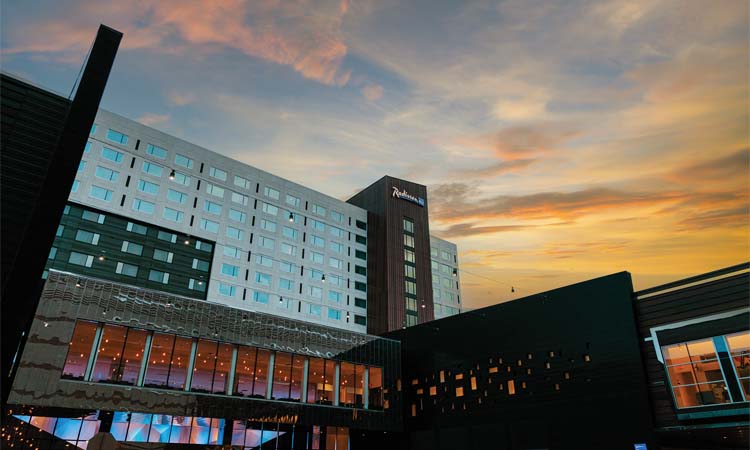
Kate Anastasi, director of sales and marketing at Radisson Blu Mall of America has worked in hospitality since 2004 and is seeing an increased emphasis on originality and intention among meeting planners.
In the past, event planners often took a “cookie-cutter, copy-paste” approach of “show up, have a cocktail, go to sleep, eat some eggs, talk at this meeting, and then go home,” she explains. Now, “there’s a lot of things that companies are doing to ensure that the attendees have memorable moments” that add up to more than just the nominal reasons they’re getting everyone together.
“It’s more than just, ‘Hey, we need some projectors to do some PowerPoint,’” echoes Josh Reitan, founder of Golden Valley-based AV For You, an audiovisual production company that has organized many events. With so many employees working from home, there has been a change in how companies value events to build brand and culture.
And new types of meetings have emerged that aim for a more individual touch and more immersive feel.
“Currently, corporate events are focusing on personal connections, interactive brand activations, and educational opportunities that allow teams to connect on a deeper level and learn how to work with different communication styles and strengths,” local event planner Amy Zaroff explains.
Westopolis, the destination marketing organization (DMO) for Golden Valley and St. Louis Park, suggests ideas like scavenger hunts and reverse trade shows (where buyers man the booths) that are far more interactive than a one-room meeting. Karen McManamon, Westopolis’ business director, says that wellness and volunteering are growing trends, with activities like morning yoga and a day of service at a local nonprofit.
Trend 2: Personalization = engagement
It may sound counterintuitive to personalize in a group setting, but the trend can take many forms, ranging from opportunities for employees to interact with company leaders or event speakers, to incorporating an element of an attendee’s personal life into a celebratory event.
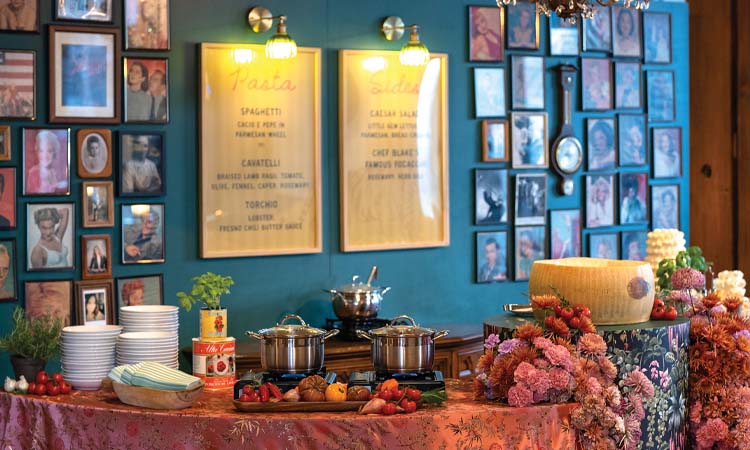
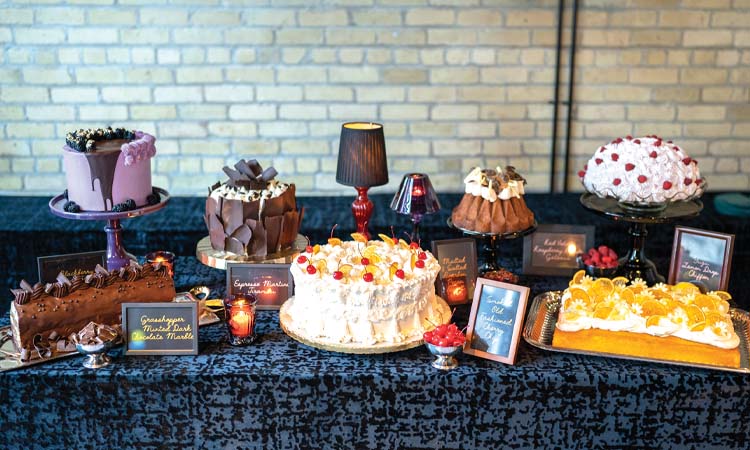
“Personalization is huge, and I think you can look at that on a couple of different scales,” says Christie Altendorf, marketing and brand experience director at D’Amico Hospitality. D’Amico trains planners in “deep listening” with clients, taking in every small detail. In that process, a comment in passing, like mentioning a favorite food item, can turn into a moment of delight at an event.
As a catering specialist, D’Amico includes dietary requirements, preferences, and eating style as part of its personalization. Though it’s usually impossible to build a menu where each item pleases every single person, what you can do is look at things like making sure names are spelled properly, says Altendorf, or providing takeaways (often merchandise/swag) with the individual’s name on it for each person to take home.
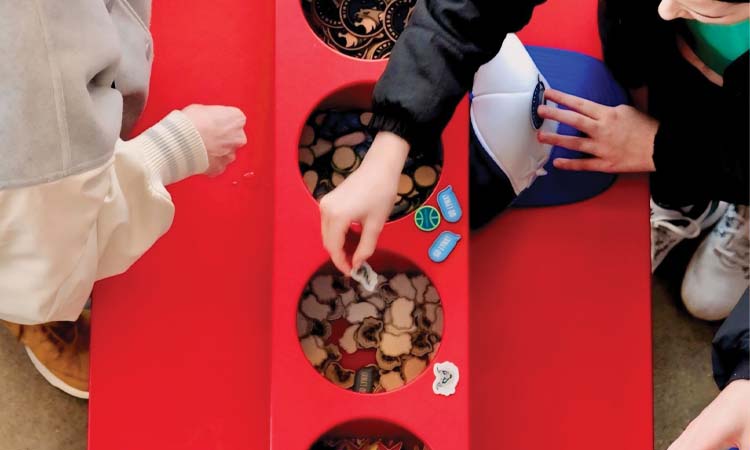
Such takeaways have become more common. Matching Patches, a Plymouth-based company, offers customized accessories with patches. Founder Beth Rubin says the company’s personalization niche allows guests to have an experience where they are “actively involved with making something on their own that’s still a branded experience, [that] then naturally becomes part of the event experience as a whole.” Since launching the company with hats, the business has expanded to pouches and bags.
At a recent event, in addition to logos, attendees picked patches with fun sayings or a personalized color palette. “So it’s really understanding who that guest is,” says Rubin, “and creating something that we think that they would be drawn to.”
Trend 3: Hybrid events hang on
Hybrid work has not only become commonplace, it’s become the norm for many companies; the same holds true in the event space. Whether because of far-flung employees or attendees with schedule conflicts, many events now make logging in a core option.
“Hybrid events continue to play an important role,” says Hannah Sandell, event manager at the University of Minnesota’s McNamara Alumni Center. “While in-person events have returned at full strength, hybrid options provide flexibility for speakers and guests.”
AV For You’s studio in Golden Valley hosted virtual events throughout the pandemic, connecting people who couldn’t gather in the same physical space. While those restrictions are gone, many companies still like the option.
It’s a way to include people who couldn’t otherwise be there, says Reitan. Incorporating the virtual element thoughtfully is crucial, depending on the size of the party, he adds.
Read more from this issue
Radisson Blu’s Anastasi warns that large groups spread over multiple breakout rooms can be tough to manage for hybrid access, and planners should anticipate higher costs and be ready to manage equipment failures or broadband issues. Anastasi is a fan of Meeting Owl, a technology that enables 360-degree audio and video, recommending it for smaller events.
“It’s really understanding who that guest is and creating something that we think that they would be drawn to.”
—Beth Rubin, Founder, Matching Patches

Trend 4: AI opens new tech doors
Artificial intelligence is advancing so rapidly that it’s hard to keep track of. Like any other sector, event planners have been evaluating how to incorporate AI into their workflow, but they’re also looking to ultimately use it in the events themselves.
From a workflow perspective, Altendorf says, AI is being integrated into “systems of all shapes and sizes,” such as modifying lists, writing invitations, and generating images.
Planners can also use AI to set agendas, create timelines, and put together RFPs through AI templates. “AI has brought a lot of things to our fingertips,” Westopolis’ McManamon says.
Reitan finds AI useful in brainstorming. He finds ideas for backdrops with an AI image generator, then planners can bring in a graphic designer to produce the look.
Anastasi says AI can even play a role in detecting potential gaps in a plan by asking the AI tool what has been missed.
Some planners recommended an AI tool called Spark, created specifically for the event planning industry, which can do research and budgeting.
The next step is to figure out new ways to use AI in the events themselves. “I think we’ll just start to see some new ways of doing things with AI, and I’m excited about that,” says Rubin. “We’re not utilizing it hands-on at the events yet, but there are tools out there, and I’m researching ways we can do it.”
Tech innovation doesn’t start or stop at AI, of course. Some companies have used virtual reality for brand activation, for example. “Let’s say you want to see how the cars are made at Ford; you can now do that with technology versus having to go on an actual [factory] tour,” says McManamon. At events, McManamon says that something as simple as printers that can make badges on the spot or wayfinding apps can help smooth the proceedings.
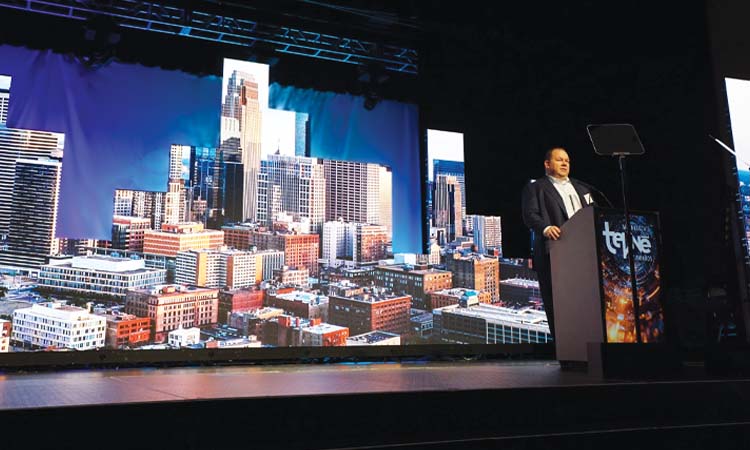
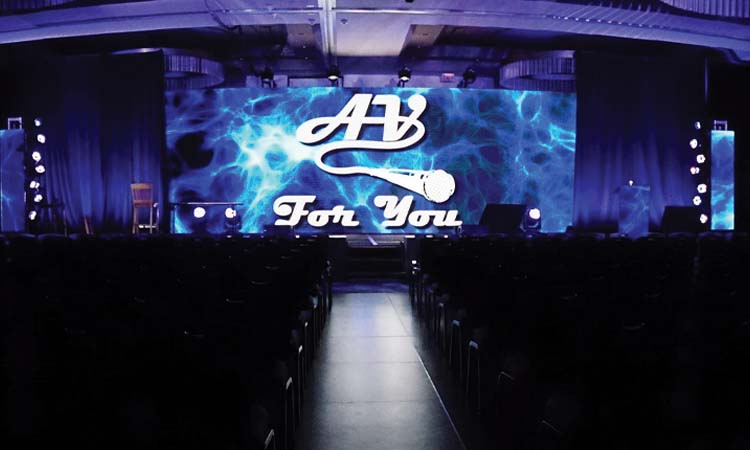
New developments in the audiovisual world continue as well. The LED video wall “has really become a game changer for us, because you’re not restricted to projector screens anymore,” says Reitan. “The magic you can create with a video wall backdrop is just unparalleled.”
One risk: Professionals who lean on AI too much risk overlooking their reason for being. “[AI] certainly is a tool that can create some efficiencies for corporate planners, but what it won’t be able to replace is having that human there with a really smart head and a really deep heart who’s looking out for their guests,” says Altendorf.
Trend 5: Designing events for value
A growing consideration for event planners is an unstable economy. Tariffs on florals, imported products, and some foodstuffs, for example, have been challenging for the industry, says Altendorf. But, she continues, “I don’t think those are necessarily barriers to creating that experience as long as we have flexibility” and a plan A, plan B, and plan C should things go awry.
Some planners say they’re keeping an eye on noticeable hikes in airfare in 2026, creating pressure on destination-based meetings.
Companies also may scale up or cut back on event spending based on internal circumstances, Reitan says, and it should be in the planner’s tool kit to “meet them where they need to be in terms of what type of an event makes sense at that moment for them.”
Anastasi isn’t sure whether companies will be spending less or more on corporate events, but the aggregate number of events is down. From a venue perspective, it has been increasingly difficult to obtain multi-year commitments from annual events or meetings since Covid-19, consistent with the trend of shorter booking windows in hotels and airlines.
“Groups that would have their annual conference the second week in February every single year—nobody [used to] bat an eye at signing a multi-year contract,” says Anastasi. Now she sees bookings six to nine months in advance, compared with once-standard 12 to 18 months in a previous era. She believes the trend is a result of companies’ desire to manage risk in an uncertain economy and leverage smaller workforces who lack the capacity to plan multiple years out.
McManamon reminds planners that they can sometimes offset event expenditures with grants offered by DMOs like Westopolis, which offers up to $2,200 in incentives on multi-year and low-season bookings.
“Currently, corporate events are focusing on personal connections, interactive brand activations, and educational opportunities that allow teams to connect on a deeper level.”
—Amy Zaroff, event planner