

Year-round E-15 Is a Win for Corn Farmers But Still Faces D.C. Approval
President Donald Trump once again advocated for year-round E-15 fuel on Tuesday at an event in Iowa, a win for rural communities and farmers.
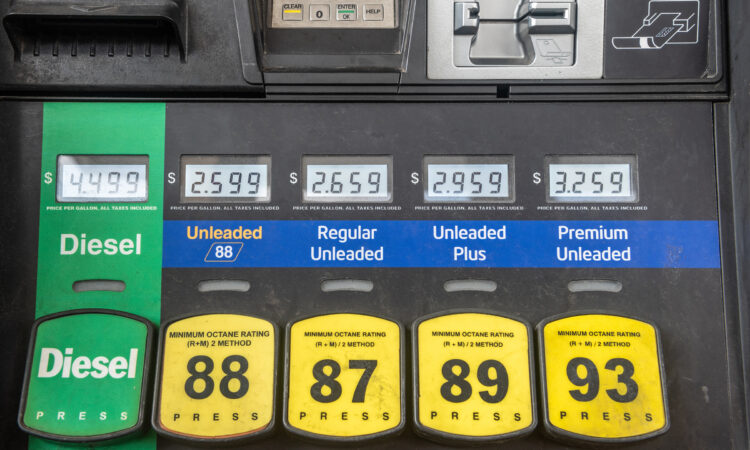
E-15 is a fuel blend containing 15% ethanol and 85% gasoline, commonly marketed as “Unleaded 88.” It is generally used in cars and SUVs designed in the past 25 years, often costing less than standard fuel, boasting a higher-octane rating, and producing fewer greenhouse gas emissions. The main drawback is that E-15 contains less energy than gasoline.
During Trump’s first term, the Environmental Protection Agency (EPA) removed a regulatory barrier restricting retailers from selling E-15 in the summer months, permitting them to sell year-round. Several oil refiners sued the EPA, and an appeals court overturned the rule in 2021.
Mid-size oil refineries have kept Congress from passing legislation permitting year-round E-15 fuel, says Dana Allen-Tully, a corn farmer and former president of the Minnesota Corn Growers Association. She adds these refineries don’t want to sacrifice “an ounce” of their oil, because demand would likely decrease for that industry with year-round E-15, while corn demand would trend in the opposite direction.
Today, only Midwest states may sell E-15 fuel year-round, while the rest of the country is restricted to non-summer months.
Getting a nationwide deal through Congress has eluded biofuel producers for over a decade. Trump said at the event that he is trusting House Speaker Mike Johnson and Senate Leader John Thune to find a deal both chambers can send to his desk to sign.
Earlier this month, Congress did not include a provision in its appropriations bill for year-round E-15, frustrating corn producers. Instead, it established a Rural Domestic Energy Council tasked with bringing the vote on year-round E-15 sales back to Congress by mid-February.
Related: Food and Agriculture Coalition Launches ‘Protein Catalyst’
Year-round, nationwide E-15 fuel availability is an opportunity to create domestic demand for corn, a product whose price has dropped by nearly half over the past three years, says Brian Werner, executive director of the Minnesota Bio-Fuels Association. The fuel blend may also help utilize record-high corn yields that the U.S. Department of Agriculture (USDA) expects to see farmers produce in 2026.
Farmers have been “really struggling on a financial perspective for at least the past four years,” Allen-Tully says. “For us to increase consumption of corn, that’s really what we’re looking for. So, we’re cautiously optimistic that this is really going to get over the table.”
If Congress approved year-round E-15, the legislation would not mandate consumers fill up with Unleaded 88 at the pump. It would simply provide additional options for consumers, who would save 10-30 cents per gallon on gas, Werner says.
Werner also believes the fuel would boost domestic demand for ethanol.
About 80-85% of the work to get year-round E-15 is done, according to Werner. The last piece is coming to “an agreement with oil refiners to settle the small refinery exemption process.”
To blend biofuels, like crude oil, a small refinery, defined as making about 75,000 barrels a day, can get regulatory exemptions for financial relief. The exemption waives the requirement for refineries to blend ethanol into its gasoline or diesel. The EPA issues these exemptions if a refinery experiences disproportionate economic harm from compliance.
Werner says during the first Trump administration, the number of granted exemptions doubled, which he says “eroded the demand for renewable fuels.” The Minnesota Bio-Fuels Associations hopes the EPA will apply small refinery exemptions more “judiciously and in a strict manner” this administration.
The fuel could also expedite the EPA’s setting of renewable volume obligations for the next two years, according to Werner.
Every two years, the EPA sets the limit for the volume level of biofuels needed to be blended into our nationwide fuel supply. The agency has yet to do so for 2026 or 2027.
Werner believes the EPA’s delay in setting the overall volume limits will be highly dependent on how many small refinery exemptions the agency plans to issue during those two years. If year-round E-15 comes to fruition, the EPA will likely feel pressured to identify the small refinery exemptions and renewable volume obligations.