

Should MN Businesses Take a Stand on ICE Operations?
Minnesota businesses are being asked to navigate one of the most complicated civic moments in recent memory—again.
Public expectations are high, emotions are running hotter than usual, and companies are increasingly being pulled into political and social debates they never wanted to enter. Whether it’s questions about messaging, decisions about access for federal agencies, or pressure to take a stand on issues far outside their core mission, businesses are wrestling with how to “meet the moment” without making things worse.
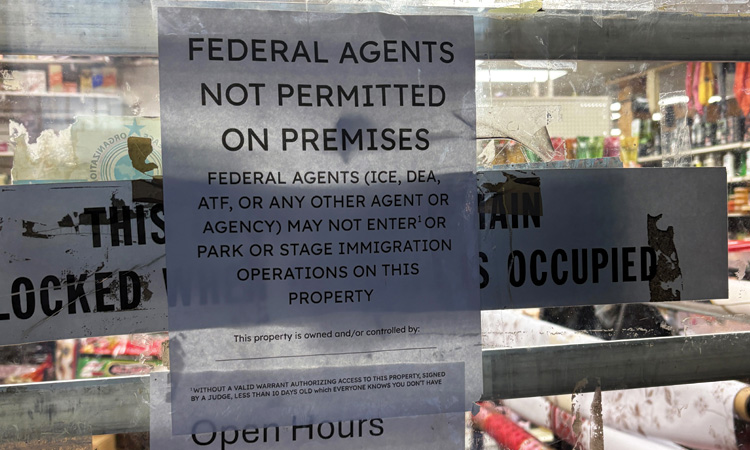
The recent calls for businesses to ban ICE from staging in their parking lots is a good example of how quickly these situations become more complex than they appear. On the surface, it’s framed as a simple moral question: Should a company allow a controversial federal agency to use its property? But the reality is far more complicated. People demanding immediate action often overlook the practical implications of what they’re asking.
Creating a policy is the easy part. Enforcing it is where things get real.
If a business declares that ICE is not allowed on its property, someone may reasonably be expected to have to enforce that rule. In the current environment, that “someone” would not likely be a corporate vice president or a public relations team member.
It would be the store employees in the parking lot. It would be the 19‑year‑old team member collecting carts. It would be the assistant manager walking out to address a complaint. It would be the everyday workers who did not sign up to confront federal agents, de‑escalate tense situations, or become the face of a political conflict.
Local police departments are already stretched thin. Even in the best of situations, they cannot be expected to respond instantly every time a private business wants a federal agency removed from its property. That means the burden of enforcement would fall on people who are not trained, not equipped, and not protected in the ways law enforcement officers are. There is no shame in a business not wanting to put its employees—or its bystanding customers—in that position.
This is not about agreeing or disagreeing with ICE. It’s about recognizing that businesses operate in the real world, not in the world of social media demands. They must consider safety, liability, staffing, customer experience, and the long‑term health of their workforce. They must think about the consequences of a policy not just in principle, but in practice.
This moment requires us to give businesses the space to acknowledge that complexity.
Minnesota companies are trying to strike the right tone. They are trying to communicate clearly without inflaming tensions. They are trying to support their employees without becoming political actors. They are trying to respond to community concerns without creating new risks. These are not easy calculations, and they should not be treated as if they are.
The truth is that businesses are being asked to fill gaps left by our increasingly polarized civic environment. When public institutions struggle to hold trust, people turn to companies to take positions, set norms, and enforce boundaries. But businesses are not built for that role. They can contribute to healthier civic culture, but they cannot replace it.
What Minnesota needs right now is a little more grace for the organizations trying to navigate these pressures responsibly. We need to recognize that not every situation has a clean answer. We need to allow room for nuance, especially when safety and practicality are at stake. And we need to remember that the people most affected by these decisions are often the ones with the least power to shape them.
Businesses are not perfect, but most are trying. In this moment, trying thoughtfully should count for something.