


Paper Routes Built Character for Tom Brokaw, Judge Tunheim
For people who enjoy holding a newspaper in their hands, Dec. 31, 2025, will mark a new chapter in the demise of print newspapers.
The Atlanta Journal Constitution will stop publishing print newspapers, and the Minnesota Star Tribune will shutter its printing plant in Minneapolis. The daily Star Tribune will print its paper in Iowa, but the much earlier deadlines will prompt more people to get rid of print subscriptions.
The conversion to digital news also means the elimination of work for paper carriers, who for many decades were young boys. Serving a route taught paperboys to be responsible, and they also learned why factual news was important. Two paperboys I know grew up to be national leaders.
Veteran NBC News anchor Tom Brokaw got his first taste of civic life when he delivered newspapers in South Dakota. Senior U.S. District Judge John Tunheim—14 years younger than Brokaw—had a very similar experience when he was growing up in the small town of Newfolden in northwestern Minnesota.
In March 2009, I connected with Brokaw when I was hoping to secure him as the keynote speaker for the annual Minnesota Society of Professional Journalists (SPJ) awards banquet.
The speaker request letter that I sent to Brokaw’s New York City home in 2009 began with the following sentence: “I don’t often write to former Minneapolis Tribune paperboys, but I am happy to make an exception in your case.” (My intention was to gain his attention.)
I also wrote: “In your autobiography, A Long Way From Home, you described how a small-town boy from the Midwest learned to be a citizen of his community, state and nation. Your Minneapolis Tribune paper route offered you a chance to see the bright lights of Minneapolis.”
A few days after I mailed my letter to Brokaw, he sent me an email at the Star Tribune and said he would give the speech. When I introduced him at the SPJ event, I referenced the fact that Brokaw won a trip to Minneapolis when he was 12 years old because he sold so many Minneapolis Tribune subscriptions. As part of his prize, Brokaw attended a Minnesota-Illinois football game at Memorial Stadium.
Brokaw knew something about every Gopher player from reading the Tribune’s sports section. “My hero was Minnesota’s All-America halfback, Paul Giel, and when he ran past our end-zone seats and into the locker room at the end of a winning game, I thought that was as close as I would ever get to greatness,” Brokaw wrote in his autobiography. Of course, he would go on to earn a political science degree from the University of South Dakota and report on major U.S. and global news stories over multiple decades.
When Brokaw spoke to Minnesota journalists in 2009, he was funny, entertaining, substantive, and sobering. The crux of his speech addressed the future of American journalism. He probed the question: “Is it an Endangered Species or Will There Be a New Life Form?”
At a time of downsizing of newsroom staffs, Brokaw talked about the important role that journalists play in reporting the facts, raising critical issues, and holding key institutions accountable in a democracy. Brokaw gave the speech for free, and he wouldn’t let our SPJ chapter reimburse him for travel expenses. It was his way of giving back to the profession.
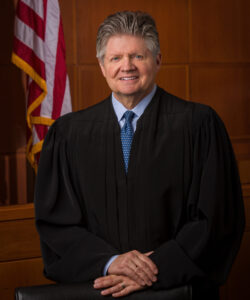
In 2021, I interviewed another public figure who also had a character-building experience as a paperboy. I spoke to Judge Tunheim about his work to open two Justice & Democracy Centers in St. Paul and Minneapolis. The judge was disheartened by the decline in civics education in K-12 school systems, and he thought the federal judiciary could help address that deficit. The Justice & Democracy Centers he envisioned could become places for students to learn about civics and for citizens to engage in constructive public dialogue.
When Tunheim was a boy, it was common for households to subscribe to at least one daily newspaper. Citizens debated government policy solutions based on factual information they had read in newspapers. Tunheim delivered newspapers on his bicycle seven days a week. He did this from grades five through nine.
“Being a paperboy, I was always proud of the fact that most of the people in town took the daily Minneapolis paper,” Tunheim told me during my Twin Cities Business interview. “And if you didn’t take the Minneapolis paper, the Star or the Tribune, you took the Grand Forks Herald in the afternoon.”
The Minneapolis newspapers that Tunheim delivered arrived in Marshall County via the Soo Line Railroad, and Tunheim would pick up his bundles at the Newfolden depot. “Virtually everybody was reading daily newspapers when I was young, and I think that contributed greatly to a sense of the importance of understanding the news, the importance of our democratic institutions and the work that they did,” Tunheim said.
Beyond serving on the federal bench, Tunheim often has traveled, to work with foreign leaders trying to establish an independent judiciary and other democratic institutions in their countries.
In 2025, the demand for paperboys and papergirls is exceedingly small. But there’s still a need for children to learn how to interact with many different types of people on a community level. That’s what the paper routes provided for Brokaw and Tunheim decades ago. The digital world encourages isolation, such as spending time on social media and sending texts on phones.
One of the most alarming aspects of the disappearance of print newspapers is that most Americans don’t believe in paying anything for credible journalism on news websites.
Earlier this year, the Pew Research Center reported that only 17% of U.S. adults surveyed paid for news—through subscriptions, donations, or memberships—in the last 12 months. Highly educated and high-income Americans were the most likely people to pay for news.
In a democracy, we’ll only have an informed citizenry if the vast majority of people have access to fact-based news. If we want vibrant economies and responsible government, we need to be well-informed so we can be fully engaged citizens. Unless we want to see the continued erosion of U.S. journalism jobs, we need to pay for accurate journalism in our communities.
Liz Fedor is the senior editor at Twin Cities Business and a former Minnesota Star Tribune business reporter and editor.