

New Dorsey Leader Pursues Growth in Volatile Economic Times
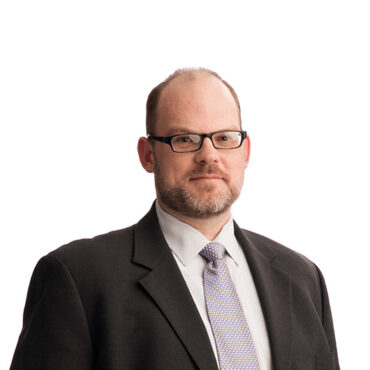
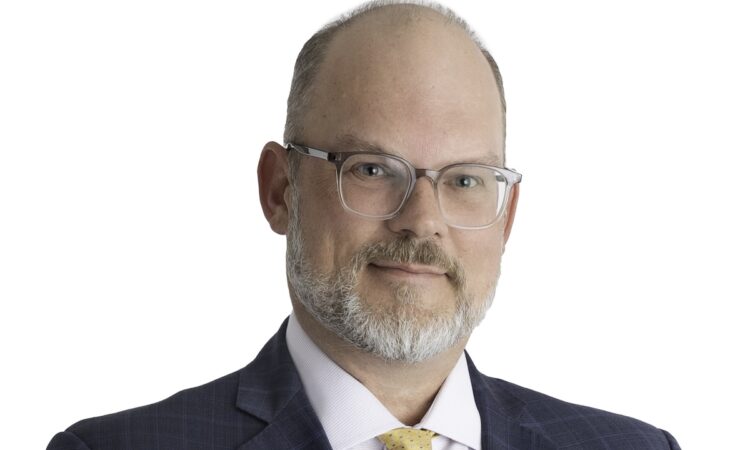
Attorney Peter Nelson joined the Minneapolis-based Dorsey law firm in 2008, which was defined by the Great Recession.
In July, he became the firm’s managing partner, who’s now charged with growing the firm’s business during the Trump administration, which has demonstrated an appetite for constant changes in government, business, and the economy. For instance, U.S. companies and consumers are attempting to adapt to the highest tariffs in the nation’s history since the Great Depression in the 1930s.
Nelson, a banking industry lawyer who graduated with a history degree from Carleton College in Northfield, acknowledges the extreme uncertainty during this period in U.S. history. But he’s clearly focused on how Dorsey’s 620 attorneys can guide clients through the uncharted waters.
“We’ve got fantastic practices that really can help support our clients who are dealing with the uncertainty, who have a lot of questions, who will be directly impacted,” Nelson said during a Twin Cities Business interview at the firm’s downtown Minneapolis headquarters.
In particular, the current environment has created demand for Dorsey attorneys with expertise in government solutions and investigations, immigration, labor and employment, and customs.
“They have been beyond busy dealing with helping to navigate what is an ever-changing landscape,” Nelson said. “We have clients that are coming to us with concerns about what is coming and how they’ll need to manage it as well as clients that are directly impacted and need to actively manage it because it’s really happening to them.”
Recent activity in mergers and acquisitions has been a mixed bag. While deals are picking up in some economic sectors, Nelson said other types of businesses are holding off on M&A transactions because the unknowns in government actions and economic conditions are too great.
“We were working for a long time with clients that were trying to bulk up, amass inventory in advance of tariffs,” Nelson said, and they leveraged their balance sheets to do so. “All of that
takes away from some of the strategic investments that those guys might otherwise be doing,” he said.
Nelson’s climb at Dorsey
While Nelson has a surname that’s extremely common in Minnesota, he actually grew up in New Jersey. His Carleton experience put him on a trajectory to become a long-term Minnesotan.
“I came here for college, where I met my now wife,” he said. “The two of us moved to Texas after college. She went to graduate school at the University of Texas in Austin.” Even though his father and an uncle practiced law, Nelson didn’t immediately go to law school after earning his bachelor’s degree.
“I started off as a paralegal,” he said, and then got an attractive offer to go to law school at the University of Houston. Nelson, now 52, began practicing law in Houston. After several years of living in Texas, Nelson and his wife decided to return to the Midwest.
“Minnesota was a logical place for us to land,” Nelson said. “My wife’s entire extended family is in the Twin Cities. I’ve got family here as well.” The couple also had Carleton friends living in the metro area. “This was a place that made sense.”
Potentially more challenging was finding the right law firm for Nelson. “I wanted to move away from being at a smaller office of a large firm,” which was his experience in Houston. He wanted to work in a large office of a large firm, and Dorsey was a good match.
“They had a very strong finance and restructuring practice group back then,” which was called the banking group, he said. In his early tenure at Dorsey, Nelson focused on private equity matters as well as some energy work that he brought with him from his practice in Houston.
Nelson became a partner at Dorsey in 2011 and not long after achieving that milestone assumed his first leadership role. That was as co-chair of the banking and financial institutions industry group, which served to build the Dorsey brand within the industry. The role involved attracting new clients and new attorneys who could expand the firm’s expertise within the industry area.
He also served as a co-leader of the finance and restructuring group and on Dorsey’s policy committee, which functions as a board of directors. The policy committee selected him to succeed Bill Stoeri as managing partner.
Nelson began his three-year term as managing partner on July 1, and the role is a full-time commitment. He won’t be juggling it with a law practice. “I frankly began thinking about taking on this job as a result of the work I was doing on the policy committee,” Nelson said, which included strategic planning and analyzing the core business aspects of the firm.
Dorsey’s legal profile
Founded in 1912, Dorsey has been home to several attorneys who were prominent in politics or the judiciary. Harry Blackmun, who was nominated to the U.S. Supreme Court by Republican President Richard Nixon, practiced law at Dorsey. So did Walter Mondale, one of Minnesota’s most well-respected Democrats, who served in the U.S. Senate, as vice president, and as U.S. ambassador to Japan.
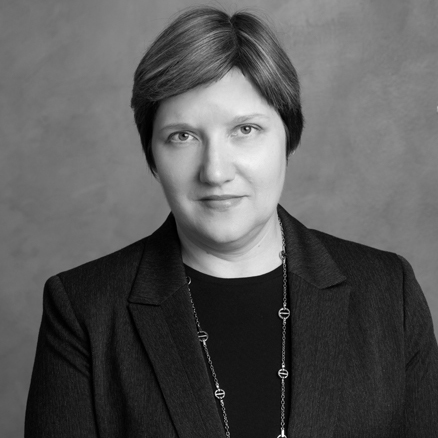
About 20 years ago, Marianne Short became Dorsey’s first female managing partner. In the United States, Short was among the first women to serve in that leadership role for one of the nation’s 100 largest law firms. Short had been an active litigator, represented some of the firm’s biggest clients, and served on Minnesota’s Court of Appeals for a dozen years.
Dorsey has been doing legal work for some of the state’s largest corporations. “Banking has always been a core part of the firm’s fabric,” Nelson said. U.S. Bank is a longstanding client, and U.S. Bank’s relationship with Dorsey can be traced to the law firm’s early years of existence.
“We’re an international law firm,” Nelson said. “We leverage our platform.” By being a full-service firm with a broad range of practice groups, he said that Dorsey has the capacity to provide legal services to global companies.
Among the large Minnesota-based clients are UnitedHealth Group and Mayo Clinic in health care and Land O’Lakes and CHS Inc. in the agriculture sector.
Dorsey operates 21 offices, including 15 in the United States and two in Canada. It has overseas offices in London, Hong Kong, Shanghai, and Beijing.
The American Lawyer, an industry publication, annually collects data from the nation’s largest law firms. For the AmLaw list released in 2025, Dorsey ranked 101 based on gross revenue, which was $512.9 million. The data used in the ranking was for fiscal 2024, when Dorsey’s net operating income was $200.7 million and its profits per lawyer were listed at $367,000.
“We’re very proud of the financial stability that we have,” Nelson said. “We think that’s actually an attractive selling point and part of what we can build on from a growth perspective.”
Nelson’s growth strategy
Like the CEO of a corporation, Nelson is focused on growing the law firm’s revenue and profitability. He’s working with a core group that wants to “add good quality and profitable practices and good quality headcount.”
Minneapolis is the largest Dorsey office, with 201 attorneys. That’s followed by Salt Lake City, with 60 lawyers. New York and Seattle are in the range of 50 to 55 attorneys apiece, while Phoenix is the fifth-largest firm office, with 45 attorneys.
“We’ve got a Minneapolis growth initiative,” he said. “This is a phenomenal city.” Nelson used the term “disruption” to characterize what’s occurred in the Twin Cities legal market over the past 10 years as some Minneapolis-based firms merged into large regional or national firms. In addition, some of the nation’s largest law firms opened offices in the Twin Cities to attract business from some of the state’s biggest corporations.
“We’re starting to see opportunities for some of the more historic legacy firms” like Dorsey to “reclaim some of the ground,” Nelson said.
Law firms can expand by adding new practice areas, opening offices in new cities, and hiring more attorneys to deepen their expertise and rosters in existing practices. Nelson is contemplating all of those approaches.
What recently transpired in New York is a strong example of how Nelson wants to build Dorsey’s talent pool of attorneys.
“We’ve been in New York for a long time, which has helped us establish a reputation there,” Nelson said. Dorsey has emphasized its commercial litigation competencies in New York, where the market for legal work is extremely competitive.
“So the commercial litigators that we just brought in fit very well within a very established set of practices there,” Nelson said. In late July, Dorsey announced that four attorneys from the Cozen O’Connor law firm would be joining Dorsey’s commercial litigation group in New York. Dorsey described those attorneys as having a track record of handling “highly sophisticated, complex business disputes in both state and federal courts around the country.”
The ways Dorsey entered the Dallas, Phoenix, and Boise markets offer lessons for expanding to new cities as well as building firm offices, Nelson said.
In Dallas, “when we first started, it was a group of finance lawyers that fit very well with the finance practices that we already had in Minneapolis and New York,” he said. “That started the investment in the market, although we have since grown that to be a full-service firm approach.” The Dallas office, which opened in 2017, now also includes litigators and corporate and real estate attorneys.
In 2022, Dorsey opened its Phoenix office with finance attorneys and then added attorneys with other specialties. Nelson sees similarities in Dorsey’s expansion in Dallas and Phoenix. “They’re very strong legal markets with great opportunities because of exponential growth that they’re realizing, both in terms of population and inbound businesses,” he said.
Beyond New York City, Dallas is a major U.S. financial hub. As evidence of that fact, Nelson pointed to the 800,000-square-foot building that is being constructed in Dallas for Goldman Sachs.
“We have a very strong Mountain West presence,” Nelson said, so Dorsey opened a Boise office in 2023. It already had offices in Denver, Seattle, Salt Lake City, and Missoula, Montana. “When an opportunity arose in Boise, it made a lot of sense. There were a lot of synergies,” Nelson said. The Boise office has focused on mergers and acquisitions, technology, and energy and environmental resources-related work.
Is Nelson targeting a particular city or state for expansion? “If you look at our platform, the obvious area of the country that we don’t have a presence right now is the Southeast,” Nelson said. “Whether that’s Atlanta, Charlotte, the Research Triangle [in North Carolina], some of the larger Florida cities, those are all good legal markets that would be attractive,” Nelson said. “What the strategy is to get invested in one of those markets, in part, depends on what opportunities arise. I’ve been saying that we’re not focused on only one [growth] strategy.”
Nelson stressed that he’s not emphasizing geographic expansion over other forms of growth. “We’ll be looking at making sure we’ve got enough strength in all of our existing offices, too,” he said. “We’re not done growing in each of our existing markets. It’s not just about new markets.”
Hockey passion outside the law firm
When Nelson isn’t doing work for Dorsey, there’s a high probability that you can find him in a hockey rink.
“I grew up playing hockey in New Jersey,” Nelson said. “I played club hockey at Carleton, and I still play men’s league hockey once or twice a week.”
A Minneapolis resident, he’s been playing with the same group for about a dozen years. “We play either Monday or Sunday nights over at Parade Ice Garden in Minneapolis,” Nelson said.
He plays in a men’s league called the Adult Hockey Association, which Nelson said is the second-largest adult hockey organization in North America. The season opens in October.
Nelson was a defenseman in high school. “Since then, I’ve been mostly a wing or a center,” he said.
Both of his sons also played hockey. “I was the head of hockey operations for my kids’ youth hockey association, the Minneapolis Hockey Association, including three years after my kids stopped playing,” he said.
Nelson has been a Minnesota Wild season ticket holder for 13 years. Like his fellow Wild fans, he’s waiting for Wild general manager Bill Guerin to sign a new contract with Wild forward Kirill Kaprizov, one of the top players in the NHL.