

Rethinking the Drive-Thru Ban
It’s been five years since Minneapolis banned drive-thrus, and St. Paul has been looking at a similar prohibition, driven by outside advocacy groups who today lead most policy initiatives in the city’s governance. The St. Paul City Council considered an ordinance, but it was tabled until September, awaiting further study.
City Council President Rebecca Noecker told TCB the city’s ban would be different from Minneapolis’ because it would not ban drive-thru banks or pharmacies. St. Paul would ban the construction of new drive-thru restaurants and coffee shops. Existing drive-thrus would be grandfathered in, but not if there had been substantial renovations to the building. (For example, McDonald’s has been radically redesigning its store exteriors nationally, but that process is mostly finished in the metro area.)
The idea to ban drive-thrus in Minneapolis came about as part of the city’s 2040 plan to reduce vehicle emissions, litter, noise, and light pollution, according to the law. The ban had the concomitant effect of snuffing out chain fast-food/coffee shop expansion in the city, which some have speculated was a secondary goal of the council.
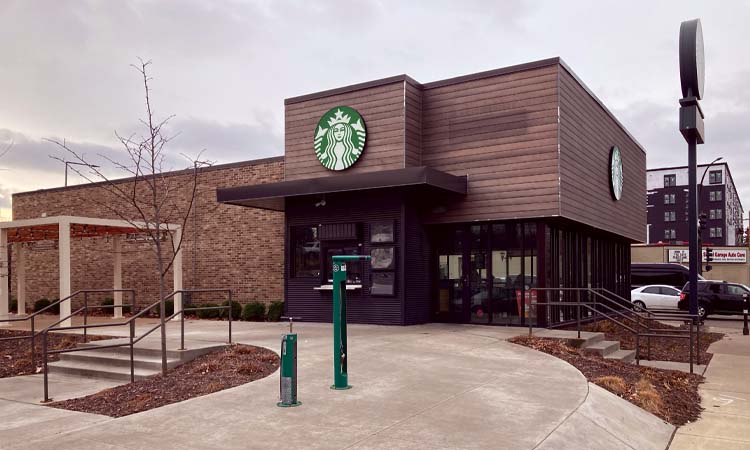
St. Paul had similar motivations. The proposal came about because of concerns from environmental advocacy groups, congestion problems driven by a Starbucks at Marshall and Snelling, and the city’s push to reduce auto activity.
“In the quick-serve business, drive-thrus are the single most valuable piece of real estate. People like them, and they’re not going away.”
—Jonathan Maze, editor, Restaurant Business
But Noecker is concerned about the impact the ordinance could have on business. It was her suggestion to slow consideration as St. Paul struggles with declining business and housing starts. “We really, frankly, have much bigger problems to worry about,” Noecker says, adding that the council must find the balance between the goals of the advocacy groups and the city’s economic climate.
Contrary to the assertions of ban proponents, most food businesses that operate drive-thrus will not open without one; Minneapolis and St. Paul simply lack the density to keep these businesses viable just with walk-in traffic, says Jonathan Maze, the Twin Cities-based editor of Restaurant Business. He says drive-thrus generate a majority of sales for fast-food (and, increasingly, coffee) businesses. Bans push consumers and their sales tax payments outside the city, since most parts of Minneapolis or St. Paul are no more than 15 minutes from a suburb.
Read more from this issue

Maze points out new drive-thru-only Taco Bells and fast-growth coffee concepts Scooter’s and Dutch Bros. “The city of Minneapolis is costing itself Culver’s, Freddie’s, Raising Cane’s, Portillo’s, Chick-Fil-A—strong growth concepts people want to eat at that just will not open” as a result of the ban.
“In the quick-serve business, drive-thrus are the single most valuable piece of real estate,” Maze continues. “People like them, and they’re not going away.”