


2024 Entrepreneur of the Year Winners
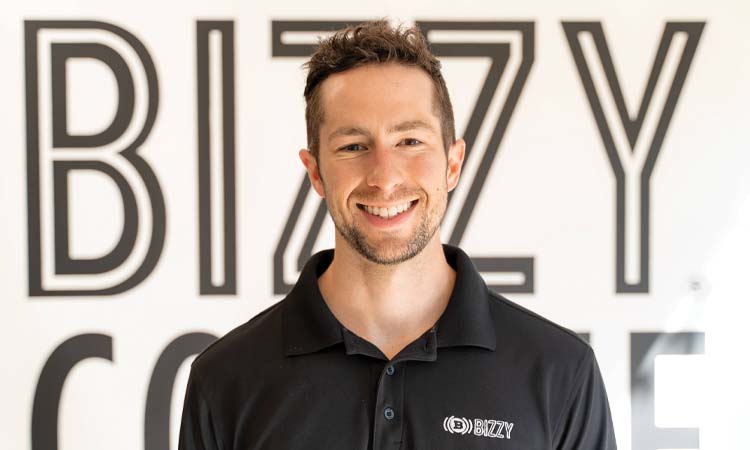
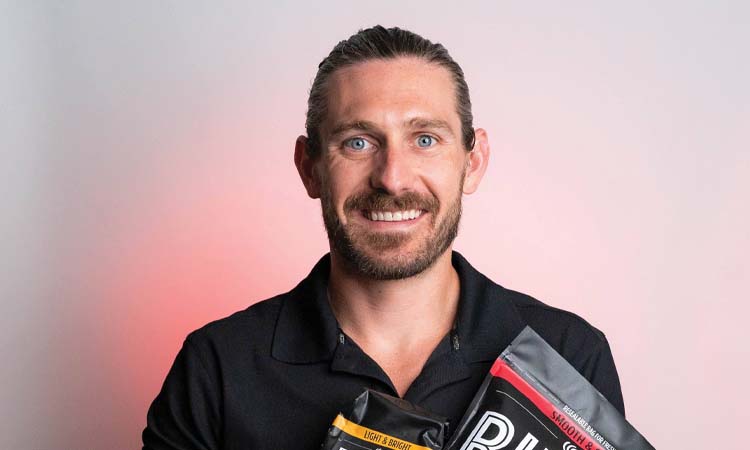
Alex French
Co-founder and CEO
Andrew Healy
Co-founder and COO Bizzy Cold Brew, Minneapolis
Fed up with paying $5 for a coffee, Alex French and Andrew Healy started making their own cold brew in 2013 and quickly realized they had the know-how and the product idea to disrupt the coffee category.
At the time, cold brew wasn’t popular at mainstream coffee shops. It was a drink made at home, largely by younger consumers like French, who started his career in consumer research at General Mills, and Healy, who was in research and development engineering for St. Jude Medical.
In the evenings, the childhood friends and roommates set to work creating a cold brew concentrate that could be bottled and sold to people who didn’t have the time or inclination for home brewing but wanted a more economical coffee option than Starbucks. Nicknamed the “Bizzy brothers” in middle school, French and Healy launched Bizzy Cold Brew in 2016 on Amazon—one of the first in its category—where it became the best-selling cold brew brand.
“Amazon was important to building the brand,” French says. Today, however, the online giant represents just 10% of Bizzy’s sales, and that’s ground coffee for the home brewers. No longer a niche product, Bizzy’s refrigerated ready-to-drink bottled beverages are now sold in more than 7,500 stores nationwide including Target, Kroger, Costco, and Publix.
“It’s become mainstream,” French says. Bizzy Cold Brew, made with organic coffee and water, boasts twice the caffeine of leading brands in its category of refrigerated coffee drinks, a fact the founders lean into. “We’re the healthiest energy product on the market,” French says. “Our purpose is to energize busy people.”
Bizzy had raised about $10 million to date (60% equity, 40% debt) and has expanded its Brooklyn Center manufacturing facility twice since 2021. In 2023, the company produced its first sustainability report and set a goal to be carbon neutral by 2025. —Allison Kaplan
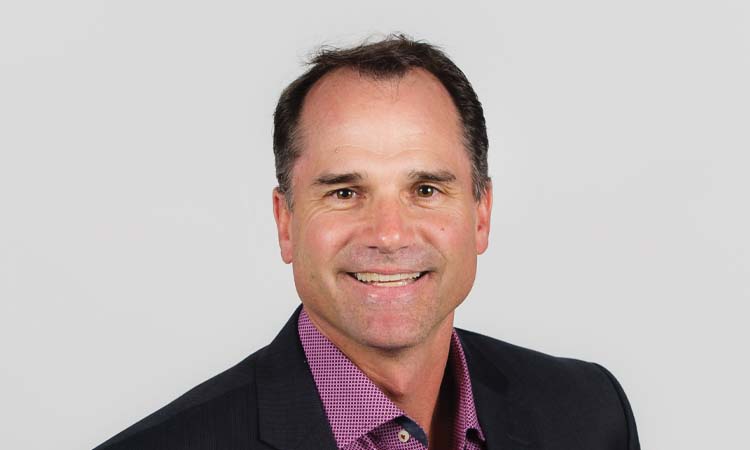
Ron Konezny
President and CEO, Digi International, Hopkins
Where many see uncertainty, Ron Konezny sees opportunity. In 1996, he left a high-paying consulting gig with a “cushy trajectory” to launch his own tech business. Known as PeopleNet, the company was an early pioneer in onboard computing and monitoring.
“I was smart enough to avoid the obvious obstacles, but dumb enough to think I could do it,” Konezny jokes about his decision to build a business.
The company’s mobile communications systems caught on in the trucking industry, and, in 2011, Konezny sold the business to Trimble Inc., a larger, publicly traded software company. He stayed on board with new ownership until 2014, when another opportunity arose.
The board of tech company Digi International wanted to hire Konezny as CEO, but he had some reservations. At the time, the company had assets in excess of its market capitalization, which was a signal from investors that the company was “essentially worthless.”
Digi was still focused on selling hardware for industrial applications like utility providers. Konezny saw an opportunity to transform the company’s business model to subscription-based revenue streams for the same customer base. “I’m addicted to recurring revenue,” says Konezny, who laid out his plans to the board and signed on as CEO.
He warned leadership that it wasn’t necessarily an “overnight success recipe.” But, like Konezny’s earlier bet, the move paid off. Under his leadership, Digi grew notably. In 2014, the company reported total revenue of almost $193 million; in 2023, Digi’s revenue exceeded $444 million. Today, Digi employs more than 800 people.
For Konezny, the key to Digi’s success is “hardware-enabled recurring revenue.”
“We’re not disowning almost 40 years now of making very reliable, long-lasting products; we’re just saying that’s not good enough,” he says. “You have to lead with software, then figure out the right hardware for the job.”
Looking back at his entrepreneurial journey, Konezny says self-determination has been pivotal: “The best bet you can make is on yourself.” —Dan Niepow

Erin Pash
CEO and founder, Ellie Mental Health, Mendota Heights
Erin Pash is on a mission to destigmatize mental health, and she’s designing a new care model in the process.
A therapist who started her career working for Dakota County, Pash saw problems on both sides of the clinical experience. Therapists were often underpaid and overworked, which pushed them into private practice, where their services are less accessible to clients who can’t pay out of pocket. For clients, seeking mental health services was seen as something to hide.
Ellie Mental Health is on the road to becoming the first nationally recognized mental health chain, with more than 200 franchise locations in 32 states and licenses sold in the 48 contiguous states.
Ellie offers flexible schedules that give therapists the advantages of a private practice with the security of corporate work.
Through the Ellie website, patients can select in-person or online service and zero in on specific types of treatment, ranging from general therapy for individuals, couples, or children to specialized types of treatment like grief counseling or LGBTQIA+ support.
Within a year of opening her first clinic in St. Paul in 2015, Pash had requests from therapists wanting to join. She opened several Minnesota clinics before selling her first franchise license in 2021.
Overwhelming interest out of the gate prompted her to partner with private equity group Princeton in 2022. Pash says the business will grow by 40% this year. She expects it to grow again by 50% in 2025 as she hopes to take her concept international.
Says Pash, “You will continue to see Ellie incorporating new ways of doing things in health care that have never been done before to truly meet the mission to transform the culture of mental health.” —Allison Kaplan
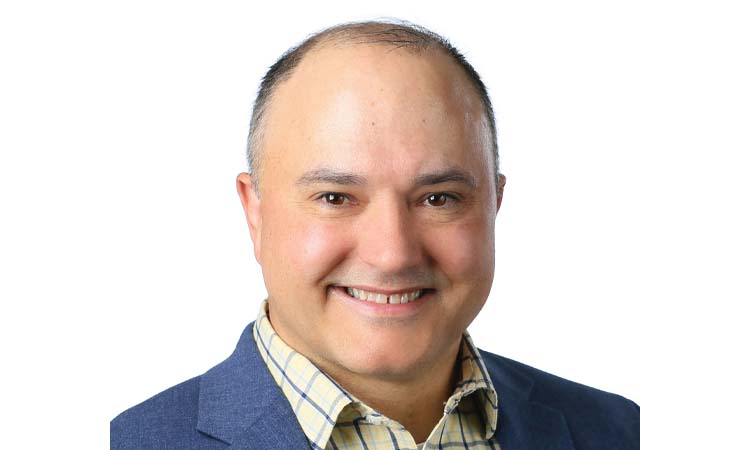
Rick Bauerly
Founder and CEO, Granite Equity Partners LLC, St. Cloud
Entrepreneurship was something Rick Bauerly was born into. He grew up working in the family business, Bauerly Cos., founded in 1968, the year of his birth.
As Bauerly grew, the family business evolved from a side gig renting dump trucks to becoming a large private business. This intimate lens into running a business, from working as an equipment operator at a young age to being instrumental in the sale of Bauerly Cos. in 2001, sparked the idea for his next venture. He also drew on the knowledge he’d developed earning an MBA and MPA at Harvard.
Bauerly saw up close the transition and retirement period that business owners like his parents and uncle experienced, along with the limitations of building generational wealth.
In 2002, he launched Granite Partners in St. Cloud. He describes it as “a mission-driven private investment and holding company that acquires and holds great businesses when their owners are retiring and looking for a long-term home for their stakeholders.”
Bauerly was 32 and newly married when he took the risk of taking out a second mortgage to help fund the startup firm.
Along his entrepreneurial journey, he faced financial challenges—including the loss of equity in some investments and the Great Recession—but he remained committed to developing a new investment model.
“Serving other people keeps us all going—growing and creating impact for others,” he says.
Granite Partners is defined by a “long-term, evergreen ownership structure” and features a “buy-to-hold orientation” for its assets. “We’ll grow the company and not squeeze the company,” he says. The firm’s model was a success and produced a major impact.
Today, Granite Partners governs 10 operating companies across diverse industries, from biomaterials to water treatment. These companies employ about 3,300 people.
Over the past 22 years, Granite Partners entered 16 end markets through its 10 operating company investments and 22 add-on acquisitions. —Tina Nguyen
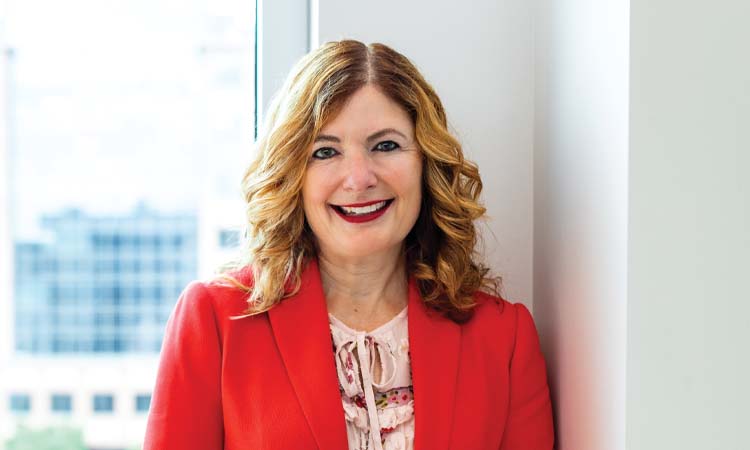
Beth Wozniak
Chair and CEO, nVent, St. Louis Park
In 2023, nVent, a manufacturer of electrical connection and protection products, introduced 95 new products.
It’s a landmark achievement for Beth Wozniak, who has been the sole CEO of nVent since it was spun off by Pentair in 2018. An engineer by training, Wozniak says she and her team have been focusing on high-growth vertical businesses, new products, and innovation.
One of those high-growth verticals is data centers, in which nVent offers liquid cooling solutions. “You’ve heard a lot about AI and these new chips are hot,” she says. “We’re solving heat problems in data centers, so you see the complete alignment to growth.”
The company produced double-digit revenue growth in 2023 when sales rose 12% to $3.3 billion. Beyond organic growth, nVent is expanding its product lines and market share through acquisitions. In mid-July, it closed on a $695 million purchase of Trachte, which Wozniak says will expand its enclosures portfolio, particularly with products serving power utilities, data centers, and the renewables sector.
“We understand customer needs,” Wozniak says, and she’s emphasized the importance of inventing and manufacturing new products more quickly. She notes that nVent employees looked at “the end-to-end process of how we design, develop, launch, and commercialize products.”
On average, it had been taking nVent two to three years to get a new product into the marketplace. “We now have that down to less than a year,” Wozniak says.
Leaders examined the time it was taking to create and produce new products by studying what was occurring in engineering, operations, marketing and sales departments. “We were looking at that process and what needed to be done—not so much in a sequential way, but concurrently—to reduce that cycle time,” she says.
For companies that use nVent’s electrical and fastening solutions, Wozniak says that nVent has developed products to save their workers time. “We have some flexible power connections that are labor saving, easier to install, and more highly reliable,” Wozniak says. —Liz Fedor