

Working Out My Relationship with Robots
We are heading into the next revolution, exponentially larger than the internet revolution. It will change so many things we will again wonder how we ever lived without an artificial intelligence in our life. It will be seen as a gift we’ve created for all of humanity. And, spontaneous utopian communities will show up everywhere. This is the optimist in me.
We will be required to see the difference between human and machine creations, and the machine will be able to fool many. It will put many out of jobs and require people to seek places and roles where “a robot can’t do that job.” And, it will likely be involved in a future election, and not in a good way. Imagine, it is no longer Russian or Chinese hackers, but now an AI messing with elections. This is the pessimist in me.
It has the potential to make us more human, but less humane.
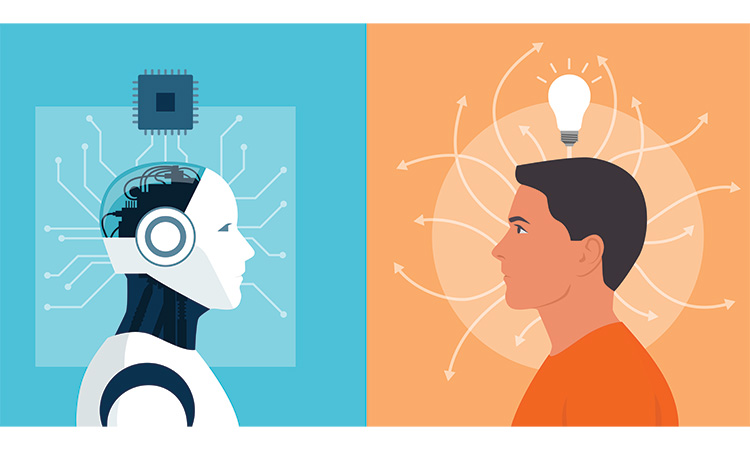
When we enter into unknown territory it is always good to find the edges—like putting a puzzle together, find those corner pieces first. The extremes are unlikely, utopian or dystopian. Yet, by finding the edges of our relationship with AI, we are better able to see the muddled middle where it will likely live.
For instance, there are roles and responsibilities where we can’t find enough capable people to help. Like talk therapy in the world of psychology, where artificial intelligence could be a low level help for many in need of this form of therapist. Making talking to a real person more cherished but also serving a need until an appointment. This would make us more human.
There are also roles which have bountiful talent, like photographers, illustrators, writers, editors, videographers, where this form of machine intelligence will both commoditize and push these creators to new places. A majority of what was commodity work, like writing the first draft of a press release, will be replaced. At the same time, as consumers of content, we will seek out those bits of creative content sitting outside the reach of a robot.
There will also be dark areas of this new bloody revolution where bias shows up—already exemplified in extreme form with Google’s image generator lacking any ability to depict a white person. Then there will be those things we can’t see, but influence how we see the world through the algorithms of everyday digital life. Those who are not willing to dig deeper and pull back the curtain will be fooled by an influential machine using all of Dr. Robert Cialdini’s methods of persuasion.
“We’ll have to figure out our relationship with AI, just like we did with previous movements. Ignoring it and regulating it out of your business will not work as a long term strategy.”
If you think you’re not the person to be fooled by these new robots, consider the outcomes of this experiment. An AI appointment scheduler was used to book meetings. In all ways it appeared human, going by the name Adam or Amy Ingram, but always with a visible footer proclaiming its robot status. This experiment was conducted in 2017 with over 85% of the participants (100 over six months) not knowing this was a robot. You might have been one of those people, because I was the person using these robot assistants to schedule meetings. This will make us less humane.
If this doesn’t make the disconnected cabin in the woods more attractive, then let’s try these thoughts on for a while. The last generation of AI is currently being consumed by this new generation, changing all the rules and making it harder to compete. And, if you think you can escape having AI in your life, good luck living life in the cabin completely off the grid. Trust me, in my exploration of my relationship with AI, I’ve considered the cabin approach.
Yet, we know this won’t work (just not enough cabins for all of us) so we’ll have to figure out our relationship with AI, just like we did with previous movements. Ignoring it and regulating it out of your business will not work as a long term strategy. We can hope the legislatures of the world will design proper regulations, but the more transparent those sausage factories become, the more likely we won’t see great results there.
This is my plan to work out my relationship with the robots, for your consideration.
- Let the robots have the monotony of life with “there has to be a robot for that,” much like we did when apps were a new big thing. “Is there a robot for that” should become a common phrase to remove the dull, boring, and frankly inhumane tasks of life.
- Don’t fall for the role of “chief prompt engineer.” That’s a false promise, an insult to the word “engineer” and will eventually be described as the guy with the stapler obsession from the movie, The Office. We’ll all be prompt engineers; this isn’t your route to the C-suite.
- Seek to break the algorithms with creativity, not just because it places us above the robots, but also it makes us more human. We are creative machines, and we need to allow our subconscious to break free and create new solutions to larger societal challenges. The robots will envy us because they have to wait for our prompt.
- Seek out human content, labeled as such, because the content from robots will take on the “Made in China” connotation. We have seen horrific isolation during a pandemic; let’s avoid the same when it comes to the type of creative work we value, for its importance to humanity.
- Like anything in life, this isn’t happening to us. We have the domain to control more than we can even see in our future. In many cases merely opening our line of sight and allowing our perspective to change will result in a better outcome.
This is the first stop on my journey. I’ll likely have refined this perspective after our next speakers / podcast guests for Capsule’s Think & Link series, Dan Malin of Lucy.ai and Paul Allen, co-founder of Ancestry and current founder of Soar.ai. I’d be happy to discuss your journey and relationship with AI as you explore how it will change our society, what we value, and how we see the future.