

Constellation’s Research Lab Begins Making Grants
Andrew Dayton, founder of the Minneapolis-based Constellation Fund, is unveiling a companion entity dedicated to long-term research that identifies the most effective poverty-fighting solutions.
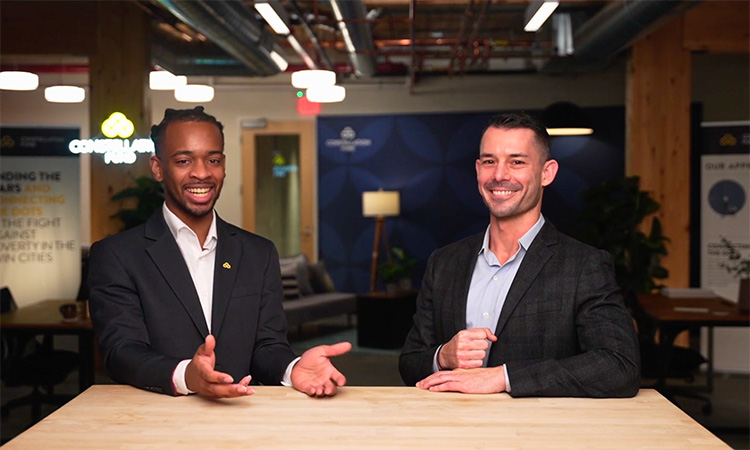
Called the Constellation Lab or CoLab, the groundbreaking research initiative has been in the works for over a year. Dayton worked with Matt Morton, the new program’s executive director, to develop it.
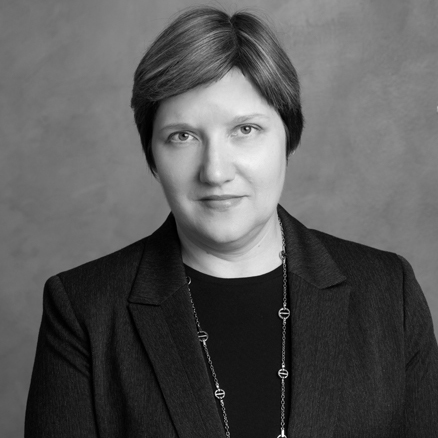
Morton, who is based in New York, holds a doctorate from the University of Oxford, where he focused his studies on evidence-based social intervention. Most recently, he’s worked for the University of Chicago and the World Bank.
In late 2017, when Dayton was conceiving his philanthropic approach for the Constellation Fund, he wanted a major element of the new foundation to involve extensive data-collection and insightful evaluations. He maintained the importance of scaling up those nonprofits that are achieving the best results in achieving economic empowerment and financial security for low-income people.
“Even with all that information, there is oftentimes still more that we wish we knew,” Dayton said in an interview with Twin Cities Business. Long-term outcome data—providing information about how people have fared over many years—is difficult for individual nonprofits to gather, whether it’s from an established program or a project intervention.
“What we saw was an opportunity to build a research investment arm, in partnership with a wonderful philanthropic partner, to help answer some of those key unanswered questions,” said Dayton, CEO of the Constellation Fund.
The Foundation for Educational Research and Development, FERD for short, is the sole funder of CoLab’s research efforts.
After Twin Cities-based FERD funded the start-up of CoLab, the program is now beginning to award research grants.
FERD has made “a long-term commitment and it’s significant,” Dayton said. “We’re talking about well into a seven-figure budget for research investment per year starting now. That type of commitment to this type of research is unprecedented, not just locally, but nationally.”
Impact forum on Feb. 7
To introduce nonprofits and other stakeholders to the work of CoLab, the Constellation Fund is hosting a virtual Impact Forum on Wednesday, Feb. 7.
During the event, participants will learn how CoLab’s work interacts with the Constellation Fund’s grantmaking, the elements of conducting a good longitudinal research study, how CoLab’s work and research agenda will be influenced by lived expertise of community members, and how long-term research findings can spur systems change to better help people exit poverty.
In addition to Dayton and Morton, Wednesday’s forum speakers include: Saanii Hernandez, COO of the Constellation Fund; Matt Klein, chief program and impact officer, Robin Hood Foundation; Brittany Lewis, founder and CEO, Research in Action; Quincy Powe, Twin Cities Opportunity Youth Network manager, Youthprise; and Abigail Wozniak, director, Opportunity & Inclusive Growth Institute, Federal Reserve Bank of Minneapolis.
The Constellation Lab leadership has defined its mission as “catalyzes, funds, and supports actionable research on poverty-fighting solutions.”
In the TCB interview, Morton said, “CoLab is not a research institution.” He was making the distinction that CoLab is a financial investor in research that it believes can have a substantial impact in alleviating poverty.
A good portion of Morton’s job will entail creating a research agenda and vetting research partners. He and Dayton began their work with a blank canvas. “We started this, not just to look for programs to conduct evaluations and publish those evaluations, but we started with a much more collaborative approach,” Morton said.
“We started with a lot of listening,” he said. “In the first several months on the job, I had conversations with about 130 people representing community expertise, other researchers, funders in the state, nonprofit leaders, public system leaders, and policymakers.”
Morton wanted to learn what research investments could make the greatest difference in Minnesota, and how to approach financial research investments that could drive systemic reforms and have a “population-level impact on intergenerational poverty.”
CoLab begins grantmaking
CoLab isn’t a free-standing organization. “It reports up through to me and to our board of directors,” Dayton said, but CoLab has its own funding source in FERD.
Grants that are awarded by the Constellation Fund come from donations raised by Dayton and others within the organization.
“While Constellation’s work we think is a great pipeline for research investment ideas and opportunities for CoLab, we wanted CoLab to also look outside of Constellation’s portfolio,” Dayton said.
“One of the limitations for Constellation is we are not in a position to evaluate a brand new idea, a new pilot, or a new practice that is emerging from community. There needs to be an existing evidence base for Constellation to be able to conduct evaluations,” Dayton said.
“CoLab is in a position to be the entity that captures that new evidence,” Dayton said. “A couple of the interventions, ideas, and opportunities that Matt and his team are exploring exist outside of Constellation’s portfolio.”
CoLab has made its first grant and it’s not a longitudinal impact evaluation, which is the type of research that will be a major aspect of CoLab’s investments.
The first grant award went to a Minneapolis-based organization called Research in Action, which is led by Brittany Lewis, a former university professor and scholar-in-residence at the Federal Reserve Bank of Minneapolis.
CoLab is financially supporting Research in Action’s Pass the Mic project. “That involves collaborating with and listening to families and young people currently living in poverty about what they see as their needs for long-term thriving and overcoming intergenerational poverty,” Morton said.
Research in Action will survey about 1,000 people from Ramsey and Hennepin counties in the Twin Cities and St. Louis County in northeastern Minnesota. Based on the survey results, Research in Action will then conduct in-depth focus groups to learn more about the people’s needs and priorities.
“What’s really interesting about this Pass the Mic project is that it’s not just asking what they need right now,” Morton said. “It’s inviting them to imagine what types of solutions would be most effective for them, their families, and their community for long-term thriving. In that way we can focus CoLab’s investment research on the types of long-term solutions that advance community members.”
While many of CoLab’s research investment dollars are targeted to organizations outside of the Constellation Fund’s grantees, two of the early research projects are likely to come from Constellation’s portfolio, Dayton said.
Grantee contracts had not yet been signed, so Dayton and Morton didn’t disclose organizational names or grant sizes.
But they did describe the topics of the research work.
One of the research studies involves a program to help low-income high school students obtain post-secondary degrees and get on a pathway to long-term career success. Financial aid and professional advising career support are components of this project.
“The other one is a study to strengthen an early childhood development home visiting model that already has good evidence for it,” Morton said. In particular, he added, the research will examine what’s needed in the service delivery “so that it’s more responsive to today’s demographics of families that are participating in these programs, which are very different from the demographics that participated in the programs 20 years ago.”
Families who previously took part in the programs will be asked what kinds of supports would have been useful to them beyond the home visits, so they could escape poverty and move into the middle class.
“We don’t know if that’s cash, or housing assistance, or career counseling,” Morton said. “We really want to engage families and front-line workers first in defining what would be most helpful that might come alongside of home visiting.”
Both Morton and Dayton expect to learn a great deal from the first three research investments—about the substance of the research project findings and the approach to selecting and supporting research efforts.
“There are 30 nonprofits with Constellation’s [grantmaking] portfolio, which we are deeply passionate about,” Dayton said. “CoLab also has an opportunity to look outside of the portfolio for research opportunities that might not yet be on Constellation’s radar.”
Dayton also emphasized a key point about the flow of dollars within Constellation and CoLab.
“When folks give a grantmaking donation to Constellation, 100% of that is still flowing into our portfolio of grantees,” he said. “We’re not siphoning off a portion of that to pay for this research. That’s funded separately.”
In its most recent grantmaking year, the Constellation Fund awarded more than $4.1 million to 30 nonprofits.
“What’s exciting is that research, as it hits the ground and we start to draw insights from it, will further inform Constellation’s ability to invest its grantmaking dollars even more impactfully,” Dayton said.