


Minnesota’s Campaign for MedTech Prominence
The Twin Cities metro has long prided itself on its outsized contributions to the medical device field, dating back to Medtronic founder Earl Bakken’s introduction of the world’s first wearable artificial pacemaker in the late 1950s. Present-day industry leaders are well aware that the standing isn’t permanent, however, especially as cities across the world invest in innovation.
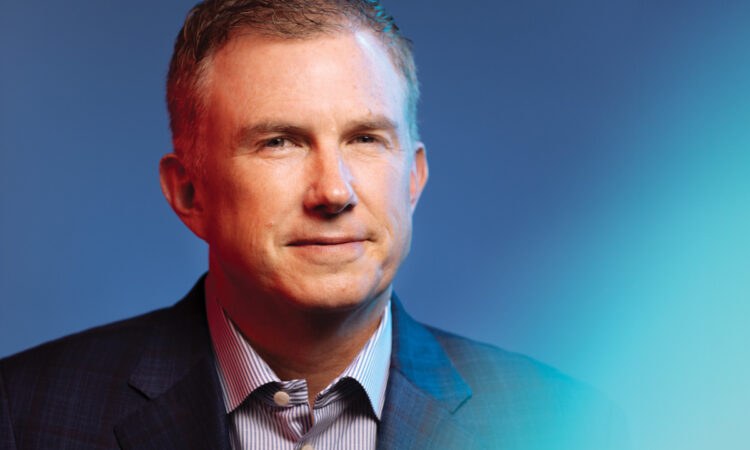
Geoff Martha, who became CEO of medtech giant Medtronic in April 2020, has been pondering the competition for years. In the wake of Covid-19, he says, many governments around the world began thinking about health care less as an expense and more of an opportunity.
Without a concerted effort to maintain Minnesota’s status, “we could start to erode what we have,” he said in an interview at the company’s operational headquarters in Fridley in January. “Resting on our laurels would be an issue.”
That concern fueled his push for the Twin Cities to jump into a new government-sponsored effort to recognize tech hubs around the country. Formally announced this past May, the U.S. Commerce Department will choose among proposals from regions across the country to award funding. The competition was largely intended to boost the U.S. economy and bolster national security. Medical technology was one of 10 “key focus areas,” so it was a natural fit for Medtronic and a host of local industry partners. Results will be announced by spring.
The competition offers more than prestige and a bureaucratic nod; millions of dollars in federal funding are on the line, which project supporters say could be used to help build out and maintain the Twin Cities medtech industry. Pat Dillon, founder and president of nonprofit MNSBIR Inc., who’s helped field scores of applications for federal grants for Minnesota startups over the years, says it’s a chance to “bring back some of the funding [Minnesota sends] to Washington” in the form of tax dollars.
Other industry boosters maintain that the competition presents a chance to bring thousands of well-paying jobs to the region and would provide a shot in the arm for a once-dominant industry at risk of moving to other parts of the country or the world.
Vying for national attention
The Twin Cities metro has, of course, competed for the national spotlight with varying degrees of success over the years. There was the bid to host Super Bowl LII in 2018 (a win for Minneapolis), then, a similar bid for Amazon’s second headquarters, which ultimately went to Arlington, Virginia, in the Washington, D.C., suburbs (better luck next time).
“When we come together as a community, we have the ability to be formidable and seize these kinds of opportunities.”
—Jodi Hubler, health care investor and adviser
But health care industry advocates and observers say that the proposal to make the Twin Cities a national medtech hub is unique because of the level of collaboration among parties often seen as competitors. Both Boston Scientific and Medtronic, for instance, are in the consortium; big insurers like Medica signed on alongside health care providers Allina Health System and HealthPartners. Proponents say they’re willing to put competition aside for the future of Minnesota.

“When we come together as a community, we have the ability to be formidable and seize these kinds of opportunities,” says Jodi Hubler, a longtime health care investor and executive who serves on the boards of several health care startups.
In October, the Twin Cities took a major step forward in the competition when it was selected as one of 31 finalists out of nearly 200 applicants across the country. Commerce Department officials said that the designation endorsed each region’s “strategy to supercharge their respective technological industry to create jobs and strengthen U.S. economic and national security.”
The economic development organization Greater MSP, which contributed to local bids for the Super Bowl and Amazon HQ2, authored the region’s initial tech hubs proposal, dubbed “Minnesota MedTech 3.0.” In a proposal that brought in voices across medtech and other sectors, the group said Minnesota would “lead a needed transformation to the third frontier of the world’s medical technology industry.”
The competition is part of the CHIPS and Science Act, signed into law in late 2022. That legislation was largely intended to help ramp up domestic semiconductor manufacturing, but it included other components designed to more broadly improve American competitiveness on the global stage.

According to the Commerce Department, the federal government is slated to distribute $40 million to $70 million apiece to as many as 10 hubs. The 31 designated hubs have until Feb. 29 to turn in finalized proposals for a chance at those dollars.
The MedTech 3.0 bid faces stiff competition from other regions: a proposal from Colorado hawks quantum computing; another from Rhode Island and Massachusetts is tackling ocean robotics and sensors. A proposal dubbed the Wisconsin Biohealth Tech Hub is underway in our neighboring state with a focus on personalized medicine.
Read more from this issue

Back to Medtronic
Greater MSP is coordinating the final bid with the help of industry partners. But everyone involved credits Medtronic for driving the collaborative campaign.
“If we’re going to remain the leader, we need to step up our game and accelerate what we’re doing.”
— Geoff Martha, chairman and CEO, Medtronic
For years, the medical device giant had been asked by other companies and foreign governments to help stand up similar health care ecosystems in other parts of the world. Medtronic’s Martha notes that places like Charlotte, North Carolina, and even Ireland, are actively investing in their health and tech industries.
“Other cities in the U.S. and other countries outside the U.S. are intentionally building up medtech hubs, which wasn’t the case even five years ago,” Martha says. “If we’re going to remain the leader, we need to step up our game and accelerate what we’re doing.”
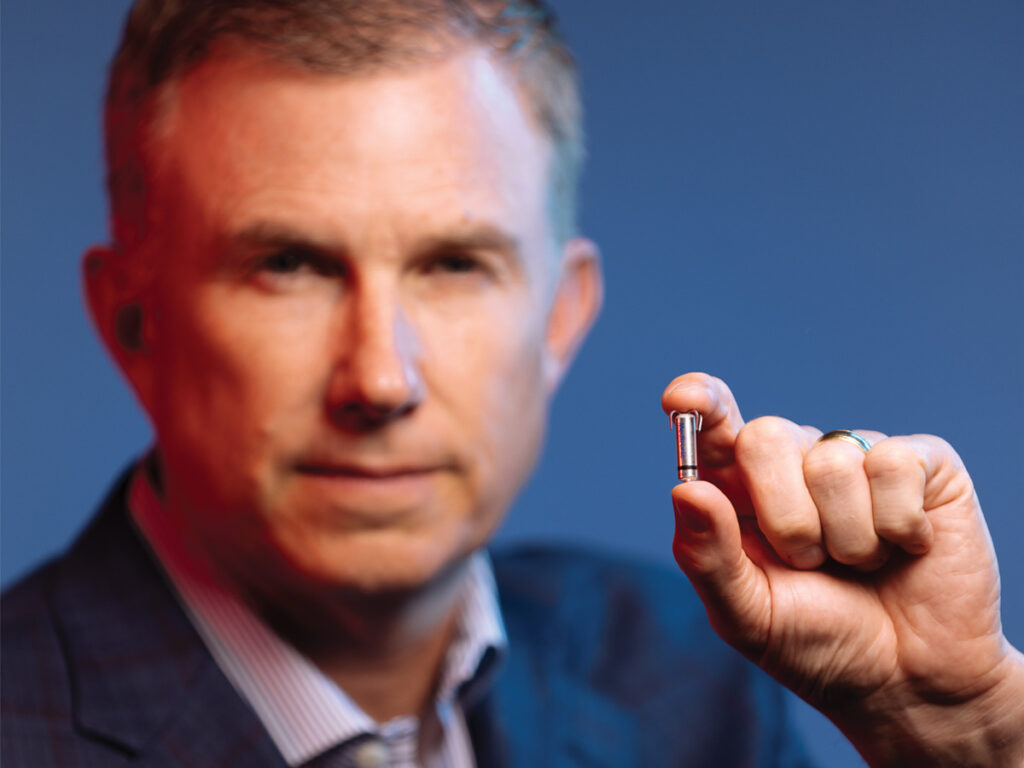
As a global company, Medtronic, which is legally headquartered in Ireland, could have taken up other proposals to build a hub pretty much anywhere in the world. But Martha views Minnesota’s position as a matter of building “strength on strength” instead of starting from scratch elsewhere.
In 2022, well before the competition was announced, Martha approached Greater MSP board chair Tim Welsh about raising Minnesota’s profile. His aim at the time was finding a way to build the medtech industry’s “next frontier” in Minnesota, incorporating rapidly advancing technologies like artificial intelligence to stay on the leading edge.
“He saw the opportunity to create that here,” says Peter Frosch, president and CEO of Greater MSP. “If we don’t, someplace else will.”
Martha asked Welsh if Greater MSP would help out. The answer was a fast yes.
In the months that followed, the nonprofit got to work, pulling together several industry leaders and convening a task force to find ways to strengthen the state’s industry. When the Commerce Department formally announced the tech hubs competition and issued a notice of funding opportunity (NOFO), it was an ideal avenue for Martha’s vision.
By mid-August, Greater MSP had convened a coalition of more than 20 medtech-affiliated organizations to apply for the tech hubs’ designation. The bid had a distinct focus on “smart medtech”—that is, integrating artificial intelligence and machine learning into the health care space. Now, more than 150 individuals are working together to craft a final bid.
A history of collaboration
“[The] modern medtech industry was created in Minnesota and has thrived here,” according to the initial proposal. “Breakthroughs in smart medtech are revolutionizing health care with integrated data, early-stage precise diagnosis, personalized treatment, in-home monitoring, and preventive care. Minnesota will lead this transformation because of our unrivaled medtech ecosystem and proven infrastructure for commercializing technologies that improve health outcomes.”
Lofty goals, but industry advocates say they’re achievable. Medical Alley Association is among the entities helping craft the MedTech 3.0 bid. The Golden Valley-based nonprofit, which bills itself as a “health tech” trade group these days, was established 40 years ago by Medtronic founder Earl Bakken, 3M exec Lee Berlin, and former Minnesota Gov. Rudy Perpich. It’s the type of industry partnership that the MedTech 3.0 group is aiming to replicate in the modern era.
“When you look at the essence of what’s going on in MedTech 3.0, it’s a consortium, and we’re one of the partners,” says Roberta Dressen, Medical Alley’s president and CEO. “It aims to make Minnesota a global leader in the space, particularly in the area of smart technology.”
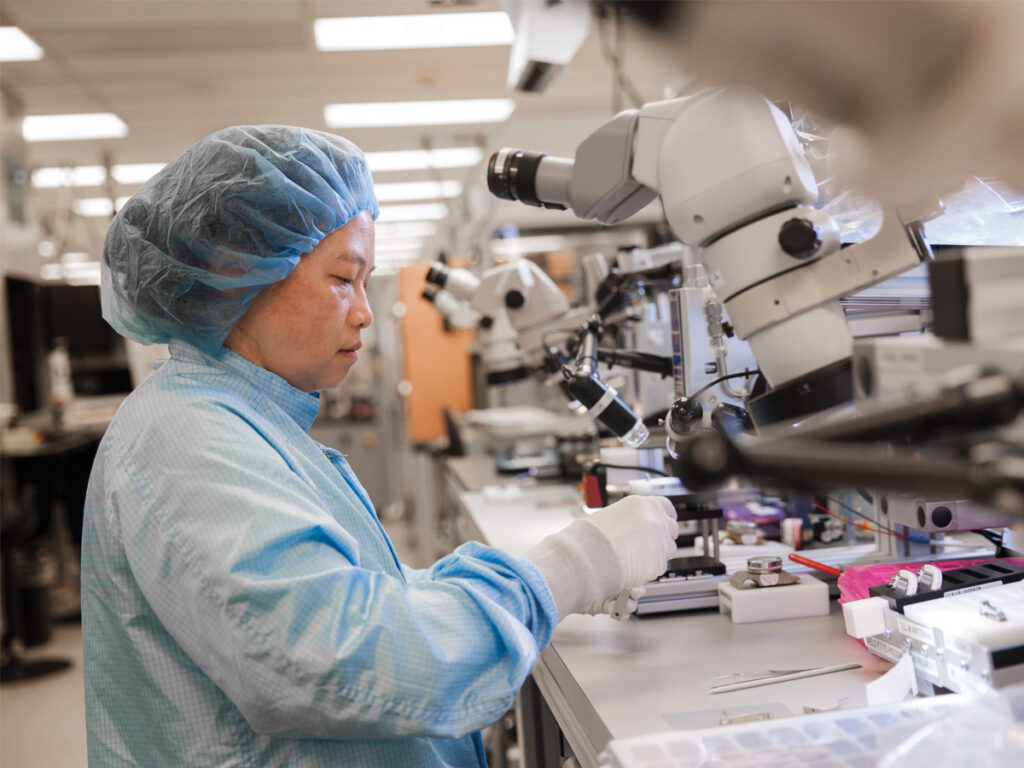
Throughout her career, Dressen has touched “pretty much every piece” of the health care sector, having worked at hospitals, health insurers, and medtech giants like Boston Scientific and Medtronic. That’s led her to jobs around the country and the world. But she says Minnesota’s medtech scene is notable for its level of intra-industry cooperation. It’s a “unique personality trait” that may serve the state well in the competition, she says. “There’s always been a sense of community, of giving back, and collaborating.”
Dr. David Ingham, Allina’s chief information officer, notes that his organization already has partnered with MedTech 3.0 members on various initiatives, such as the Northwest Metro Alliance with HealthPartners.
“As a care provider, employer, purchaser, investor and community partner, we work to improve health outcomes for all, create a diverse and inclusive culture, and invest in our communities,” he says. “Federal support is an important investment in developing technologies and care models to transform health care in Minnesota.”
“It makes sense that the next generation of medtech would be created here, but it’s not inevitable.”
—Peter Frosch, president and CEO, Greater MSP
But industry advocates say past performance doesn’t guarantee future results.

“One of the foundations of Minnesota’s economic strength and prosperity for the past two generations has been a growing medical technology sector,” says Greater MSP’s Frosch. “We invented that industry. We scaled here, so it makes sense that the next generation of medtech would be created here, but it’s not inevitable.”
If Minnesota isn’t chosen, Frosch says the effort won’t have been in vain. “We already won this designation,” Frosch says. “It matters not only because the ideas are cutting edge, but because the leaders and institutions have the power to realize this future. We’re not asking anyone for permission. We’re not waiting. We’re creating it.”
The capital question
Whether folks in other regions consider the Twin Cities a hub for technology is an open question, though—ask anyone who’s tried to build a new business in Minnesota, where venture capital is far less plentiful than on the coasts. But the designation—and winning the final bid—could help bring more attention—and dollars—to the Twin Cities.
In the Midwest, willingness to invest “has always been a little bit more challenging than we like,” says Morgan Evans, a former Medtronic employee and serial entrepreneur who’s built six companies (for more on Evans, see “Medtech’s Next Gen”). “Anything that brings a little more attention to the startup and innovation ecosystem is going to be great for the whole community,” Evans says.
Amrinder Singh, another Medtronic veteran, is now partner at Minneapolis-based medtech investor Vensana Capital, which helped craft the MedTech 3.0 bid. He says he deliberately located his firm in the Twin Cities to help raise the region’s profile. “We feel there is such an opportunity to build companies here, and the last thing we want to see is a really good idea or team feel the need to relocate to Boston or the Bay Area.”
Why AI?
Minnesota isn’t the only competition applicant with a marked focus on artificial intelligence, the hot topic in business and tech circles. A proposal from Birmingham, Alabama, seeks to build “equitable AI-driven biotechnology,” for instance.
It comes at a time when investors are still pouring billions of dollars into AI-based startups. Industry boosters say it’s the inevitable step forward in medicine. “We’re not replacing surgeons anytime soon,” Medtronic’s Martha says. “But surgeons that are using AI will replace ones that don’t, and that’s happening now.”
He also makes a distinction between buzzy “large language models” like ChatGPT, whose source data is something of a black box, and Medtronic’s own in-house programs with custom patient data.
Yet there’s still reason to proceed with caution. The mix of AI and health care is fraught with liabilities. Consider UnitedHealth Group, which was sued in late 2023 for allegedly using an artificial intelligence program to deny coverage for elderly patients. Given the liabilities, why venture forward?
As Martha sees it, we’re at an inflection point in medicine, where traditional practices of medicine are colliding with digital systems. AI and robotics are simply the next step.
“It’s creating a huge opportunity for us to build on what we have,” he says.
The Twin Cities’ bid also places a premium on equity, another topic du jour in business circles. Greater MSP tapped the Center for Economic Inclusion, a St. Paul-based nonprofit, to ensure that Minnesota’s “next frontier” of medtech is equitable across gender, race, and class. The idea is to avoid the pitfalls of inherent biases found in some AI-based technology.
“We have identified measures of economic inclusion that speak to the impact that these resources and strategies will have on building wealth, creating and providing family-sustaining jobs, and improving health outcomes for communities of color and indigenous communities, particularly those who are experiencing the greatest inequities,” says Andrea Ferstan, the center’s vice president of innovation, policy, and research.
In her view, it’s critical to bring in voices from Black, Indigenous, Latinx, and Asian communities to “ensure racially inclusive and responsive innovations.”
It’s largely undisputed that there have been demonstrable differences in health care for different population segments. A 2022 study from Harvard Medical School, for instance, found that Black, Hispanic, and Asian patients “received less supplemental oxygen than white patients” due to differences in pulse oximeter readings between skin tones.
Those are precisely the type of disparities that the center aims to help avoid in medtech’s next frontier.
Ultimately, though, the consortium agrees that advances in AI and machine learning are “not really a choice,” as Greater MSP’s Frosch puts it. It’s a matter of minimizing the downsides. “I have more trust and faith in the Minneapolis-St. Paul region and the leaders and institutions here to prioritize that and solve those problems actively than I would [in any] other regions or countries around the world.”