

U of M in Rochester Growing Rapidly Thanks to Medical Focus
These are turbulent times for U.S. higher education. In September, Minnesota State announced it will undergo a major system restructure, with potential mergers and closures, to address persistent financial challenges. The same month, the University of Minnesota shared it will see $225 million to $260 million in budget cuts over the next two fiscal years, a 12-15% reduction in allocated operating revenue.
Meanwhile, the University of Minnesota–Rochester (UMR) has been on a rapid growth trajectory since it welcomed its first class, of 57 students, in 2009. The satellite campus increased enrollment by 13.7% this fall over last, to 1,264 students. That follows an 80% leap between 2024 and 2025. (By comparison, the University of Minnesota’s Twin Cities campus saw new-student enrollment decrease by 6.2% this fall.)
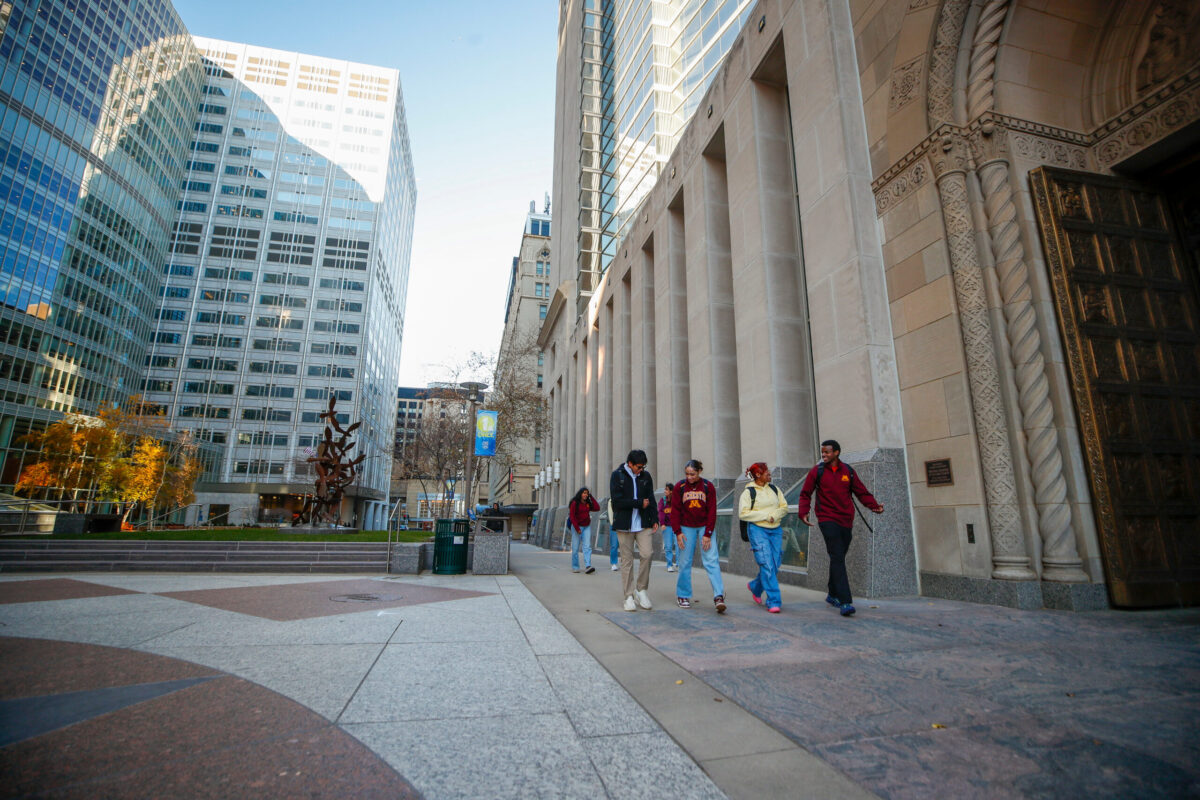
In January, UMR is set to embark on a three-part plan to grow physically. It’s set to add classrooms, housing, and gathering spaces. This will start with a $10 million, 12,600-square-foot lab and classroom expansion in Discovery Square, which is Rochester’s “innovation district” downtown.
Cohort sizes nearing 400 have become the norm for UMR admissions, and the campus is on its way to meeting its enrollment goal of 2,500 students by 2030, says senior director of admissions Justin Stoll. In fact, the college is flying close to the sun, needing to lease space inside an event venue—the Mayo Civic Center—for temporary classrooms this year.
UMR has been embracing its medical reputation, Stoll says, at a time when demand for healthcare workers is exceptionally high. The school’s model shows how some colleges are adapting to new expectations and concerns.
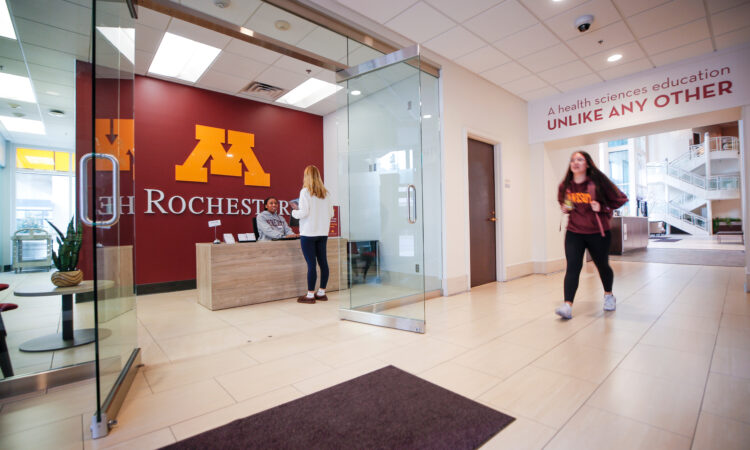
A health sciences campus, UMR was designed to meet the needs of Mayo Clinic and the surrounding healthcare workforce. The college has two undergraduate programs, in health sciences and in health professions. The latter is a junior-admitting program in collaboration with the Mayo Clinic School of Health Sciences. Those students earn a bachelor’s degree plus a certificate from Mayo Clinic in one of four tracks: echocardiography, sonography, respiratory care, or radiography.
The health sciences degree is intended to prepare students for a health career across six broader areas, including pre-med and patient care, health technology, and business and leadership.
UMR chancellor Lori Carrell cites Minnesota Department of Health data showing that up to 80% of Minnesota counties are experiencing shortages of healthcare professionals across several areas. As a career path, healthcare has shown growing appeal among young Americans.
That means the school is among today’s winners in higher education, while others trend downward. “A student can invest in a degree in healthcare and health sciences because, in a few years, they’re going to be very employable at a high salary with a lot of mobility,” Stoll says.
Nationally, colleges and universities are seeing declines in enrollment, attributed in part to fewer 18-year-olds graduating high school, plus growing concerns about the value of a college degree, Stoll says. More young people have been seeking non-college options, including certifications and apprenticeships.
Affordability is a top concern. UMR’s 2026-27 sticker price—$34,960 for a student living on campus—is above the average cost of attendance for all other University of Minnesota campuses except the Twin Cities (with tuition significantly higher than that of colleges and universities within the Minnesota State system), although Stoll notes scholarships and other cost-reduction programs can help.
UMR provides other perks: Degree-in-three is an initiative to reduce the cost of college with a three-year bachelor’s degree option, and it has taken off nationally in the past couple years, with UMR among the first to launch its own program, in 2022.
Students at UMR also can fast-track their degrees. “A student might enroll with us, do three years in our health sciences degree, in their third year apply to a program like MRI or nuclear medicine at Mayo Clinic, and—if they’re admitted—do their fourth year in that program through the Mayo Clinic School of Health Sciences,” Stoll says. “They graduate in four years, but they have both a degree and a certification, and they can do the national board exam and be ready to work.”
Through partnerships with biomedical researchers at Mayo Clinic, undergraduates can access work-study, internship, and research opportunities.
UMR also works with Rochester’s Discovery Square, partnering with local researchers and startups. The university anticipates the recently opened BioLabs will expose students to emerging work, as the lab serves as an incubator for early-stage biotech startups.
Carrell also says all UMR courses, including those in the humanities, center around health, and Stoll says faculty gain tenure by conducting student development research and applying it to curricula.
Plans for growth
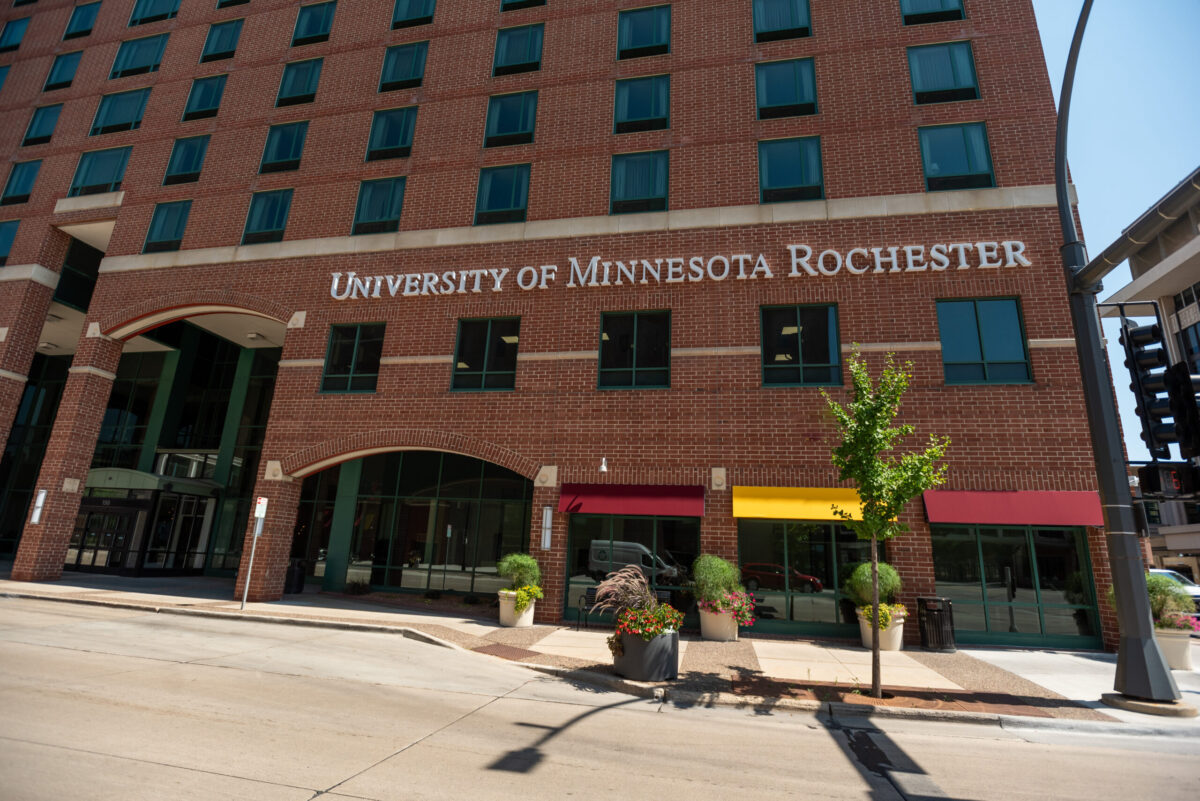
With the rapid growth, UMR now needs more space. Over the years, the school has spread into multiple properties downtown, occupying space for labs, classrooms, and student housing in Discovery Square and converting Rochester’s former DoubleTree hotel into a first-year residential hall. But the school has exceeded overall capacity.
“Everything so far has been through partnership and long-term leasing … and we’re keeping all of that space, but we need more,” Carrell says.
The three-part facilities growth plan starts with the $10 million classroom expansion in Discovery Square, with construction to begin this coming January.
UMR this month also proposed a $150 million academic building with additional classrooms, labs, and a dedicated gathering space. The building—an estimated 122,000 square feet—would be the first university-owned in Rochester and would expand its research into new learning models. Carrell says the university is hoping to reveal a selected site ahead of the upcoming legislative session.
Then, the plan’s final initiative is to build a 600-unit student residence and recreation facility on nearly five acres of university-owned land adjacent to Soldiers Field. While the university has made moves in recent years to expand student housing options—including the 400-bed Student Life Center, one floor of Discovery Square, and the 318 Commons apartment complex with 261 beds—Carrell says a new residence hall is a necessary next step to accommodate its growing student body.
At the same time, Rochester undergoes its own transformation with Mayo Clinic’s $5 billion campus expansion and the continuation of Destination Medical Center. “The University of Minnesota’s presence here creates an opportunity for students to move into the city instead of out of it,” Stoll says, “and they’re going to be in the midst of all of this innovation and change.”