

Corporate Social Responsibility: Ecolab
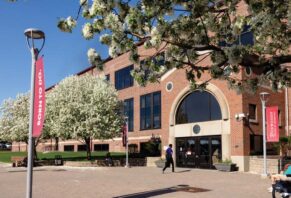
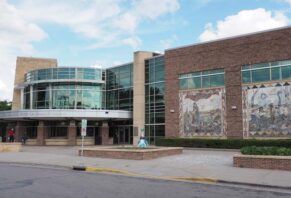
Ecolab, with its corporate headquarters in downtown St. Paul, has been a long-standing supporter of the Dorothy Day Residence that’s also located downtown. Ecolab employees have volunteered at the Catholic Charities-operated nonprofit that serves people dealing with housing insecurity.
For more than two decades, Ecolab’s employees have volunteered to build affordable housing in partnership with Twin Cities Habitat for Humanity. Last year, almost 200 Ecolab employees contributed about 1,400 volunteer hours to build homes in Minnesota.
In late 2025, Ecolab deepened its commitment to address the growing problem of access to affordable housing. The business made a
$3 million commitment to support emergency housing services in Ramsey County. Ecolab joined with three Minnesota foundations to launch the Our Home State initiative, which is dedicated to expanding the supply of safe, stable, and affordable housing. The Ecolab and foundation contributions—totaling $23 million—are funding grants focused on eviction prevention, expanding shelter capacity, and advancing affordable housing.
“Housing is foundational to thriving communities,” says Reilly Goodwin, Ecolab’s vice president of water partnerships and community impact. “For us, making investments to support the community and drive more housing stability is really key to creating that thriving community.”
Beyond making a major financial contribution to address the housing challenge, Goodwin says that Ecolab has been the convener for a homelessness roundtable for two years. Ecolab CEO Christophe Beck chairs the meetings, which bring together leaders from business, government, and the nonprofit sectors.
“It’s grounded in the belief that real change requires leadership around a shared vision,” Goodwin says. “Each quarter we bring together leaders from across the housing spectrum, focusing mostly on emergency shelter providers.” Businesses, including Securian Financial, also take part, as well as government leaders from the state, county, and city levels.
Ecolab takes its role seriously to help build healthy and resilient communities where its employees live, Goodwin says.

It’s taken a corporate leadership role on the homelessness issue, she says, because it wants to be a catalyst so “these stakeholders can come together and discuss how we create more beds, how we create more capacity, how we drive more funding, and how we create long-term solutions.”
Ecolab CEO Beck, in a June LinkedIn post, wrote that “as long as people in our community remain unhoused, we must continue to act with urgency, accountability and a shared sense of responsibility.”
Beck also emphasized the importance of aligning housing goals on a community wide as well as a larger geographic basis.
“What makes this group [the homelessness roundtable] special is the way people show up,” Beck wrote. “People listen, lean in, and stay focused on what matters most for the community, not just individual organizations.”
After the aggressive immigration enforcement campaign was waged last winter, Ecolab contributed $200,000 to the Economic Response Fund, an effort led by the Minneapolis Foundation.
In 2025, Ecolab awarded more than $6.2 million in grants to Minnesota-based organizations. Its funding priorities are in the areas of advancing water and nature resilience, delivering the future workforce, and building abundant communities.
“We find it incredibly important to continue to make investments in Minnesota,” Goodwin says. “We are committed to making this the No. 1 state for business, for families, and for thriving communities.”