

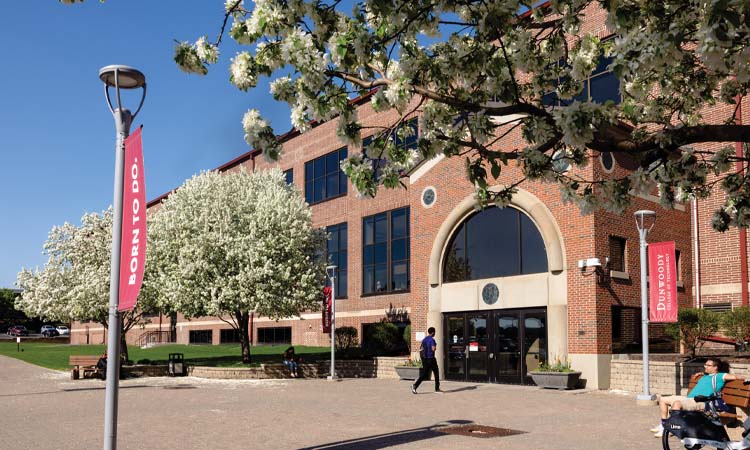
Pathway to Family-Sustaining Jobs: Dunwoody College of Technology
The average starting salary for graduates from Dunwoody College of Technology in Minneapolis is $62,710. That’s an opportunity that Dunwoody’s Pathways to Careers (P2C) Signature Scholarship Program seeks to make available to all potential students.

“We want to ensure that access and opportunity is expanded to under-resourced students,” says Bayza Weeks, whom Dunwoody hired as its first executive director of community partnerships in 2021.
Weeks authored the P2C program, which launched the following fall. The program’s chief goal is to meet the growing demand for skilled trade professionals while closing “disparity gaps” that prevent many high school graduates and adult learners from pursuing technical careers. P2C is now Dunwoody’s largest scholarship program.
The program is open to “students who want to come to Dunwoody,” Weeks says, and who’ve determined that the school is a good fit for them. Prospective participants also must demonstrate that they’ve lacked access and opportunities outside of Dunwoody.
The P2C program comprises two distinct pathways or “chapters.” The first provides 80 high school juniors and seniors with an immersive summer experience where they learn about Dunwoody’s programs and what they’d need to do to be successful in their careers. Those students who matriculate at Dunwoody are eligible for an annual $10,000 scholarship.
Chapter two supports adult learners from a wide range of career and educational backgrounds who are looking to enter a technical trade. Those who qualify also receive $10,000 annually. Both pathways are structured to promote student success by reducing financial barriers and providing comprehensive academic and personal support.
P2C students can pursue associate degrees in any of the trade and technical areas of study at Dunwoody. The disciplines that have been particularly popular among P2C scholars include architectural drafting, automotive, construction project management, electrical construction and maintenance, and automated systems and robotics.
Dunwoody recognizes that these students need more than scholarship funds.
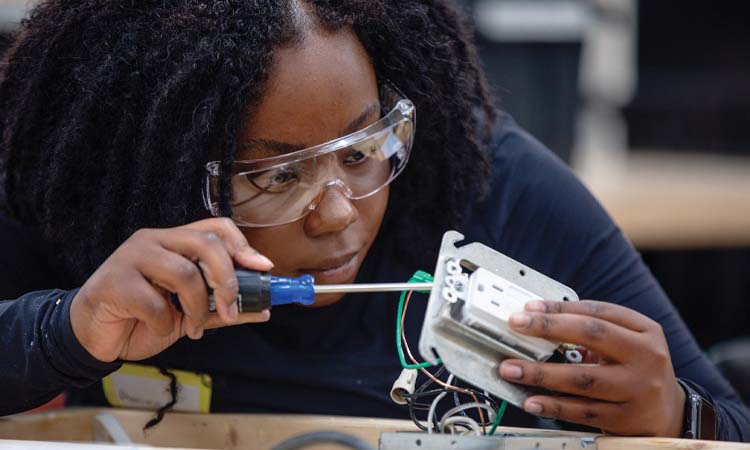
“Based upon documented disparity gaps in income, skills, and graduation rates, we know that first-generation-to-college and under-resourced students—including students of color and women—haven’t had the opportunity to thrive academically and professionally in trade and technical careers,” Weeks says.
To help close those gaps, P2C participants receive personalized “wraparound” support services, including one-on-one academic advising and career guidance.
If the students find themselves facing unexpected difficulties paying for food, housing, or child care, the program can offer emergency financial support and child care stipends. “Without the additional supports that are included in the P2C program, they would not be able to thrive while enrolled in school,” Weeks says.
And P2C students are thriving. The program started with 30 students; last year, 257 students participated. (Dunwoody’s total enrollment in 2025 was 1,584.)
Graduation rates increased from 60% in 2021 to 79% five years later. In 2025, the number of P2C graduates was 105—the most thus far—out of a total Dunwoody graduating class of around 500.
Looking ahead, Weeks and Dunwoody will be working to maintain the program’s sustainability. They’ll also be pursuing additional ways to support P2C students.
This could include increasing the size of the scholarship to help recipients keep pace with inflation.
The P2C scholarship program helps ensure that “Dunwoody remains a place that’s inclusive for everyone,” Weeks says. “That goes back to the founders’ original vision in 1914.”