

Q&A: Dairy Queen’s Jane Friedrich
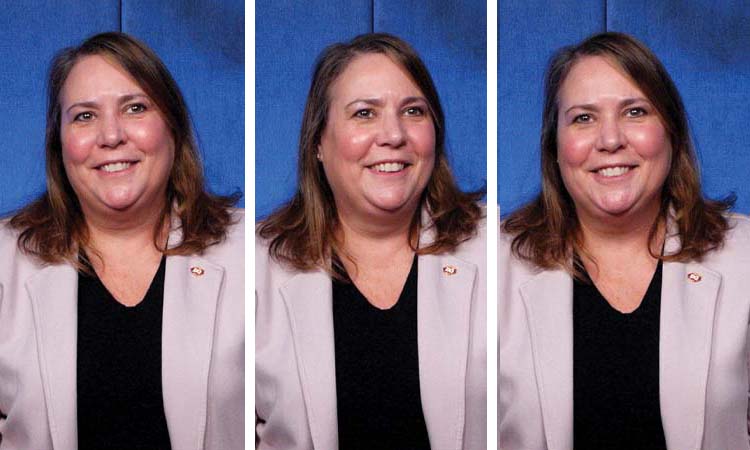
Bloomington-based Dairy Queen is a summer staple, yet always changing. So how do new menu items make it from test kitchen to drive-through? For every Blizzard, chicken strip, and burger, there’s a team of scientists studying how to make them more delicious. Jane Friedrich, executive vice president of research and development, oversees the team responsible for turning big ideas into menu items. In this conversation excerpted from The Twin Cities Business Show, Friedrich, a former Cargill scientist with a Ph.D. in food chemistry, explains how new Blizzards are developed, why menu items go viral, and how the company balances nostalgia with innovation.
Take us inside the Blizzard lab…
It starts with understanding consumers. We can’t launch something unless somebody wants it, right? There has to be a need in the market. We spend a lot of time gathering insights to understand what flavors are emerging, what trends are developing, and whether those are opportunities we should pursue. Then we’ll [focus group] different concepts to see which ones rise to the top. From there, we’ll create flavors and continue refining them until they’re really great. We call it being “Blizzard good.”
How many ideas are you working through before seasonal Blizzard flavors make it to stores?
It’s hard to even put a number on it because we don’t start with individual flavors; we start with concepts. For example, this year we introduced a breakfast collection with a Fruity Pebbles shake, a Cinnamon Toast Crunch dipped cone, and a choco frosted donut Blizzard. The idea was bringing breakfast flavors into a different daypart. We’re constantly exploring concepts like that before deciding what resonates with consumers.
We also have something we call “the DQ freezer.” That’s where we keep more than 100 Blizzard recipes we’ve launched over the years. Sometimes consumers tell us they want an old favorite back, so we’ll bring it “out of the freezer.” The cotton candy Blizzard and s’mores Blizzard are examples. Those disappeared for a while, and our fans made it clear they wanted them back.
That seems like a balancing act. You’re creating new products while also protecting decades of nostalgia.
That’s right. Sometimes consumers want their favorites back. Other times they’re looking for something completely new. The key is understanding which moment you’re in. People trust Dairy Queen. They know what to expect when they come here. That gives us room to innovate, but we’re never going to launch something that doesn’t test well. We spend a tremendous amount of time making sure every product delivers on the promise of the concept.
You’re a food scientist by training. Most people probably don’t realize how much science goes into something as simple as a Blizzard.
There’s much more science than people think. Cooking is chemistry. When you’re developing food, it’s not just about combining ingredients. You’re understanding chemical reactions and how ingredients behave.
Take toast. Most people want it to be golden brown. That’s the Maillard reaction—a chemical reaction creating flavor and color. The same thing happens throughout our menu.
If we’re creating a new chicken strip, we’re studying how the coating behaves during cooking. Those pieces of angel food cake in our strawberry angel food cake Blizzard have to survive the blending process. There’s a tremendous amount of force involved in making a Blizzard. If those pieces break apart completely, it doesn’t deliver the experience consumers expect. You have to have those chunks. That’s the type of problem my team solves every day.
The Oreo Blizzard has been your best-selling Blizzard for decades. Are you wary of messing with something so successful?
We do when we need to. We don’t make Oreos—we buy them from the manufacturer. Several years ago, Oreo reformulated, and we had to make sure it still delivered the same experience inside our Blizzard. People don’t always realize how often suppliers reformulate products. Our responsibility is making sure consumers never notice.
“People trust Dairy Queen. They know what to expect when they come here. That gives us room to innovate, but we’re never going to launch something that doesn’t test well.”
Social media seems to have changed product development dramatically.
It has. Sometimes we launch something that performs well, and then it suddenly goes viral in ways we never expected. One example was our crunchin’ cookie cone dip. Within days, people were creating menu hacks online. They were turning it into Blizzards, parfaits, and ordering extra cups of the dip to use with other products. Our teams moved very quickly to help franchisees respond by creating standardized recipes and point-of-sale options. We have a social media team that’s constantly listening. The challenge is not assuming everything is going to go viral. You prepare yourself to respond if it happens, but you can’t build your entire innovation strategy around trying to predict the internet.
You spent almost 24 years at Cargill before joining Dairy Queen. How did that earlier experience inform your current role?
I started at Cargill right out of graduate school as a flavor chemist. One of the wonderful things about Cargill is that you can have many different careers inside one company. I worked across research, protein businesses, applications, and animal nutrition. Eventually I started thinking about what I wanted to do next. One of my favorite roles had been working with food-service customers and quick-service restaurants. Around that same time, Dairy Queen was looking for an executive vice president of research and development. It turned out to be a great fit.
Dairy Queen is known for treats, but you’ve also invested heavily in hot food.
We think about both equally. It’s not food or treats; it’s food and treats. This year, for example, we launched spicy chicken strips alongside a new beverage platform with sparkling lemonades and coolers. Those products complement one another and create a better overall experience. We’ll always be known as a place to get a great treat, but we also want people to think of Dairy Queen when they’re looking for a meal.
How is Dairy Queen thinking about GLP-1 medications?
GLP-1s are impacting most of the food industry right now, and we’re continuing to watch them closely. We’re monitoring how they’re affecting consumer behavior and evaluating what those changes could mean for the industry over time. It’s still an evolving trend, so we’re continuing to learn and understand what the long-term impact will be.
Dairy Queen has expanded rapidly around the world. Are consumers overseas looking for the same products that Americans love or something different?
Our soft serve stays consistent around the world, but many of the flavors become localized. In Thailand, for example, we offer a seasonal mango sticky rice Blizzard inspired by one of the country’s most popular desserts. We also look at successful products from international markets and ask whether they might work in the United States or Canada. Consumers today are exposed to global cuisines far more than they were even 20 years ago. Understanding how tastes evolve—and deciding when those flavors are ready for our markets—is part of what makes this job so interesting.