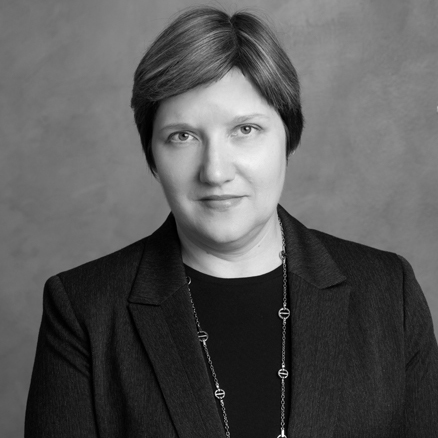



Jeff Ettinger Would Be an Effective CEO of the MN Business Partnership
The Minnesota Business Partnership conducted a lengthy search process in 2023 to find a successor for Charlie Weaver, who excelled at leading the organization for 20 years.
Kurt Zellers, a former Republican legislator who served as Minnesota House speaker in 2011 and 2012, emerged as a leading candidate from that search process. The Partnership’s leadership hired Zellers, who began the CEO job on Sept. 1, 2023.
A few weeks ago, on June 25, the Partnership’s communications director said in a written statement that Zellers had “stepped down” from the Partnership’s CEO job and was no longer with the organization. His tenure in the important position lasted less than three years.
Medtronic CEO Geoff Martha, who chairs the Minnesota Business Partnership, declined to answer why Zellers had abruptly departed and two current staff were named co-CEOs on an interim basis.
Instead of weighing a multitude of candidates who want the well-paid job, the Minnesota Business Partnership’s leadership could draft veteran Hormel CEO Jeff Ettinger to become the Partnership’s CEO for a two- or three-year period.
With a Minnesota economy showing tepid growth and an open governor’s seat and all 201 legislative seats on the November ballot, the Partnership needs a new CEO who would have instant credibility with CEO members and who could adeptly navigate Minnesota’s political climate in the upcoming 2027 legislative session.
Ettinger has the talent and experience to serve in the key Minnesota Business Partnership role, and the timing would be right for him and the business association.
Ettinger, a lawyer, was CEO of Hormel Foods from 2006 to 2016. After he handed the CEO baton to Jim Snee at Hormel, he’s demonstrated that he has the leadership capacity to serve as an effective bridge when organizations need to be stabilized as well as address pressing challenges.

In 2023, after University of Minnesota President Joan Gabel left the state to become chancellor of the University of Pittsburgh, the U of M needed a new leader.
In what the university described as a “thorough but expeditious search process,” the university received 21 applications from people who wanted to become the interim president. Ettinger was among the four finalists who took part in public interviews.
The University of Minnesota Board of Regents chose Ettinger to become interim president over three other finalists who had worked or were working within the University of Minnesota system. Ettinger served for about a year before Rebecca Cunningham became the U’s president.
In June 2025, Hormel’s board turned to Ettinger to serve as interim CEO of the company. Months earlier, CEO Snee, who had worked for Hormel for 36 years, indicated he was ready to retire.
Hormel’s board elevated John Ghingo to the president’s role. It simultaneously announced that Ettinger would serve as interim CEO for 15 months.
“During his tenure, Ettinger earned a reputation for driving performance and results,” Hormel said in its 2025 announcement. “With his deep knowledge of the company and its culture, and his experience with the company’s external stakeholders, he will be a strong partner to Ghingo. During this time, the company’s corporate functions including finance, legal and external affairs, human resources, corporate communications, and ethics and compliance will report to Ettinger.”
Identifying the right leader
Ettinger’s stint as Hormel’s interim CEO will conclude in October, so he could be available to take the reins at the Partnership after the Nov. 3 election and before the Minnesota Legislature convenes in January.
For three decades, the Minnesota Business Partnership was led by two men—Duane Benson, a former state senator, from 1994 to 2003, and Weaver, a former Minnesota House member and chief of staff to Gov. Tim Pawlenty, from 2003 to 2023.
Benson, Weaver, and Zellers were Republican legislators. But that’s only one dimension of the three men. A myriad of skills are needed to work effectively with politicians and the CEOs of the state’s largest companies. The CEO of the Partnership also must capably lead and inspire the organization’s staff and cogently communicate the Partnership’s strategy and policy positions to the news media.
Ettinger already holds the respect of his fellow CEOs within the Partnership. He’s among the 97 executives who lead Partnership organizations, which are among the largest employers in Minnesota. Most Partnership organizations are public companies or private businesses. However, the association also includes nonprofit health systems, big cooperatives, and large higher education institutions.
Ettinger’s exposure to Minnesota businesses and state laws began 37 years ago. He joined Hormel in 1989 as a corporate attorney. In particular, he has deep knowledge of issues faced by public companies in the state. He’s served as a director on the boards of Ecolab and Toro.
Solutions-oriented, political centrist
Ettinger isn’t a political novice. In addition to dealing with government affairs topics in his leadership roles at Hormel, he was willing to take the plunge in 2022 to run for a U.S. House seat.
Minnesota’s First District seat became open following the death of Congressman Jim Hagedorn. Ettinger made his first run for public office as a Democrat, and he lost to Republican Brad Finstad.
Ettinger ran as a solutions-oriented, centrist candidate. In a reference to Ettinger, the Minnesota Reformer carried the article headline “A purple candidate in an increasingly red district.”
Ettinger appears to have the intellectual curiosity and civic engagement gene to take on challenging assignments where he can make a difference.
He also is someone who already possesses key relationships within business, politics, and academia. In addition to serving as the interim president of the University of Minnesota, he’s taught a course, “Engaging with Boards for Effective Corporate Governance,” with Sri Zaheer, dean emerita at the Carlson School of Management.
Ettinger is in his 60s and financially secure. He doesn’t need a full-time job that he could hold for a decade. But he has a valuable combination of skills, experience, respect, and existing relationships with important leaders inside and outside of the business community.
He’s well-positioned to help the Minnesota Business Partnership regain its effectiveness as a premier business organization.
It would behoove key CEO leaders within the Partnership to have conversations with Ettinger. They should explore whether he’d be willing to serve for two or three years as Partnership CEO. They could jointly identify a compelling strategy for the organization.
Minnesotans benefit when the Partnership is a successful advocate for building Minnesota’s economy and for taking responsible and forward-thinking positions on important quality-of-life issues.