


What Future Workers Expect from Your Company
Companies and colleges in the Twin Cities contemplating the future of work confront big questions. What does the next generation workforce expect? What can employers do to meet these expectations? What can colleges and universities do to best prepare their students for a new world of work? In a word: growth. Easy to say but hard to deliver.
A 2023 national survey I developed revealed an important insight. Students’ sense that they are growing is the best indicator of their satisfaction with their education. If they are being challenged, gaining confidence, learning teamwork, preparing for a career, and working on projects that make an impact, then they feel positive about their classes, campus, community, career path, and more. But only about two-thirds of students feel this way.
Belonging to grow and growing to advance
Not surprisingly, about the same percentage of students feel like they belong at their college or university, according to the National College Health Assessment. To learn and grow, you first have to belong. You also need flexibility in where, when, and how you learn. The same national survey found students want 43% of their classes fully in-person, 17% to be a blend of in-person and remote activities, 18% hybrid where they can choose which sessions to attend in person or virtually, and 22% fully-online.
Not only is growth what students prioritize in school, the survey found it’s also their top priority when looking for a future career. Students rate opportunities to advance in their career as most important, closely followed by building valuable skills and having flexible schedules/hours – just like they want flexibility in their learning. Unfortunately, Wiley’s State of the Student Report found that only 46% of students feel well prepared for future careers. More on how to close this gap in a moment…
Attracting and retaining the next gen workforce
Savvy employers have learned the value of providing their people flexibility in where, when, and how they work. 3M’s philosophy is that choosing where to start and grow a career is an important part of the professional and personal life of the next generation of the workforce – and that it’s equally important that new workers choose a company that supports and nurtures them in return. Their Work Your Way program is a trust-based approach that lets employees create a schedule that helps them work when and where they can most effectively. For 70 years, they have also been giving employees flexibility to use 15% of their time to innovate and grow.
This flexibility has value. Stanford economist Nick Bloom’s research shows that a flexible schedule is equivalent to a 10% pay raise. It’s also what people are looking for: Gallup found that about a quarter of employees want to be fully in-person, a quarter want to be fully remote, and half want to be hybrid.
Rather than “return to office” mandates without a rationale, employers focused on staying competitive and creative are providing reasons to come to the office and a “return on commute.” Microsoft’s research identified these reasons as the “moments that matter” when working together in-person and growing as people: team building, meeting with managers and mentors, and brainstorming. A study about brainstorming published in Nature shows that “while it’s easiest to choose the best idea virtually, in-person pairs generated 18% more creative ideas and 14% more ideas overall compared with virtual pairs in the same hour.”
Employers taking it to the next level
Inspiring spaces, state-of-the-art technology, and great coffee are a good start, but spaces become places when they are activated by people and programs. Events with talks, demos, mentoring, and more help enliven spaces and employees alike. Today’s students are also supported by a suite of services like advising, counseling, presentation coaching, research help, writing, and data analysis. These are the services and programs that enable their growth in college. They bring these expectations for support into the workplace. So, tomorrow’s collaboration hub needs to have more than coffee and conference rooms, they need coaching as well.
Flexibility in where, when, and how to work helps not only your people but the planet, too – and environmental sustainability should also be part of the story. A study published by the National Academy of Sciences on the impact of working from home on carbon emissions two, four, or five days reduces carbon emissions by 11%, 29%, and 58%, respectively.
Flexible spaces that get transformed over the course of the day and from event to event also need more explicit norms to guide their use so people can get more out of them. Is it OK to take a Zoom meeting at your desk? When is it OK to interrupt someone? When are your focus times? How can tables be arranged in workshop space and who’s responsible for setup and reset? Norms and culture are the “software” that make the space “hardware” run. Time spent on it pays off. One company I worked with increased their satisfaction with focus time 70% without changing their space but rather by designing their workplace norms.
Closing the college/career gap
While it’s tempting to think about the college experience and a future career separately, they overlap. According to the Lumina Foundation’s research on today’s students, 64% of college students work during college and 40% are working full-time while they are in school. Where college/career gaps exist, innovative colleges and universities are working to close them by rethinking courses, career development, and the intersection of the two.
In Wiley’s same national study, 81% of students said it was important to work on real-world projects with companies but only 30% of professors said they offer these. Here in the Twin Cities, the Minneapolis College of Art and Design (MCAD) offers “client-based studios.” They also require students to create a resumé, portfolio, and website to showcase these projects and their skills. They also require a professional practice course tailored to each major so students can explore careers and get prepared. These courses on career development are unfortunately rare nationally. Only 23% of students have taken one according to research from the National Association of Colleges and Employers (NACE).
Internships are another way to close the college/career gap. Gallup found that nationally 41% of students do an internship and that students who are the first in their family to go to college are about half as likely to do an internship and students attending private colleges are about one-third more likely to have internships than those at public colleges. These low numbers are unfortunate when you consider how impactful an internship can be. Gallup and Purdue University found that students with internships are 1.8 times more likely to be committed to and enthusiastic about their job after graduation and 1.5 times more likely to think their education was worth the cost.
Next generation career development
Where, when, and how colleges deliver career services is changing too – and with good reason. A recent survey by Inside Higher Education found that while 70% of students are aware of career services, only about half say that their center is welcoming and only about a third are satisfied with the career center services they’ve used. The business career center at the University of Minnesota’s Carlson School of Management takes a different approach. In addition to flexible delivery and outreach to students to meet them where they are, the center creates interesting ways for employers to interact with students – such as teaching a skill or software or discussing a real business problem – and attendance at these sessions is up 40% annually. They also train and certify employers on creating an inclusive workplace to set students up for future success and give students an opportunity to teach employers about what they are looking for.
It seems that the desire to grow is embedded in our DNA – in school, at work, and as people. As companies and the colleges in the Twin Cities think about the next gen workforce and next gen workplace, they can take it to the next level by prioritizing growth. Offer students chances to be challenged, to work in teams on projects with impact during a class or internship, and identify a career path that gives them a sense of purpose, role models, and a community to be a part of. In the workplace, provide flexibility, mentoring, and magnetic places that are enlivened by events and services that connect people to a purpose and each other. Easier said than done, but worth doing.
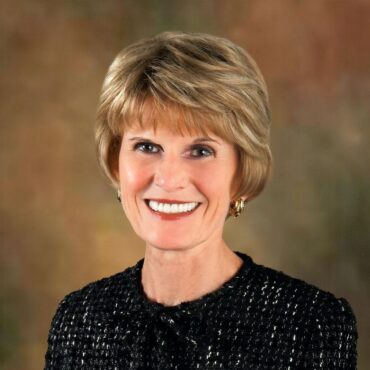
Elliot Felix is the founder of the higher education strategy firm brightspot, a Buro Happold Company, and the author of How to Get the Most Out of College. He moved to southwest Minneapolis in 2020 and now runs around four lakes per week.