

There’s a Pharmacy Shortage in Minnesota
The Cub pharmacy on West Broadway Avenue is one of the few pharmacies left in north Minneapolis.
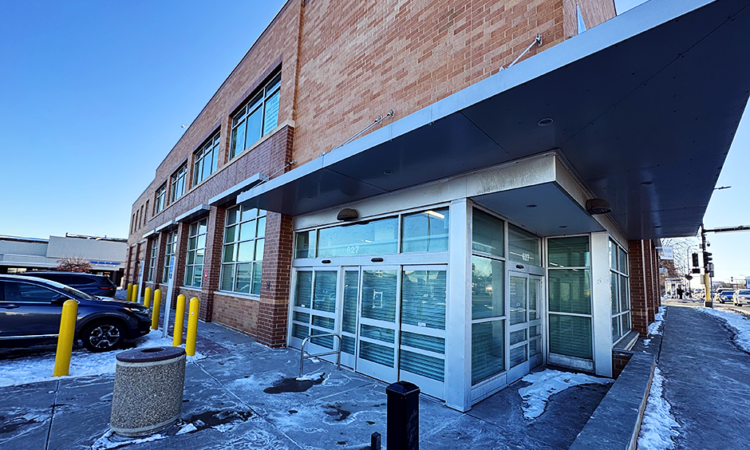
Not long ago, however, there was a Walgreens only a short walk away, which closed in February 2023, leaving behind a still-shuttered building.
Minneapolis Ward 4 Council Member LaTrisha Vetaw was working at NorthPoint Health and Wellness during the civil unrest following the murder of George Floyd. At that time, the Walgreens shut down and Vetaw, who was working with senior citizens, witnessed the impact of the closure firsthand.
“One of the biggest issues we were having during the civil unrest was seniors having access to their prescriptions,” said Vetaw. “I’ve seen the impact of the Walgreens in particular (closing), because that was heavily used by most of the people whose prescriptions I was filling.”

Everyone in north Minneapolis who didn’t have access to a car, Vetaw added, would walk or take the bus to that Walgreens. Now, as a council member, Vetaw hears from various constituents that they would like pharmacies back in their neighborhoods.
“It’s families, it’s single people, it’s seniors, it’s parents for their children,” said Vetaw. “Everyone wants pharmacies back in the community.”
North Minneapolis, however, isn’t the only area in the state with a low amount of pharmacies.
This past December the University of Minnesota’s College of Pharmacy, in collaboration with the Minnesota Department of Health (MDH), released a map showing census tracts in Minnesota that have either low or limited pharmacy access. Low pharmacy access was defined based on how far the population center of each census tract was from a pharmacy, which also depended on whether the area was in the Twin Cities, another metro area, or in non-metro Minnesota. Tracts with limited pharmacy access, however, were tracts that had only one pharmacy in operation.

According to the map, 28.9% of people in the Twin Cities live in tracts where there is only one pharmacy. This is also true of 2.6% of the people in other metro areas, as well as 15.3% of Minnesotans living in non-metro parts of the state.
For some, living farther from a pharmacy doesn’t necessarily mean they have no access. MDH epidemiologist Emily Styles clarified in a University of Minnesota article that some low pharmacy access areas are made up of people with higher incomes, who can – and do – make longer trips to pharmacies.
For those who cannot easily make trips far outside their immediate area, the closure of a pharmacy can increase the difficulty of accessing care. Since Jan. 31 of last year, 38 pharmacies have closed in Minnesota, said Deborah Keaveny, founder of Minnesota Independent Pharmacists and owner of Keaveny Drug in Winstead.
PBMs and the economics of pharmacies
Various pharmacists working in Minnesota – from Keaveny in Winstead to John Hoeschen, the owner of St. Paul Corner Drug – identified pharmacy benefit managers, or PBMs, as undercutting the profits of pharmacies, making it difficult for them to stay open. But what exactly is the job of a PBM?

Pharmacy benefit managers are companies that work alongside insurance companies to reimburse pharmacists, as well as creating formularies – lists of drugs covered by insurance plans. Every time a claim is made on a person’s insurance for medication, PBMs are sent these claims by pharmacies. To send these claims, individual pharmacies pay PBMs a sending fee. While this fee is generally an amount of cents, with every client seeking to fill a prescription at each pharmacy associated with a PBM, those cents start to add up.
This isn’t the only way pharmacies lose money to PBMs, which are also tasked with reimbursing pharmacists for drugs dispensed through clients’ insurance plans. However, reimbursement amounts for the same drug can vary even within the same day, says Hoeschen, with how PBMs operate left largely unexplained, even to pharmacists themselves.
What is clear to pharmacists is that reimbursement from PBMs doesn’t adequately provide their businesses with any profit, leaving them operating at a loss.
According to Keaveny, Minnesota Medicaid says pharmacists should be paid the national average drug acquisition cost, plus a dispensing fee for dispensing an individual prescription. This dispensing fee is meant to cover the cost of other parts of running a pharmacy, including liability insurance, building rent and staff. In the last Minnesota Cost of Dispensing Survey in 2023, the Department of Human Services recommended that the Minnesota dispensing fee be taken up from $10.77 to $11.55. But pharmacies aren’t making enough back in reimbursement from PBMs to cover that dispensing cost.
“Sixty-eight percent of my business, I am not making $11 and 55 cents profit,” said Keaveny. “That means 68% of my business I am doing at an operational loss. … We’re at a point where you could give me the drug for free, and I dispense it and I’m still not making any money”
The three largest PBMs, which the Federal Trade Commission have stated are responsible for approximately 80% of all prescriptions in the U.S., are owned by large health care companies, including companies that own insurance companies and/or pharmacy chains. Caremark is owned by CVS, while OptumRX is owned by UnitedHealth and Express Scripts by Cigna. In 2024, the Federal Trade Commission sued these three PBMs for inflating the price of insulin, a legal case that remains ongoing.
Despite all this, working and operating a pharmacy without a PBM isn’t a realistic option.
Hoeschen has previously written for MinnPost about pharmacy service administration organizations (PSAOs), which can help groups of independent pharmacies, including as his own, negotiate contract terms with PBMs. However, even if a PSAO refuses to contract with a particular PBM, an individual pharmacy within the PSAO may not be able to avoid accepting a contract with that PBM. After all, if a PBM’s contract isn’t accepted by a pharmacy, then that pharmacy is not in-network for the insurance companies associated with the PBM.

“If I’m a pharmacy in an area where Express Scripts is 60% of the market, what am I gonna do, attempt to contract on my own?” said Hoeschen as an example. “(The PBMs) don’t have to negotiate. They don’t want to negotiate, they won’t negotiate. The power of a PSAO is basically rooted in the ability to keep their members all on the same page and all on the same team. If you start to fracture that, and that’s what the PBMs have been able to do, especially in areas where they have heavy penetration of their product, they fracture the alliance of the PSAO members.”
Unless patients are willing to pay out of pocket to use a specific pharmacy – something not everyone is able to do – pharmacies have to accept working with PBMs, even if they know they’re getting a raw deal.
“We refer to this entire industry as the mafia, because they just do what they want and the rules don’t apply to them,” said Hoeschen.
Adapting to loss
In the past, said Jeremy Faulks, vice president of Thrifty White Pharmacies, pharmacies could make up revenue through selling other goods over the counter. But competition on that front from Amazon and stores like Dollar General that sell those particular goods has meant this inventory is taking up room without being sold.

“We actually downsized a lot of our pharmacies and got rid of a lot of our front-end space because it didn’t make sense to carry all this inventory and we weren’t really selling it anyway,” said Faulks. Instead, he said, Thrifty White Pharmacies have begun to set up clinical suites and focusing on additional health care services, including vaccinations and testing for conditions they can then prescribe medication for, such as strep throat.
Pharmacy owners have also taken cuts themselves to keep their businesses alive.
“We’ve taken out lines of credit just to survive,” said Keaveny of the various independent pharmacies operating in Minnesota. “Some of us don’t take a salary much anymore. Some of us don’t pay ourselves rent anymore if we own the building. Some of us have to cannibalize our savings and our retirement accounts to keep the doors open. Quite frankly, we’re tired of subsidizing Fortune 20 companies on our backs to keep our businesses open and to be able to have access to our customers and take care of them.”
Those affected
While how PBMs operate can be opaque, how the loss of pharmacies impacts health care remains clear.
People who have lower incomes or are living in poverty are strongly affected by pharmacy closures, said Sarah M. Worthy, CEO and founder of Doorspace, an organization that provides workforce tools and support to those in the medical field, including pharmacists.
“They don’t have the money to go to a primary care (physician), so they’re much more likely to be relying on that pharmacy for other health care concerns,” Worthy explained. If pharmacies are a longer distance away and people are working multiple jobs or on an hourly basis, they are less likely to find the time needed to make that drive or find transportation, missing treatment or medication.

The complications of missed medication and missed care can then lead to greater costs down the line. According to Worthy, these include the costs of crime born out of economic desperation as well as the costs of treating chronic conditions that could have been avoided. Some examples of these conditions include amputations for people with diabetes, or kidney dialysis in cases of renal failure.
“When we focus on removing preventative care from these communities, we are increasing that long tail expense that we have to pay, on top of the suffering,” said Worthy.
Additionally, as pharmacies become where more and more people get their immunizations, a lack of pharmacies may lead to populations getting less vaccinations and not reaching herd immunity.
“People aren’t going to drive 45 minutes and wait in line for three hours to get a flu shot,” said Worthy. “So now that community isn’t going to be vaccinated at the percentage that they need to be (to prevent the spread of a disease).”
While the need for pharmacies is evident, for Hoeschen, the prognosis of pharmacies isn’t favorable.
“We need something to change in 2025, or we’re going to lose a lot of pharmacies in the next year or two,” said Hoeschen. “We’re that close to the end.”
This article first appeared on MinnPost and is republished here under a Creative Commons license.