

Minnesota Company Comes Up with Modest Scrubs for Health Care Workers
While putting a tube in a patient’s body to protect his airway, Yasmin Samatar inadvertently ended up getting messy.
“The end (of the tube) was accidentally not closed and stomach contents went all over my dress and my shoes,” said Samatar. “My family is about an hour drive away, so there’s no one (who) could have come to me and given me new clothes. I had to change out and wear pants and I felt super uncomfortable, ’cause I do not wear pants.”
Samatar and her colleague and business partner Firaoli Adam are both health care professionals, specifically respiratory therapists. Both of them are also members of Minnesota’s Muslim community, and dress modestly, in accordance with their faith.
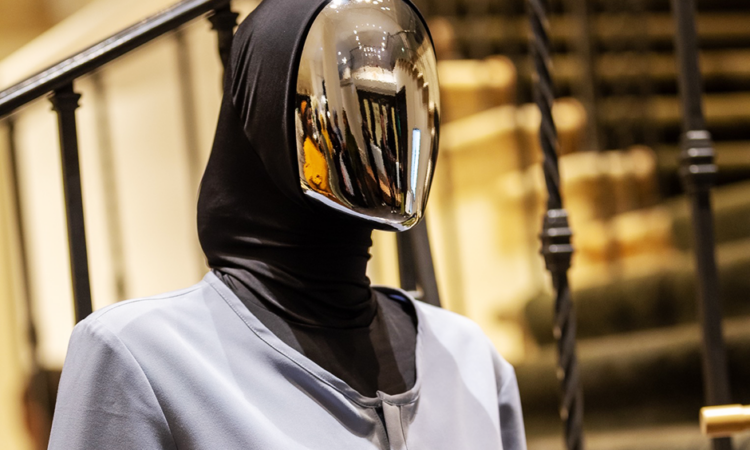
In November 2022, Samatar and Adam launched their business, Mawadda LLC (previously known as Hayaa), which provides disposable hijab head coverings to medical settings, to ensure Muslim health care providers would be able to dress in accordance with their faith while keeping their patients safe. Mawadda now works with Children’s Hospital of Philadelphia, Aurora Health Care (part of Advocate Health Care) and various health care distributors to provide protective and disposable hijabs.
The response to the disposable hijabs, said Adam, has been overwhelmingly positive, with requests coming in from outside the U.S .as well as within, for the disposable hijabs.
“It’s been amazing and overwhelming at the same time,” said Adam, who added that while requests have come in from India, France and the Maldives, one of the latest requests is from a woman in Indonesia – the nation with the largest Muslim population in the world.
“We always knew we wanted to go international ’cause the need is there. We actually are able to meet with the sister in Indonesia soon. We actually set up a meeting with her to just listen and see how we could work together and how we can cater to her since she’s the one that reached out to us.”
When the head coverings were launched, said Adam, there were people who believed Mawadda was going to offer modest scrub skirts as well.

“People were coming up to us saying, ‘Oh my God, thank you so much. I wanted to go to NICU (neonatal intensive care unit) or I wanted to go to labor and delivery, but we never had that skirt, so I didn’t. I didn’t wanna go there and wear pants.’ And we’re just like, ‘Oh my God, that’s not what we’re coming up with, but we’re definitely gonna work on (that) next,’” said Adam.
The need for effective modest scrubs
While there are protective skirt scrub options available for medical personnel, the options on the market leave something to be desired. For one, said Samatar, they aren’t readily available in hospital settings in the same way as pants in the past, which led to her having to wear pants instead of being able to wear a skirt or dress.
“I wish that they just had (skirts) available, sitting there just like the pants. It would’ve been a little bit more inclusive to people who don’t wear pants,” said Samatar.
The protective skirts, while available, have to be specifically requested by hospitals themselves, which, said Samatar, wouldn’t help in a situation like the one she faced, where her clothes were ruined and there had been no skirts ordered before.
“I’m in the ER and I just got stomach contents all over me and now you have to go order (a skirt) and I’m gonna wait a week. That’s not feasible. We wanna change that outlook – where you do have the pants, (so) you should have the skirts. No one should be asking to order one skirt for you to just have one skirt available,” said Samatar.
During their education as respiratory therapists, added Adam, protective skirts weren’t made available to Adam and Samatar, leading them to find ways to modify the scrubs for modesty.
“We always (bought) the biggest pants we (could) find and we (had an) extra sweater that we tie around our hip area just to kind of feel like it’s more covering, so we can feel okay just walking around and learn and do our job,” said Adam. “A couple years later we found out there are skirts that came with our first job. They provided a skirt, but that skirt we used to wear specifically only when we went to the (operating room) because it’s not something that you feel comfortable wearing.”
“One (skirt) that I had a hospital order for me went to my calf, and anytime I walked it went up further. So if I didn’t have pants underneath, you’re seeing my legs all out. So then I would have pants underneath and it would just look so weird I’m wondering ‘Why did we make this again and why wasn’t it longer?” said Samatar. “The other was super thick material where you would just hear it from miles away. Let’s say you’re going to a code blue (a situation where there’s an emergency usually involving respiratory or cardiac arrest), you’re running and you’re gonna trip because of how thick (the skirt is and how) it has no flexibility in it. We’re wondering ‘Who made these (and) do they wear skirts at all?’”
On top of functional concerns, the skirts just weren’t fashionable. While medical scrubs and protective equipment may not be typically considered fashionable, companies such as FIGS, which created the scrub line for Team USA’s medical providers in the Olympics, “made (scrubs) fashionable,” said Samatar.
“We’ve gotten a lot of their products too, and we love their jackets and stuff like that, but that’s as much as we can wear. We can’t wear the pants, but we definitely love what they’re about and wanna emulate that for the modest community as well,” said Samatar.
Elements of design
Founder and head designer at Ramadhan Designs, Rammy Mohammed, who is also Adam’s cousin, previously worked with the founders to design the disposable hijab. Now, she is the designer behind their upcoming modest scrub line. Mohammed has long been involved in the Minnesota fashion scene, and was one of the first designers to display a full hijab collection at a Minnesota Fashion Week.
While designing the upcoming scrub line, Mohammed had to unite fashion with function. Though the founders and Mohammed would have liked to keep production local to Minnesota, in both cases production ended up taking place outside of Minnesota. While the disposable hijabs are manufactured in New York, the scrub line will be manufactured overseas.
The fabric used in the upcoming line is a mixture of polyester and spandex with antibacterial properties sourced and made overseas. The blend allows for the fabric to be impermeable to airborne particles and to make less noise than a cotton blend would while moving across the floor. It can also be washed more than 50 times without losing its color.
To further avoid the noise of a flared skirt against a hospital floor, Mohammed has designed a skirt for the scrub line with a straighter cut.
“It almost looks like a pencil skirt, except it has a godet (a piece of triangular fabric) in the back, which is where typically the slit would be. So the mobility and the function of the slit is there, but (there’s) a piece of fabric that’s inserted. So when you stand, it looks like a pencil skirt, but when you walk, it won’t expose your legs because you’re covered with that triangle piece,” said Mohammed.
Mohammed’s line has options for everyone wanting to dress modestly, including different styles of shirts, pants and skirts, focusing on using current trends to make them fashionable as well as functional.
“In the modest industry, the way you dress modestly doesn’t necessarily mean (wearing a) skirt, but (dressing) proper enough (with) things you could wear and pray with. So we wanted to cover all of our bases,” said Mohammed.
She also focused her efforts towards “creating a style that’s not frumpy, but very contemporary” for health care workers.
“Where you live matters. We live here in the West, so we do have to embrace that side also. So (to look contemporary, modest design utilizes) cuts that are longer and not as tight, yet have some of the design features that you would find at a Macy’s or any other department store,” said Mohammed. “(The presence of stylish features) also means that anybody can wear them, not just Muslim women per se, but anybody (who) could see it and resonate with the design style could purchase it.”
The interest from Muslim health care workers, however, has been one of the driving forces behind Mawadda’s success. Right after Adam and Samatar had their first meeting regarding a modest scrub line with Mohammed, they received an email from Children’s Hospital of Philadelphia.
“We went to check our email and Children’s Hospital of Philadelphia (had) reached out to saying, ‘Hey, we buy the hygienic hijab from you guys, but do you guys also have skirts? Our Muslim health care workers want skirts as well, so we just wanted to reach out and see if that’s something that you guys do,’” recalled Adam. “Honestly speaking, we just want people to have more options. There (are) so many scrub stores near us – within the next five miles, you will find at least two (or) three – so why not have that option (for modest scrubs) and present it to people?”
This article first appeared on MinnPost and is republished here under a Creative Commons license.