


Innovative Awareness Campaign: Latitude’s Gratitude Campaign
Latitude barely made it out of the pandemic. The Minneapolis-based creative agency, known for giving half its profits to local and global causes, had done probably 90% of its business in real life.
Marketing vice president Lisa Dammann recalls massive events and product launches such as an event for Puma Fenty in New York. The pandemic “nearly killed the business.”
But Latitude bounced back. Social media campaigns and brand strategy became the focus. “We sent out iPhones and asked [influencers] to capture themselves,” she says, recalling social distancing. A pivot led to new clients. Last year, Latitude’s gross revenue grew by about 25%.
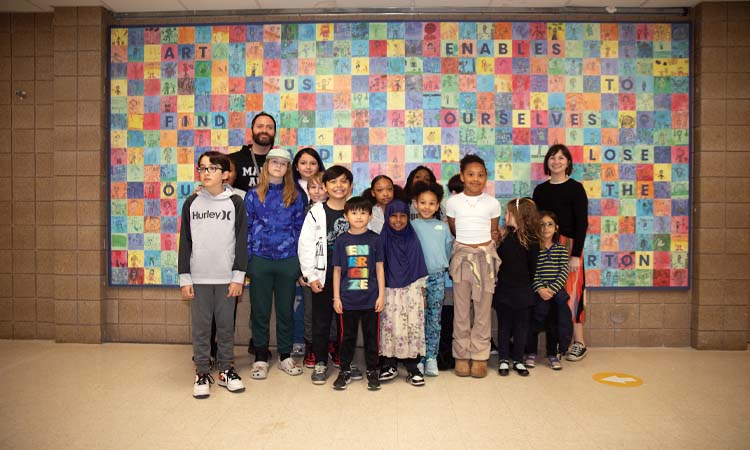
The agency also marked 15 years. To demonstrate its new recipe for success, it launched an annual integrated marketing campaign called “Gratitude.” During its first year, it promoted arts education, involving a limited-edition apparel line, designed by the company’s creative team, and a mural at Marcy Elementary School in Minneapolis. Sponsors matched the $38,000 in donations collected by Latitude.
The campaign raised awareness of Latitude’s unique mission. As the company profits, so do nonprofits worldwide. Since its inception, Latitude has given 50% of its bottom line to local and international causes. They include life-and-death scenarios. In the past year, Latitude reports, its profit-sharing has contributed to 52,665 meal deliveries, medical care for 24,579 people, and the release of 1,449 people from abuse and modern-day enslavement.
Krista Carroll founded Latitude in 2009 after an eye-opening trip to Haiti with her husband, where she witnessed the work of Healing Haiti, a nonprofit group that delivers humanitarian aid. “That first trip, in which we saw them doing incredible work—empowering work that allowed people to use their giftedness—was the inspiration behind Latitude.”
If the spirit of business is profit, Carroll says the 50% model works as a strong motivator. “We find a different level of engagement from our employees,” she says. “In six weeks’ time, we know the impact of that job with our client is going to have ripples that truly change the lives of people.”
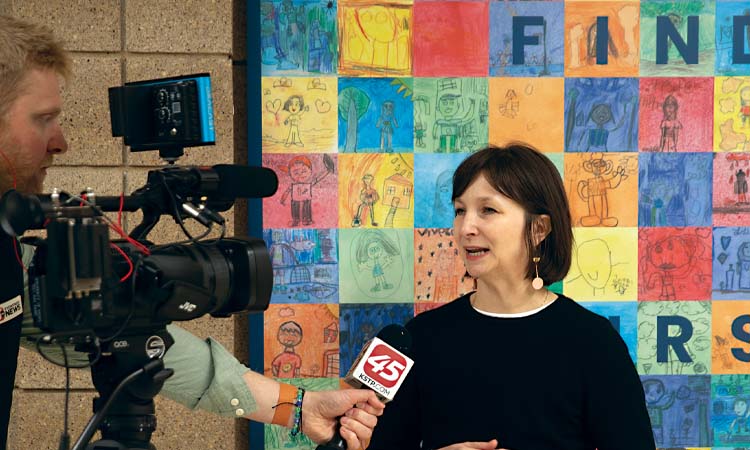
The “Gratitude” campaign, Carroll says, gives Latitude a chance to focus locally. The first year’s theme hit close to home for the former elementary school teacher. “One challenge in the creative industry is the glaring lack of diversity,” she says. A notable barrier: How many children get to actually see creatives at work? The campaign contributed to Art Buddies, a creative mentorship program that pairs artists with kids.
Another benefiting nonprofit, Give Us Wings, has a two-person staff in St. Paul and supports people living in extreme poverty in Uganda. Earlier this year, Latitude funded a three-wheel motorcycle ambulance for its clinic.
Executive director Peter Carlson describes Latitude’s philanthropy as practically one of a kind. “Corporate social responsibility is kind of a buzzword,” he says, and it can sometimes equate to performative marketing. “Latitude really lives out the mission in a more special way.”