

Feds OK NeuroOne Device to Treat Parkinson’s, Other Conditions
After six years of trials and development, Eden Prairie-based NeuroOne Medical Technologies Corp. has received clearance to sell its first product with a therapeutic indication.
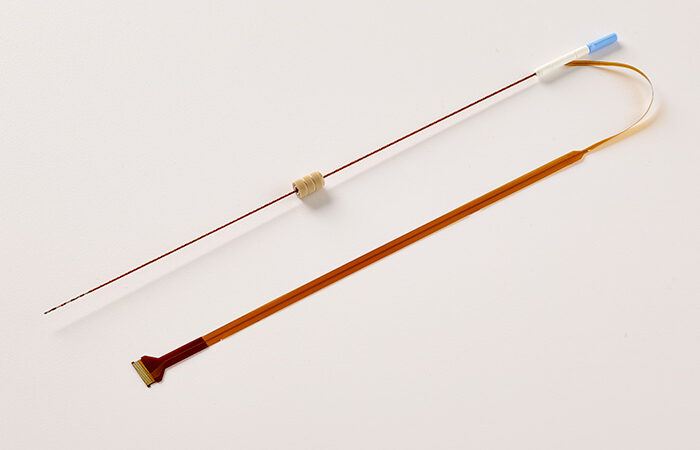
Last week, the company announced that it received U.S. Food and Drug Administration 510(k) clearance to sell its OneRF Ablation System, which is designed to treat neurological conditions by recording electrical brain activity and removing targeted regions of tissue. NeuroOne officials said the system could be used to treat things like Parkinson’s, epilepsy, brain tumors, and chronic back pain.
OneRF has been in the works for a while – NeuroOne began development on the concept in 2017 and completed its first feasibility study of the product in December 2022. The company submitted its application for 510(k) clearance on June 8 of this year.
“Our team’s achievement in reaching this milestone was the culmination of years of perseverance, and I could not be more excited for our future,” said NeuroOne CEO Dave Rosa in a statement. “We are now preparing for a commercial launch either directly or through a strategic partner in the first half of calendar 2024.”
OneRF is joins two other NeuroOne products that have gained 510(k) clearance: the Cortical Electrode and the EVO sEEG Electrode. Evo Cortical is a minimally invasive brain implant to diagnose various neurological conditions. The EVO sEEG Electrode, meanwhile, is an sEEG system designed to be less invasive to mitigate risks of brain damage when capturing data for diagnoses. But OneRF, which uses the sEEG system in ablation procedures, is the first to be cleared with a therapeutic indication.
“There are devices that are cleared by the FDA for just diagnostic purposes and different devices cleared for therapeutic [purposes]. This requires two separate procedures,” Rosa explained in an email to TCB. “No device has an FDA clearance to perform both functions until we received our second clearance for the therapeutic application. Now you can use the same device for both procedures.”
In the future, NeuroOne might also pursue applications for other medical areas such as depression, mood disorders, and high blood pressure.
“We are developing an electrode that is capable of both delivering a drug or gene therapy to the brain as well as having a diagnostic capability of showing the impact of the drug or gene therapy,” Rosa told TCB. “We are also developing a fully implantable electrode for permanent use that can be placed without making an incision in the body.”
NeuroOne was originally incorporated as a Nevada company under a different name back in 2009. The company went public in 2017, Rosa said. NeuroOne began developing its technology in 2015 in partnership with the Mayo Clinic.
In the third quarter of 2023, NeuroOne had a product revenue of $630,000, compared to $32,000 in Q3 of 2022. The company was still operating at a net loss of $3.5 million as of third quarter, but said it expects to see a “cash burn reduction” beginning in the fourth quarter.