

Fairview to Expand Relationship with Orthopedics Provider
Starting early next year, Summit Orthopedics will provide urgent and emergency care—think: broken bones, torn ACLs—at three more M Health Fairview hospitals in the Twin Cities, bringing the total to five and building on a decades-long relationship. The move speaks to a progression in health care over the past decade, as baby boomers age and orthopedic injuries grow in number.
With greater demand, there’s a market opportunity for care systems. In 2013, Bloomington-based Tria Orthopedics became a division of HealthPartners. The new Fairview–Summit relationship similarly situates orthopedics more closely to primary care.
“This is about an overall growth in the [orthopedics] market,” Summit CEO Adam Berry says of the expanded relationship. “Fairview and Summit believe there’s a way we can tap into that growth if you deliver a product that is of value to the patients and to the communities.”
Summit will begin serving patients at Fairview hospitals in Burnsville, Edina, and Wyoming. The Woodbury-based orthopedic provider has nearly 30 locations in the Twin Cities and western Wisconsin.
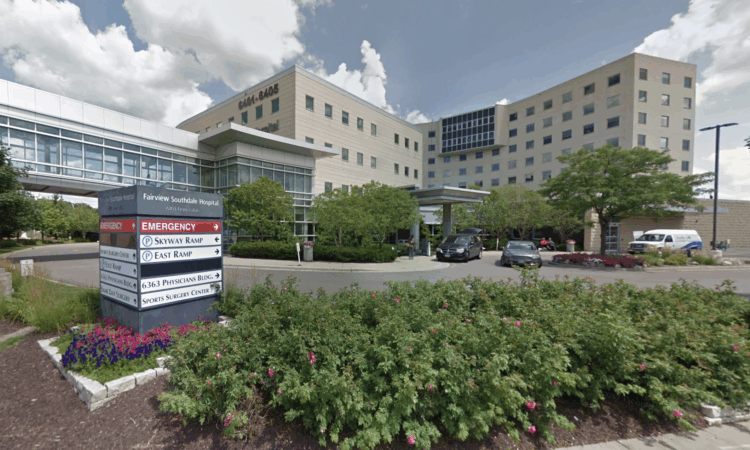
The new contractual agreement takes effect Jan. 1 at Burnsville’s Fairview Ridges hospital and Edina’s Fairview Southdale hospital, then at Lakes Medical Center, in Wyoming, Feb. 1. Summit will continue its partnership at M Health Fairview hospitals in Woodbury and Maplewood.
At the three new hospitals, Summit replaces Twin Cities Orthopedics, says Berry, who adds Fairview can still make orthopedic referrals beyond Summit. “We’re coming together so that we can develop one coordinated way to work.”
The roots of the relationship go back three decades. Summit landed an exclusive arrangement in 2017 to provide orthopedic care for HealthEast, an east-metro hospital network that merged with Fairview that year.
The overall benefit of expanding the relationship is speed, Berry says. Fairview physicians may access orthopedic specialists more readily, to better treat often time-sensitive injuries, and the tie-up centralizes electronic records, for simpler physician–specialist correspondence.
“When people come in with an orthopedic injury, many times the most crucial element is literally time itself,” Berry says. “You want to make sure that you can fast-track and appropriately triage everything—so, having a primary-care physician that’s always going to know the exact subspecialist to refer that patient off to, has access to [their] calendar, has the ability to be able to get them in as quick as needed.”
Summit expects to hire more physicians and support staff. Summit today employs 1,200, including 45 surgeons and 20 “non-surgeons.” The latter range from spine physicians to sports experts within family medicine. “We’ll need [more physicians] to cover the overnight hospital trauma work,” Berry says. He anticipates three to seven new surgeons.
“Orthopedics is more in demand, and you’ve seen that for the last decade,” he adds.
A Market Scenario Planner report, last updated in 2024, forecasted growing U.S. demand for orthopedics through 2028, namely in outpatient services. The study cited an aging population, plus the rising prevalence of diseases like arthritis and osteoporosis.
Aging baby boomers, Berry says, equate to more joint replacements. With “weekend warriors,” you also have people in their 40s and 50s into pickleball or hiking—classic Covid-inspired activities—and incurring overuse injuries. But it’s not just the middle-aged; young adults participate in more sports and are more single-sport than they used to be, he says, also leading to overuse injuries.