

Coworking Is Back to Growth Mode
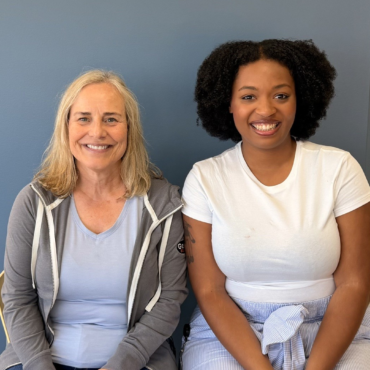
Coworking was a 2010s trend: Untethered freelancers, “solopreneurs,” and startups could enjoy water-cooler vibes and amenities. But nowadays, such spaces feel inseparable from the pandemic. “Even as late as 2019 and into 2020, coworking was more for small- to medium-size companies,” says Colleen Moselle, president and CEO of Coco, which runs two Minneapolis coworking spots. Traditionally, Moselle says, businesses expected to outgrow coworking; eventually, they’d get big enough for an office of their own.
But the workplace strategy changed, “whether it’s remote-first or hybrid,” Moselle says. She has since seen more demand from bigger companies. If they’ve gone hybrid, they don’t need a big, permanent office and don’t want to pay for one. Moselle’s largest client, she says, has 85 employees with a key card in the Coco system.
Reports suggest most U.S. companies are staying hybrid, even as some larger employers (in Minnesota: 3M, U.S. Bank, state government) have lately scaled back remote work. CoworkingCafe, an online directory that uses proprietary data, counted 105 coworking spaces in the Twin Cities region in the first quarter of 2025, up from 101 the quarter before.
And some Twin Cities coworking outlets are expanding.
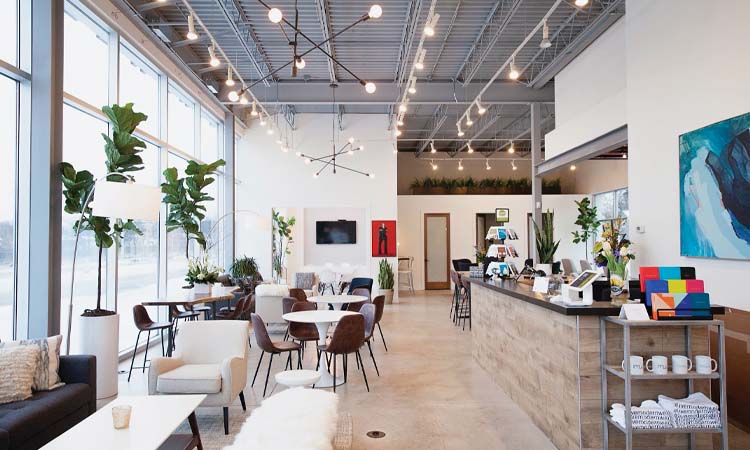
ModernWell debuted its first space in 2018, in Minneapolis. In early fall it’s opening a second location, in Wayzata.
Traditionally, Moselle says, businesses expected to outgrow coworking; eventually, they’d get big enough for an office of their own.
Why a second location now? Shortly before Covid-19, CEO Julie Burton wanted to open a west-metro office—but got cold feet (“thank God,” she says). ModernWell recovered to pre-pandemic levels around 2022 or 2023, she says, and market research still points her to Wayzata: “There are people in the western suburbs that won’t go anywhere east of 169 or 100.”
Meanwhile, The Coven—a boutique Twin Cities coworking franchisor with an eye to “underdog” cities—rolls out its fifth franchised location (seventh overall) in June, in Northeast Minneapolis. (Since launching a franchise model in 2023, the company has opened two non-metro franchisees, both in Wisconsin.)
The Coven headquarters locations achieved profitability in 2024, and its private offices fill to capacity consistently across locations, says cofounder and CEO Alex West Steinman, speaking from Atlanta in April on a scouting trip through the Midwest and Southeast.
“We’re seeing more suburban coworking,” she adds, pointing to ModernWell and spaces in Edina, Roseville, and Woodbury for The Reserve, which moved to a bigger Edina space in 2021. Coco has considered the suburbs too.
Flexibility, it seems, reigns. And as home offices look more and more permanent, the suburban worker—wanting a “second space” nearby—may represent a next phase for coworking.