

Local Med Tech Company Wants to Bring Product for Incontinence to U.S. Market
Minnesota Medical Technologies (MMT) announced last month it has procured $20.6 million in Series A funding, which the Stewartville company plans to use to launch StaySure, its self-insert device intended to help manage fecal incontinence and accidental bowel leakage.
“The $20.6 million is solely dedicated to getting us into the U.S. market,” says David Jonas, CEO and president of MMT. “So, it’s beefing up our infrastructure in the house here and also hiring a sales team.”
As for the product, Jonas describes StaySure as a small, soft silicone device that’s encapsulated with mineral oil, which moves and flexes easily with the body.
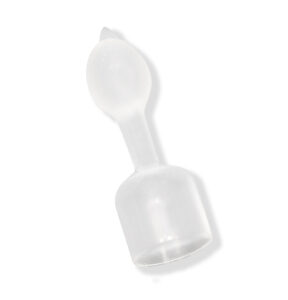
Jonas says there are no good solutions currently on the market. Treatment usually involves changes in diet or increased exercise, he says, working to manage, rather than solve, incontinence. “But really what happens is the sphincter muscles weaken or become damaged, and they don’t ever recover. They’re a part of the body that you can’t fix,” he says, adding, “You can do anything—walk, run, swim, ride a horse—[and] you don’t even notice [the inserted product].”
Two percent of the general population has some form of fecal incontinence, according to many sources, but Jonas says that is likely a conservative estimate; he says the number may be up to 4-5%.
In addition to entering the market, the funds will be used for a marketing push that includes educating doctors and nurses about the availability of StaySure.
The road to Series A
Fundraising followed clearance from the U.S. Food & Drug Administration last July, which took longer than expected due to some bumps along the road. Jonas says that, when the company first applied for clearance, the FDA demanded additional clinical trials to verify product safety. That process, in collaboration with Mayo Clinic, began in mid-2019 but slowed during the Covid-19 pandemic.
“We got those trial results back a year and a half ago now, and they were fantastic,” Jonas says.
In Europe, the company received clearance more quickly. StaySure entered European markets in late 2021 under the name Navina Insert, distributed through a partnership with Wellspect Healthcare, a Swedish med tech company that specializes in bladder and bowel dysfunction. The company has since sold over a million devices in Europe, Jonas says.
“I think the one thing we’ve learned from being in Europe is that you have to educate doctors and nurses and facilities,” he notes. “To get this thing to grow faster [in the U.S.] than it’s growing over there, you have to make the calls to the doctors that see people with fecal incontinence.”
Jonas says that MMT is trying to push its European partners to take a similar approach, but it has been a challenge. “But it’s going to help us make sure we do it the right way.”
More on MMT
MMT began when Rochester Medical Corporation (RMC), a public medical device manufacturer, was acquired by New Jersey-based C.R. Bard in 2013 for $262 million. A group from RMC went on to launch MMT in 2015. Jonas, who was RMC’s CFO in its last decade, took over as president and CEO of MMT in 2018.
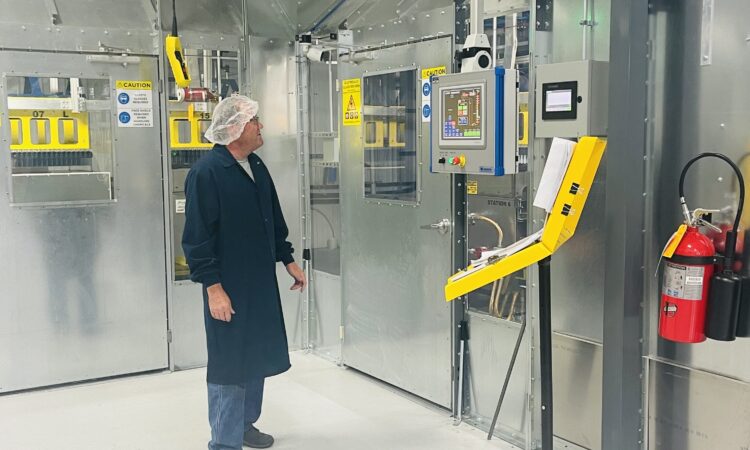
“We have a very well-thought-out, developed five-year plan,” Jonas says, which includes upgrading existing MMT facilities, which can currently produce 5 million devices annually. “We are going to need to make many more devices as we grow in the U.S. and in Europe.”
Likely starting next year, Jonas says the company will build a new, bigger facility that can create up to 20 million devices per year, potentially making MMT into a $100 million-plus-revenue company. The company’s five-year plan includes a goal of 50,000 patients, projected to use 500 devices per year.
Long term, Jonas says that, once MMT builds momentum, it anticipates acquisition, as usually happens with smaller med tech companies. “We always say we don’t have a sale sign out there, but we’re always for sale.”
Jonas did not disclose the company’s revenue but says MMT went from selling units in five digits in 2021 to about a million and a half units the last two years.
Since the funding round concluded, the company has hired five employees in the sales department, a customer care director, a human resources director, and a production manager.
“We just have to scratch the surface to be very successful,” he says.