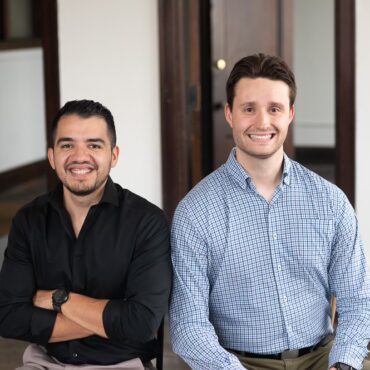



First Take: Nonin Medical’s New CEO
Nonin Medical, a Plymouth-based designer and manufacturer of medical devices, named Todd Austin as its new CEO in November.
Nonin develops monitoring equipment, notably pulse, cerebral, and tissue oximeters, which measure oxygen saturation in the blood, brain, and tissue hemoglobin, respectively.
Austin grew up in a North Dakota farming family and has spent five decades working in health care. Prior to joining Nonin, Austin served as president and CEO of MGC Diagnostics, a Vadnais Heights-based subsidiary of CAIRE and Niterra. His career includes leadership roles at Angeion, CareFusion, NDD, VIASYS Healthcare, and SensorMedics.
Before Austin’s executive career took off, he worked as a bedside clinician in the late ’80s, primarily in neonatal, pediatric, and adult critical care. He also worked in ICUs, taking care of older patients as a respiratory therapist.
“I used Nonin devices when I was a clinician at the bedside,” he says. “So, I’ve known the company throughout my career.”
That was in the ’80s, when Austin had transitioned into the diagnostic side of the business, where he did testing on cardiorespiratory disease. A decade later, a medical device manufacturer based out of Southern California hired Austin as a clinical specialist to travel the world teaching people how to use the devices he had previously used, such as pulmonary function testing, exercise stress testing, and sleep diagnostic devices.
Austin says he would be away from his wife and kids for 200-plus nights, which was difficult. But professionally, it paid off because, after years of speaking engagements and working at academic trade shows, he got his first CEO role at MGC Diagnostics in 2014.
A decade later, at Nonin Medical, Austin’s running one of the globally leading companies in noninvasive medical monitoring.
This interview has been edited and condensed for clarity.
You knew Nonin’s devices years before you started in this role. So, how did you end up in the position you are in today?
After a private equity company purchased MGC diagnostics, I had a two-year retention agreement. I started to look for what’s next, interviewing with Mayo Clinic and other medical device companies. Then, a recruiter reached out to me who was trying to fill the CEO role at Nonin.
What are the biggest drivers of revenue growth for your company?
It’s capital equipment, recurring revenue from disposable oximeters and consumables, and then there are specialized revenue streams that come from accessing and managing data to integrate into hospital systems.
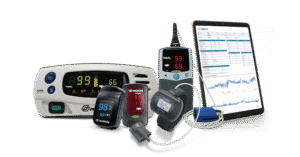
The fingertip oximeters, though, are kind of the bread and butter for the company, as well as the handheld [oximeters] and tabletop devices.
Health care has started shifting toward being more home-based in recent years, so what does the future of respiratory and sleep care look like?
[It looks like] trying to monitor patients and keeping them in their home environment, and then identifying when they’re deteriorating so that the physician can intervene and the patient hopefully doesn’t show up in the ER or back in the hospital again.
Along with that transition, there’s a shift in the economic model, because most devices are reimbursed with a CPT [Current Procedural Terminology] code. When a physician prescribes a test or prescribes a device, there is an associated CPT code that Medicare or private insurance reimburses the hospital for. So, the shift toward home monitoring in this preventive care is more on relieving the economic burden of that health care and keeping people out of the hospital and the ER.
So, do you see that there’s more opportunity for growth in home care monitoring?
Yeah, there’s a paradigm shift where hospitals and health care networks are really focused on home care, so that’s new. Most of it used to be outpatient clinics in a hospital. Wait lists are longer to get to see a specialist in a hospital.
How would you say supply chains in manufacturing are evolving for Nonin’s devices right now, if at all?
It’s still a major challenge for most medical device manufacturers. A lot of companies that are like Nonin, that aren’t the Medtronics of the world, or the Boston Scientifics of the world—we have limited access to low-volume providers. We’re not a high-volume consumer of electrical components or systems. And so those third-party manufacturers, those supply chains, we tend to struggle with being priority.
Lead times are still very long for some components. So, trying to balance lead times that are three months, six months, 12 months on some components, with a sales forecast that is month to month, quarter to quarter—that still exists.
What would success look like for Nonin coming out of its 40th year as a company?
We’re in the process of redoing our long-term strategic plan and really working on that to align with the changes in health care.
So, we’re working to extend Nonin from being a device manufacturer for point-in-time measurements, to being more of a continuous physiologic monitoring company in this connected ecosystem where patients at home can use devices, really transitioning Nonin from a device manufacturer toward data analytics.