


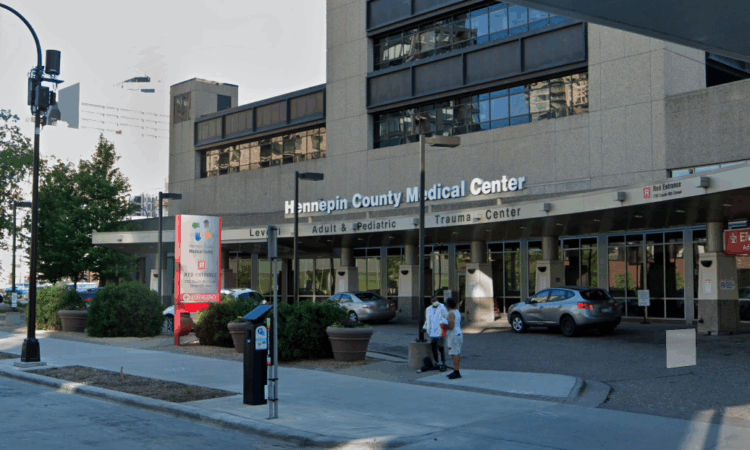
What’s Next for HCMC?
For Hennepin Healthcare, the year kicked off with about 100 layoffs and the removal of five medical programs at Hennepin County Medical Center (HCMC). The goal? Slashing $50 million from its budget to tackle a cash flow crisis at its doors. Hennepin Healthcare, downtown Minneapolis’ largest employer, is also Minnesota’s biggest public safety-net hospital.
This mess is far from a recent development. Back in 2017, HCMC laid off 2% of its full-time staff, citing rising costs in medical equipment and staffing, along with a decline in public reimbursement support. Since then, the nonprofit hospital has suffered an operating net loss in seven of the past eight years.
In June 2024, the hospital board announced that HCMC was on its way out of business by the coming December. The news prompted the board of commissioners to take direct control of the hospital for the first time since the board’s formation in 2007.
The move was not necessarily a popular one, but it received little pushback due to the urgency of the situation, says Jeff Lunde, the Hennepin County commissioner for District 1. Several factors—UCare going out of business, unpaid bills, ICE crackdowns—have only accentuated existing holes in the hospital’s operations as of late.
Now, Hennepin County reports HCMC ran out of money mid-January and is using a line of credit from the county.
“At the end of the day, the county is the backstop for the hospital,” says Lunde, who has also been chair of the hospital board since the takeover. “Cutting out the middle person [the hospital board] and getting direct control is important because [the county is] writing the checks, so we’re the only ones beholden to our constituents when we raise any taxes or allocate money.”
Besides the budget cuts, county officials seek to repurpose a Target Field sales tax to help fund future operations. The previous attempts to get approval from the state legislature to continue collecting the tax were in vain, but Lunde says HCMC is just about out of options at this point.
“If the legislature doesn’t allow us to repurpose the ballpark tax, I would say [HCMC is] going to close,” says Lunde, noting the county otherwise cannot make up deficits.
If the sales tax does get approved, Lunde says it won’t solve all the problems, and it will take a quarter or two before money starts to come in. “So, we’re talking six more months past [May],” he says. The board will know the results by mid-May at the latest, when the legislature’s session concludes.
“But if they [the legislature] say, ‘We’ll get to it next year’—there is no next year,” he adds.
Financial disadvantage
Sayeh Nikpay, an associate professor at University of Minnesota, says that the financial struggles at HCMC cannot be attributed to a single bad guy. Rather, they’re a culmination of many disadvantages that safety-net hospitals face. (Nikpay, a health economist, specializes in the economics of the health care safety net.)
As a safety-net hospital, HCMC is open to anyone and everyone. So, if someone cannot afford care, they can still get it at HCMC. This, in itself, puts the hospital at a major disadvantage.
“[HCMC] is making care affordable to patients, which, as a public hospital—that’s kind of what they should be doing,” says Nikpay. “But it does put them at a disadvantaged revenue-, cycle management-wise.”
She continues, “If I go and fill my prescription at an HCMC pharmacy, and I say, ‘I can’t afford $50 today to pay for the full cost of this medicine,’ then HCMC is likely going to try to figure out a way to get it for me—somehow, that day—because of their mandates to make care affordable.” Other integrated hospital systems likely will not extend the same assistance.
Then, a larger portion of HCMC’s mix of patients are on Medicaid programs, which don’t always pay the full cost of care, Nikpay says. So, the hospital depends on state and local revenue, which does not completely offset its deficit.
“We’ve been in this period where there’s been a lot of Medicaid,” Nikpay says. But recently, there has been a period of contraction. “Contraction in Minnesota hasn’t been as big as it has been in other places because our Medicaid program made it easier for people to stay on Medicaid after the public health emergency ended associated with Covid-19.”
More contractions are expected because of the One Big Beautiful Bill Act, signed in July 2025. It is projected to reduce eligibility and financing for Medicaid by around $900 billion. “If you have a mandate to provide care, whether it’s free or reduced price, this is going to hit you harder,” says Nikpay.
Then there’s the matter of unpaid bills. Many patients are uninsured, either because they don’t have insurance or because they hit their maximum cap. In addition, UCare going out of business and suddenly not paying bills last year amounted to a $6.2 million loss per week, per Minnesota Star Tribune reporting last month. And the problems don’t stop there.
According to Lunde, 40% of patients admitted to the trauma and burn unit are from outside Hennepin County, and 24% are under-compensated.
“We get patients from all over, and we’re happy to receive them,” Lunde says. “But guess what? 100% of the [public] money for the hospital comes from Hennepin County property tax owners.”
Lunde says that while HCMC carries the state on highly intensive trauma and burn care, the county does not receive financial support from other counties.
The state has attempted to boost Medicaid rates for HCMC. In 2022, HCMC started using the Directed Payment Program (DPP) to close the payment gap between commercial patients and Medicaid patients through additional Medicaid funding. For DPP to work, the county is required to put in $40 million per year, which allows for a better Medicaid reimbursement rate.
“[DPP] has helped but, to its detriment, it’s kind of given us a false sense of security,” Lunde says. Likewise, he says the American Rescue Plan Act (ARPA) aid during the Covid-19 pandemic helped the hospital but also papered over signs of a looming crisis. Leadership at the time got used to the Covid-19 support, which became a bad habit.
“You got money and you’re like, ‘OK, things are going great.’ And then when that ARPA money receded—it had time limits—you were left with the deficits that continued to mount,” Lunde says. “We were going downhill and then we decided to just go off the cliff at the same time.”
Lunde says that, in addition to the budget cuts and the sales tax, there needs to be a structural change at HCMC for it to be more financially sustainable. This could mean an extended conversation about which services are core to HCMC and which can be removed.
“I think we’re going to be taking a hard look, across the board, at many different things,” Lunde says. “Repurposing the ballpark sales tax helps us, but we’re still going to have to come to grips with what is our core role. And trauma is what we’re known for, and so we think that’s a good starting point.”
In any case, the ballpark sales tax is critical, he reiterates. “If that doesn’t happen, we are automatically in the worst-case category. If that happens, we will still be restructuring the hospital. There’s a split personality at the legislature right now, and rumor is they don’t always get along, but we’re hoping this one is one [where they do].”