


Fedor: Tariff Decision, Election to Bookend 2026 for Minnesota Businesses
Editor’s Note: This analysis was published before Gov. Tim Walz announced Jan. 5 that he was dropping his bid for a third term.
With a Republican-controlled Congress casting itself as a meek bystander, President Donald Trump imposed a range of tariffs in 2025 that drove up costs for American businesses and consumers.
The sweeping tariffs were opposed by business interests that included soybean farmers, the Minnesota Chamber of Commerce, and small and large companies that rely on buying finished goods or materials produced in foreign countries.
In early 2026, the U.S. Supreme Court will issue a ruling on whether Trump had the legal authority to unilaterally create the comprehensive tariff regime.
The Supreme Court decision on tariffs will reverberate across the political landscape in 2026 and create cascading responses that likely will usher in more uncertainty for Minnesota businesses. Tariff policy will be a big issue at the outset of the year, but the 2026 election results—in Minnesota and the nation—could dramatically alter the business climate beginning in 2027.
If the Supreme Court determines that Trump improperly used the International Emergency Economic Powers Act (IEEPA) to justify his tariff actions, the administration might be forced to reimburse businesses that paid the tariffs.
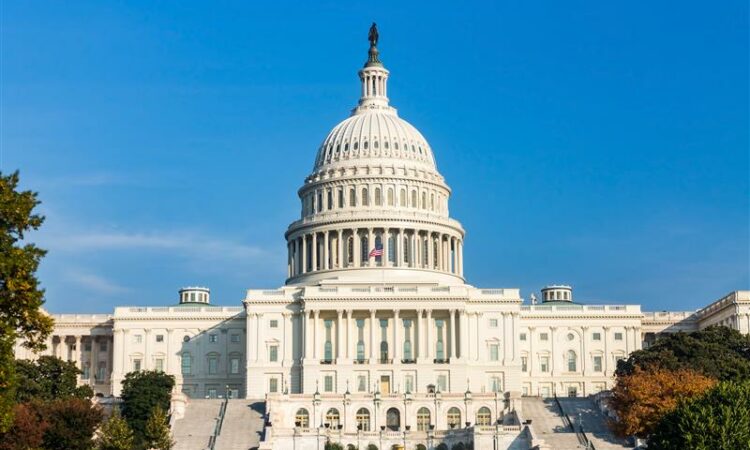
At some point, the tariff issue could be punted to Congress. The U.S. Constitution grants Congress the power to tax in Article 1. If the Supreme Court’s ruling shifts the overarching tariff question to Congress, public and media attention would focus on the legislative branch.
Republican caucus leaders would be forced to decide whether to rubber stamp and enact Trump’s unpopular tariffs or respond to the pushback on tariffs coming from consumers, farmers, and business owners in a variety of sectors.
A national poll conducted in late October for ABC News, the Washington Post, and Ipsos showed that 65% of Americans disapprove of how Trump is handling tariffs. That disapproval was expressed by 72% of independents who participated in the poll.
U.S. House and Senate members from the Midwest Farm Belt long have advocated for free and fair trade. That’s been true of Republicans and Democrats, because they’ve recognized that farmers need ready access to export markets and the countries that purchase U.S. agricultural commodities want reliable suppliers.
The Trump administration’s tariffs have hurt the farm economy, in which farmers already were struggling to make a decent income. After hearing complaints from Minnesota farmers and their peers across the nation, the Trump administration announced in December that it would provide $12 billion in relief to American farmers, including $11 billion through a Farmer Bridge Assistance Program.
The Farmer Bridge Assistance payments are set to be released in late February. The U.S. Department of Agriculture said the payments would “help address market disruptions, elevated input costs, persistent inflation, and market losses from foreign competitors engaging in unfair trade practices that impede exports.”
In an administration in which President Trump has siphoned power from Congress, two key Midwest political figures are in positions to reclaim some of that power on behalf of consumers and businesses who’ve been operating in a global economy for decades. Those politicians are U.S. Senate Majority Leader John Thune of South Dakota and U.S. House Whip Tom Emmer, who represents Minnesota’s Sixth District.
Thune, who holds bachelor’s and master’s degrees in business, is a product of the mainstream of the Republican Party and has been close to Mitch McConnell, who preceded him as leader of the Senate Republicans.
Emmer, an attorney who served in the Minnesota Legislature, was elected to the U.S. House in 2014 after narrowly losing a gubernatorial bid in 2010 to Mark Dayton.
For a matter of hours in October 2023, it appeared that Emmer would be elected speaker of the U.S. House. In a crowded field, he won the Republican Conference’s nomination to be House speaker.
Then Trump went to work to block Emmer’s ascension to the top leadership position in the House. On Truth Social, Trump labeled Emmer a “Globalist RINO [Republican In Name Only]” and contacted members of Congress to express his opposition to Emmer.
Recognizing the political reality, Emmer dropped his speaker candidacy and retained his role of majority whip, the No. 3 House Republican. U.S. Rep. Mike Johnson of Louisiana was elected speaker, and he’s chosen to defer to Trump’s agenda on nearly all policy questions.
In 2026, it bears watching—from within the business community as well as the entire political spectrum of voters—whether Thune and Emmer will deviate from Trump’s policies on tariffs or other economic matters.
As Minnesotans and their fellow Americans enter the 2026 election year, it’s clear that a majority are unhappy with the country’s direction and economy.
In a Gallup Poll conducted in early December, 24% of Americans were satisfied and 74% were dissatisfied “with the way things are going in the United States.”
In addition, 47% described U.S. economic conditions as “poor,” 31% said they were “only fair,” and 21% said they were “excellent” or “good.”
Minnesota’s landmark election
By the end of 2025, about a dozen Republican candidates were running for Minnesota governor. They sense that DFL Gov. Tim Walz is vulnerable and they are trying to win the governor’s office for the first time in 20 years.
Republican Gov. Tim Pawlenty won a second term in 2006, defeating DFL Attorney General Mike Hatch and Independence Party candidate Peter Hutchinson. After his victory, Pawlenty worked with a Legislature that had substantial DFL majorities in the House and Senate.
In the 2026 political environment, Minnesota is more akin to a purple state than a blue state. The Minnesota House has been split between 67 Democrats and 67 Republicans. The state’s U.S. House delegation is divided 4–4. In the Minnesota Senate, DFLers have a one-seat majority.
All 201 Minnesota legislative seats will be on the 2026 November ballot, along with Minnesota’s eight U.S. House seats and five Minnesota constitutional officers. U.S. Sen. Tina Smith, a Democrat, isn’t seeking another term, so Minnesotans will elect a new U.S. senator.
For Minnesotans in the business community, their votes and campaign donations could decide close elections and determine who will be setting tax, spending, and regulatory policies.
The Minnesota governor’s race already is attracting national attention from leaders of both major political parties and the news media.
Democrat Walz developed a national profile in 2024 when he was the vice-presidential running mate to Kamala Harris. Because Walz spent a good share of his time criticizing Trump, he’s viewed as a more partisan figure within Minnesota than when he originally ran for governor. But his biggest political problem is the firestorm that’s been created over substantial fraud in multiple Minnesota social service programs.
Walz has been governor for two terms, so the fraud occurred on his watch. Beyond intensive statewide news coverage, the fraud and Walz also are getting coverage from national media outlets, including The New York Times, CNN, and Fox News.
If it appears that Walz cannot overcome being defined by fraud as the No. 1 issue, it’s possible that key DFL donors or friends will ask him to drop out of the race. If that occurs, it will open the door to a DFL candidate who doesn’t carry the political baggage that burdens Walz.
Walz has supporters and critics in the business community, and some argue that the cost of doing business in Minnesota is too high.
A viable and moderate Republican candidate could attract votes from independents, who likely will decide the outcome of the governor’s race.
Some key statistics indicate that it will be challenging for Walz to win a third term. When he and Harris were on the November 2024 ballot, the ticket attracted only 50.92% of the votes cast for president in Minnesota.
In a KSTP/SurveyUSA poll released in mid-December, Walz had a 48% approval rating and a 48% disapproval rating. “Those ratings are his lowest in the 20 times we’ve surveyed his approval in the past four years,” wrote veteran KSTP political reporter Tom Hauser.
The KSTP poll showed that President Trump had a disapproval rating of 55% and an approval rating of 42%. Only 43% of Minnesotans surveyed approved of Trump’s handling of the economy.
U.S. Rep. Angie Craig, who represents Minnesota’s Second District, and Lt. Gov. Peggy Flanagan, both Democrats, are running for Smith’s U.S. Senate seat.
Craig, a moderate who worked for St. Jude Medical for a dozen years, and Flanagan, a progressive who previously served in the Legislature, likely will end up in a DFL primary.
It’s a virtual certainty that the Republicans will have a gubernatorial primary.
When it comes time for the Aug. 11 primary, independent voters will have to decide whether to cast their votes in the Republican or Democratic primary.
Another statewide race that will have a major impact on the business community is the contest for attorney general.
Incumbent DFLer Keith Ellison is seeking a third term. Ellison has been visible in recent months as he attempts to get a resolution in the long-running negotiations among Fairview Health Services, the University of Minnesota, and M Physicians. It’s been difficult for the parties to reach an operating agreement.
Ron Schutz, a prominent leader in legal and Republican circles, is running against Ellison. He’s on leave from the Robins Kaplan law firm, where he’s been a successful litigator and immediate past chairman of the firm.