

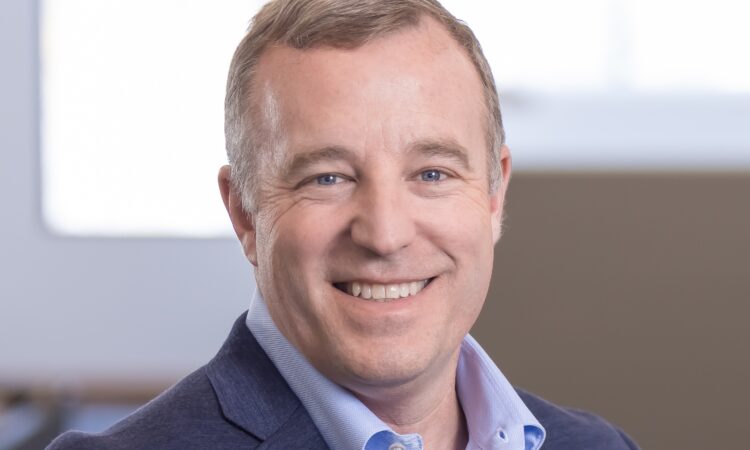
First Take: Opus Group’s Next CEO Matt Rauenhorst
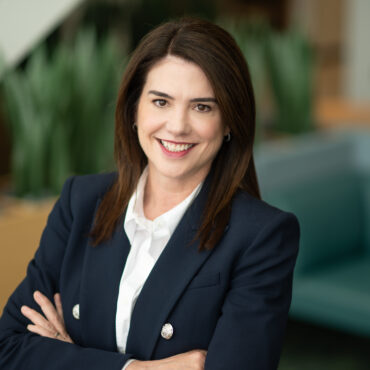
With Matt Rauenhorst to take over as CEO at the end of 2026, the Minneapolis-based Opus Group is reinstating the commercial real estate company’s family legacy.
Rauenhorst will succeed Tim Murnane, who served as president and CEO starting in 2010. Late last month, the top leadership position bifurcated: Rauenhorst took over as president, to assume the CEO role at the end of 2026, when Murnane retires. Opus announced the board’s decision in May.
Rauenhorst’s grandfather, Gerry, founded the company in 1953, and Rauenhorst is set to become the third family member to hold the title of president and CEO. Gerry died in 2014, at 86. (TCB recognized Opus last year with a Minnesota Family Business Award.)
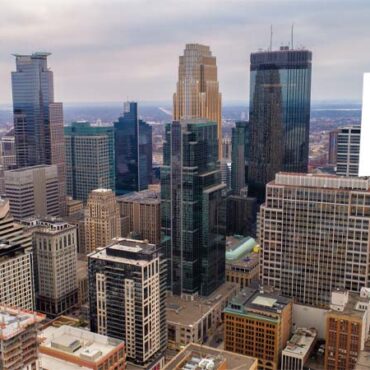
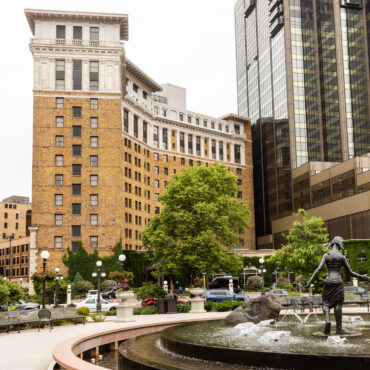
Founded as Rauenhorst Construction Company, Opus is known for having built some of the Twin Cities’ most iconic structures, including the Capella Tower and the Ameriprise Financial Center. Today, the business combines companies across commercial real estate development, construction, and architectural and structural engineering, with a focus on industrial and multi-family projects, Rauenhorst says. It supports offices and projects nationwide.
Rauenhorst launched his career with Opus in 1997. He worked his way from hourly labor to internship, left the family business post-college—to work with Frauenshuh Commercial Real Estate, UnitedHealth Group, and Habitat for Humanity, per a company statement—and returned in 2008 as senior director of development.
He rose to vice president of real estate development in 2019 and, four years later, became president and CEO of Opus’ development subsidiary. (To fill the role Rauenhorst vacates, former senior vice president and general manager Phil Cattanach returns to Opus after two years away.)
In succession planning, “multiple individuals were identified and thoughtfully evaluated for the role,” a company release states. “Rauenhorst ultimately earned this promotion based on his combination of business acumen, real estate expertise, and leadership skills, along with his consistent track record of achieving results while living our core values.”
TCB talked with Rauenhorst about commercial real estate challenges and what helps Opus stand out.
This interview has been edited and condensed for clarity.
What do you see as the major challenges facing commercial real estate development? And how do you see Opus tackling some of those?
It has been a challenging three years for commercial real estate. Rising interest rates have caused a reset in values across all of commercial real estate. Those declining values have put strain across the whole industry. Opus is … focusing our new development efforts in markets and sub-markets with the strongest demand fundamentals and significant barriers to entry. Within Opus, we refer to these as the ‘best-of-the-best’ sites. We’ve been using that terminology now for the better part of two years.
Could you explain “best-of-the-best sites”?
So, the number of new, ground-up development opportunities is certainly more limited than it was three years ago. We are using that term, ‘best-of-the-best,’ to mean two specific things. We’re going into a sub-market where the demand and supply fundamentals are still strong. Their supply is limited; demand is strong. We believe that there will be opportunities for users who are going to be wanting our space.
And the second component of a ‘best-of-best,’ other than a strong sub-market, is a high-barrier-to-entry market. So, we’ll take on a challenging site that’s got barriers to entry. … There have to be two components that build to what I would call the ‘best-of-the-best’ site: Geographic location is strong, and there’s not going to be another project similar to ours developed right next door—there are barriers to entering the market, right?
What’s an example?
Infill industrial development is where we’ve been doing most of our new starts. We have examples of that in the Twin Cities. … It is looking at the last-mile distribution. You’re bringing high-quality, new industrial buildings into sub-markets that don’t have any of the new supply that meets the needs of occupiers today. We did the first speculative industrial development project in the city of Minneapolis in 20 years, and it was a very high-barrier-to-entry market.
You’ve mentioned you’re especially proud of the work you’ve done building trust within the team. You focus on two core values, respect and integrity. What does that work look like?
I look at it in the retention of associate team members, to build a career here, and even in some of our recruiting efforts. I think the other item where I see it come up is that commercial real estate is an inherently risky business. We are solving problems. … Sometimes really big issues come up along the construction and development process.
When I was project lead back in 2014, we were nearing final completion of a student housing project at the University of Minnesota. We had a water event where a pipe broke on the fifth floor. Water flowed through the building three weeks before we were supposed to be moving students in. It’s really common to say, ‘I’m on the development side. The construction company screwed up.’ And the construction company would say, ‘You guys didn’t give me enough time’—and [everyone] just starts finger-pointing.
There was a level of respect, integrity, and trust that it wasn’t ever discussed as ‘Whose fault…?’, because it didn’t matter.