

 What’s this?
The Case for School-Based Clinics
Schools are always striving to improve student outcomes, and it’s often no easy feat. But one promising way to make strides is through school-based health centers. By providing care in a trusted environment, clinics open access to medical services that reduce students’ time away from school.
Students in the White Bear Lake Area Schools have been benefiting from such a program thanks to their own advocacy, responsive administration, and the vision of a St. Catherine University nursing professor. They separately developed a concept to make health care more accessible to students, joining forces to bring the idea to life with the Bear Care Clinic.

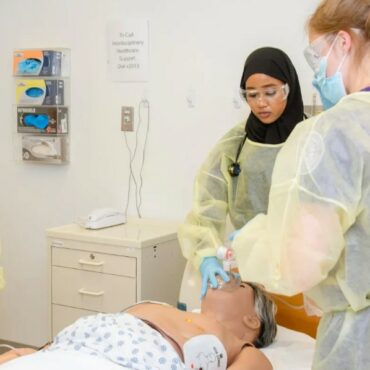
Jessica Miehe, DNP, an associate professor of nursing, first envisioned launching a school-based clinic while pursuing her Doctor of Nursing Practice at St. Kate’s. It would have a dual purpose: providing mental and physical health care to students of all ages and opening another place where the university’s nursing students could gain clinical experience.
With support from St. Kate’s, the clinic has operated at White Bear Lake Area High School since 2020, providing care to the district’s 9,000 students from preschool to age 21. Today, the clinic offers treatment for acute illnesses, immunizations, sports physicals, mental health counseling, and nutritional health services, with a health educator and occupational therapist coming soon. To make care affordable and accessible, Bear Care bills insurance if available and charges no out-of-pocket costs, Miehe says.
Lisa Ouren, the district’s director of student support services, notes that Bear Care removes common obstacles to care. For example, the clinic offers counseling appointments when other clinicians have waiting lists, and it addresses transportation struggles with mobile units that visit the district’s other buildings and provides access to Uber rides.
“By offering these services, it has a positive impact on students’ attendance at school and it gives them a lot of agency to navigate the health care system in a supportive environment,” Ouren says. “We believe that access to essential care without barriers is what every student deserves.” 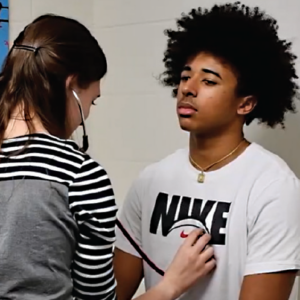
It’s been a smashing success for all involved. “This has been a key partnership for us to be innovative in what we offer our students to help them succeed,” says Superintendent Wayne Kazmierczak. “It’s a point of pride that we are able to offer this to our families. This could really be a model for other school districts.”
Miehe agrees, leading Bear Care’s nonprofit owner, Rise Up Health Clinics, to open a mobile clinic in 2023 to serve Saint Paul Public Schools students. Minnesota has 30-plus school-based clinics, but their outcomes prove that there is always room for more, she says.
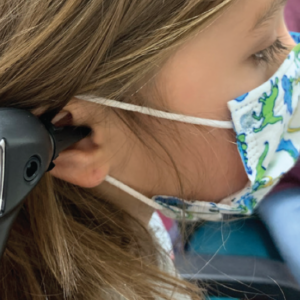 School-based clinics lead to better outcomes because students avoid missing significant school time to secure health care. “Students have decreased absence rates, better graduation rates, and they can get physical or mental health counseling and then return to class,” says Miehe. Plus, these clinics ease strain on the healthcare system by reducing ER visits and Medicaid costs. Through the work of clinics like Bear Care, Miehe and St. Kate’s aim to reduce health care disparities caused by barriers to access. When students feel better, they learn better. Having a one-stop shop where they can utilize a range of services also is a key way they help.
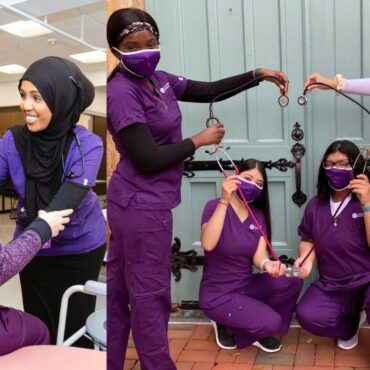
“One of the great things about St. Kate’s is its mission to care for the community and teach our students about social justice and equity. We are teaching our nursing students to be leaders and advocate for eliminating health disparities and barriers for patients,” Miehe adds. “When students come to the Bear Care Clinic, they are seeing that in practice and get to be a part of it.”