

How Do You Fight Leadership Fatigue?
If you feel exhausted and unhappy at work, you’re not alone.
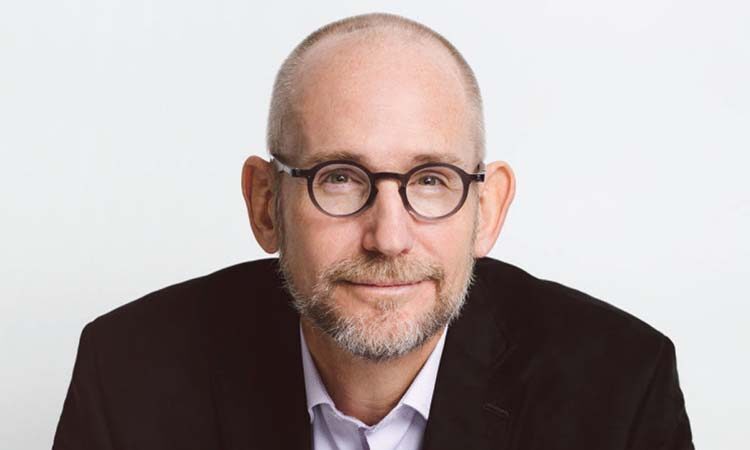
Matt Kucharski, who leads the Padilla communications firm from downtown Minneapolis, has spent considerable time this year talking to clients about what he calls “fighting fatigue with focus.”
“Our job is to help organizations communicate in ways to accomplish their business goals with customers, with employees, with investors, and with communities,” said the veteran company president.
To gain insights into how C-suite leaders and their employees were doing, Padilla engaged a firm to do national online surveys of the two groups in late 2023. Kucharski also conducted several interviews with C-suite leaders for in-depth assessments.
What Padilla found were company leaders and their employees facing challenges that were greater than they were in 2022. C-suite concerns over coping with rising inflation were up by 15 percentage points. In addition, there was an 11-point boost in leaders worried about adapting to change and/or innovating their businesses.
CEOs continually develop strategies to grow their businesses, but Kucharski told Twin Cities Business that some of the leadership fatigue and frustration stems from an inordinate number of obstacles or factors outside of leaders’ control.
“People don’t have the same visibility into their [supply chain] pipelines as they did in the past,” he said.
The economy’s fundamentals have been having disparate effects upon industry sectors. “You couldn’t say it was a bad economy or you couldn’t say it was a good economy,” Kucharski said. “It was just the damn economy because it’s so varied based on who you are and what your situation is.”
Some companies are still feeling the effects of employee pay raises that occurred in 2022, when there was low unemployment and rapidly rising inflation rates.
“It was an employees’ market,” Kucharski said. “They could almost demand an upgraded salary. So, companies were having to accelerate their wage increases, hoping that the revenue would materialize to be able to cover that and they could maintain profitability. That hasn’t always happened.”
Several of the executives used the word “slog” to characterize having to cope with an uncertain economy and still face expectations to produce substantial profits.
A decline in worker well-being and pressures caused by the transition to hybrid work schedules also have caused fatigue in business leaders, he said.
When encountering fatigue or near exhaustion, Kucharski said it’s important for leaders and their employees to concentrate their energy on the most important actions. That’s the advice he shares, and he’s seen leaders prioritizing their business agendas.
“Leaders are focusing their business initiatives, doing fewer things and trying to do them well,” he said. “They are focusing their employees on initiatives that they feel are going to really have an impact. They are simplifying their stories and spending more time being deliberate about what their true purpose is.”
Adapting to a hybrid workplace
Flexible work schedules were outliers before the pandemic, but when many people returned to the office in 2021, they shifted to hybrid work schedules.
One of the most common models requires employees to be in the office three days, on Tuesdays, Wednesdays, and Thursdays.
“A significant majority of leaders don’t love it,” Kucharski said. “But they also know they’re not going to be able to do anything about it.” He means few executives would ban hybrid work, because many office workers expect to have hybrid arrangements.
“It’s a condition to have to be managed,” he said. “It’s not a challenge with an end.”
With the arrival of the Covid-19 pandemic in early 2020, many office workers discovered whether they preferred to be in the office five days a week, in the office two or three days a week, or simply work remotely.
“This is not an easy environment to lead in,” Kucharski said. “The injection of variability reduces the amount of certainty.” Consequently, leading companies and teams has become more complicated and creates more stress, because it’s more challenging to create and maintain company culture when employees have fewer opportunities to get to know each other and work together in person.
In research published in July, Gallup noted that hybrid work has provided individual workers with benefits, but many companies have inadequate training to maximize the productivity of hybrid work teams.
Gallup conducted research on 2,877 hybrid workers in the United States. “When teams are physically distanced and on different schedules, teamwork is harder to coordinate, and productive partnerships are more difficult to cultivate,” Gallup concluded.
Gallup recommended a four-step process to improve the plans, practices, feedback, and training for hybrid teams.
“Hybrid teams need a plan for working together effectively. A plan helps teammates know what to expect from each other and what is expected of them. It also balances team needs in an environment where individual autonomy can overrun priorities that aren’t explicitly defined,” Gallup wrote in a recent article.
Gallup also stressed the importance of training managers and employees in how to work in a hybrid environment. “Only 21% of hybrid workers have received required or optional training for how to work effectively in a hybrid work environment,” Gallup reported.
Disconnect on employee well-being
In recent years, Kucharski said that many Americans have moved from a live-to-work mode of operating to a work-to-live mentality.
The popularity of hybrid work means there no longer is a physical separation between people engaging in work activities at the office and conducting their personal lives at home and other private settings. The blending of people’s daily schedules prompted Kucharski to ask how much responsibility an employer has for what occurs in employees lives away from work.
Kucharski explored that issue by analyzing research that measured employee well-being. In a 2023 study conducted by Deloitte, only 3% of C-suite executives thought that their employees’ well-being had worsened from the standpoint of their financial, mental, and physical conditions. Only 5% of the executives said they thought employee social well-being had declined.
In the same Deloitte study, 37% of employees said their social well-being had worsened over the past year, while 17% to 25% reported a worsening in their financial, mental, or physical well-being.
One reason for this perception chasm is that employers have financially invested in an array of employee benefits, Kucharski said. After seeing the major opinion difference between top executives and employees, he argued that employers should do extensive research to determine what benefits employees value as well as what new benefits would make a difference on employee well-being.
The well-being issue is linked with workplace culture and employee benefits. Kucharski said that executives are searching for answers to the question: How do I build and maintain culture in a way that’s fundamentally different than the way I did in the past? The new culture incorporates hybrid workers.
Kucharski pointed to two consequences of hybrid work that leaders will need to manage.
“It literally allows people to isolate themselves, including people who maybe would benefit from not being so isolated,” he said.
Second, he noted that workers like flexibility in their schedules, but depending upon how a workplace implements hybrid work, it can generate chaos and more stress for leaders and co-workers.