

Earthworms Inspire Medtronic’s Latest Chronic Pain Device

Medtronic researchers say a recently approved closed-loop spinal cord stimulator marks one of the company’s biggest breakthroughs in decades. And they can thank earthworms from a local bait shop for the idea.
No, these little invertebrates didn’t throw on a pair of glasses and bowtie like the character from BookWorm and run the tests themselves. They just happened to have the technology already built in.
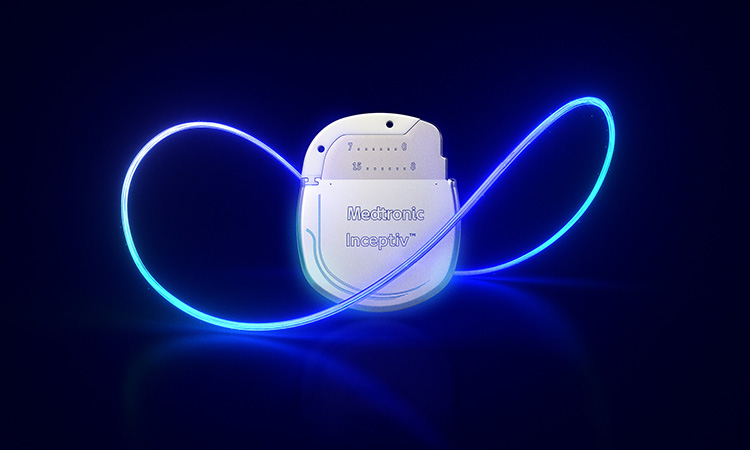
Inceptiv is a rechargeable, fully-implanted device aimed at delivering real-time treatment to patients experiencing chronic pain. The U.S. Food and Drug Administration officially approved the device last month. While implantable spinal cord stimulators have been around for decades, other devices deliver static levels of treatment. That can cause discomfort or pain for people engaging in different levels of activity. With Inceptiv’s closed-loop feature, the device adjusts stimulation 50 times per second — roughly five times faster than a blink of an eye — to detect movement and adjust the level of treatment to ensure maximum comfort.
David Dinsmoor, the local engineer behind the earthworm experiments and a 25-year Medtronic veteran, never expected his tests to come back successful. However, as similar technology has been employed to treat other ailments such as diabetes and cardiac problems, Dinsmoor said this adaptive treatment uses existing pain responses to usher in a new era of physical therapy.
“It’s the idea of listening for something in the body and then using that signal to change or adapt the type of therapy that you’re providing for the patient,” Dinsmoor said. “That’s a very common type of approach, but it’s not something that historically has been done in spinal cord stimulation.”
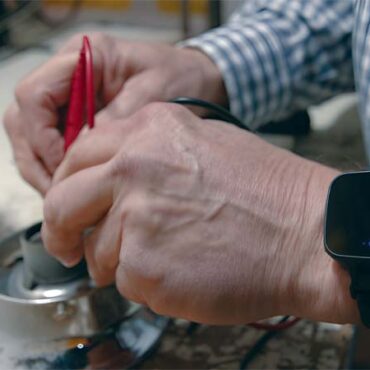
After his boss told him to find something for a high school intern to work on 10 years ago, Dinsmoor sent her to a local bait shop to pick up “the fattest nightcrawlers she could find” to conduct a fun experiment to measure electrical impulses and evoked compound action potentials (ECAPs) from the earthworms’ nervous systems.
Worms have simple nervous systems compared to humans; researchers have long debated whether worms feel pain or merely react to avoid damaging stimuli. Dinsmoor compared Inceptiv’s methodology to bashing your knee into a table: a common reaction, right after cursing, is grabbing it to provide some comfort.

“The idea is you provide a little bit of vibratory or pressure input to mask the pain signal that’s going to your brain,” Dinsmoor said. “Spinal cord stimulation — it’s similar in some ways to that. It provides electrical input into the spinal cord — a signal— that can change your body’s perception of pain.”
The science works like this: ECAPs are measurable signal responses from nerve fibers, which act as a proxy for the distance between the electrode and spinal cord. As patients reduce their activity levels, previous devices would get closer to the spinal cord and provide an overstimulating or even painful amount of therapy. Unlike other devices, closed-loop implants are visible in MRI scans that make regular monitoring possible for those who need it.
“It’s funny that it sort of evolved from picking up a couple wiggles from a worm and then eventually ending up with a device that we can implant in patients for pain management,” Dinsmoor said.
David Carr, head of Medtronic’s pain interventions business, compared the device to adaptive cruise control in a car. Drivers might have a hard time navigating the road if their speed is constantly set to 60 miles per hour, but may feel more comfortable if their speed changes to keep a safe distance between them and other cars.
So far, patients have noticed the difference. The results of two randomized, in-house studies this year found 86% of people preferred the closed-loop device while 89% reported a significant reduction in overstimulation.
Additionally, 86% of people reported back and leg pain levels being cut by at least half within three months, while more than 80% of people reached their activity goals within the same time. Notably, every single participant reported satisfaction with the closed-loop device.
“The first implantable spinal cord stimulators were developed by Medtronic and launched in 1984, so we’ve had 40 years and millions of patients who have benefitted from this technology,” Carr said. “But of course, whether it’s Medtronic or our competitors, we’re all aspiring to continually develop capabilities that continue to increase the level of pain relief.”
For people who may otherwise explant their device and seek alternatives forms of pain management like opioids, Carr said closed-loop technology can transform lives.
The first closed-loop patient, for instance, loved open-sea swimming, but MS lesions took his passion away from him. Despite needing spinal cord therapy, his doctors advised against it due to the need for regular MRI imaging that previous devices could not support. Since implanting a closed-loop device, he no longer has to rely on medication for pain relief.
A car accident took a mother’s semi-professional ballet — and most of her walking abilities — away. With the new closed-loop device, she is now back on stage doing what she loves.
Another patient’s diabetic neuropathy left them wheelchair-bound and unable to do the traveling they love. Her closed-loop device allowed her to board a plane for the first time in four years.
“These devices have the ability to fundamentally reduce pain and give people back all the things that we take for granted,” Carr said.
Formally headquartered in Ireland for tax purposes, Medtronic maintains an “operational headquarters” in Fridley.