

Corporate Leadership: Room & Board
Room & Board’s Orlin dining table, with its simple Scandinavian design and solid ash construction, comes with an origin story as familiar as the trees in the national retailer’s own backyard, at home in Golden Valley.
The Orlin is one of several pieces in the Room & Board collection that is constructed entirely from reclaimed urban wood—lumber harvested from city trees that are felled nationwide for a variety of reasons (emerald ash borer infestation, for instance). “We’re able to divert some of those trees from landfills and turn them into beautiful heirloom-quality furniture,” says Emily McGarvey, Room & Board’s director of sustainability. By 2025, the retailer, with 22 stores nationwide, hopes to divert 1,000 trees annually for use in urban wood furniture and achieve 100% sustainably sourced wood for all products.
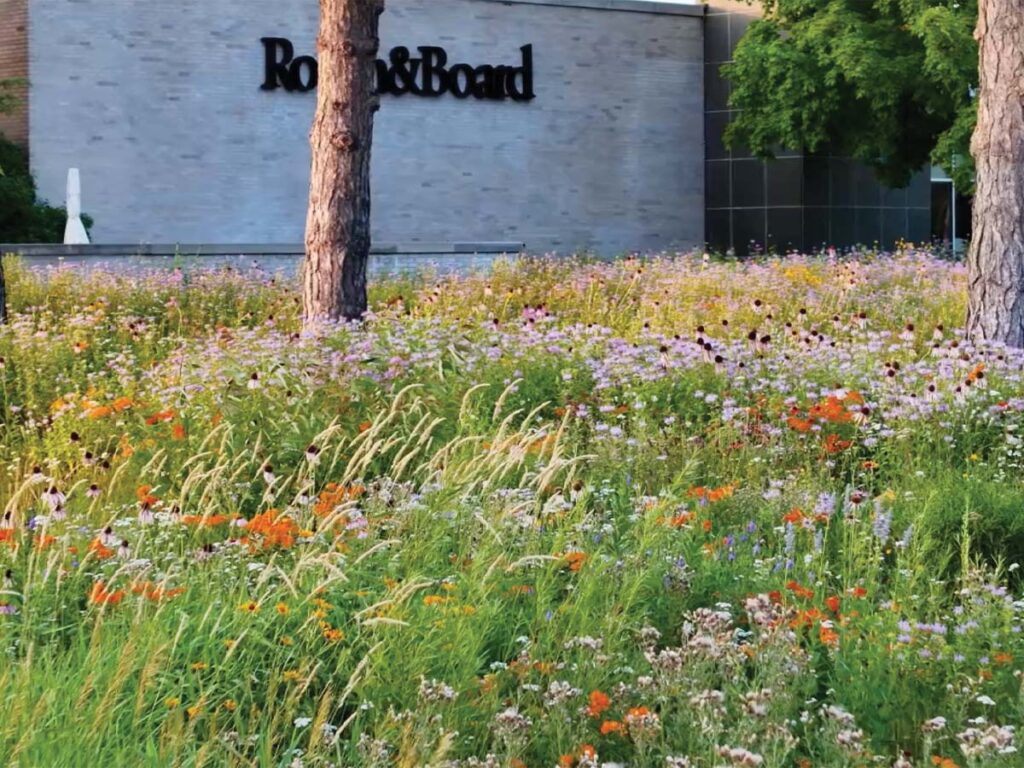
Recycling urban wood is just one example of a strategy Room & Board adopted long before eco-consciousness became a widespread business tenet. “Since our founding in 1980, Room & Board has been committed to sustainable sourcing and American craftsmanship,” McGarvey says. “It’s really in our DNA to consider both people and planet alongside of profit.”
Last October, Room & Board earned B Corp certification, which “solidifies our long-standing commitment to both sustainability and the community,” says McGarvey, who pushed for the certification after joining Room & Board two years ago. B Corp certification is awarded by global nonprofit organization B Lab to for-profit businesses that meet specific environmental and transparency standards.
Room & Board organizes its sustainability efforts into three “pillars.” The first is “better products,” a commitment that includes incorporating sustainable components—such as urban wood—into what it sells. The second pillar is “better for people,” which includes sourcing American-made products, “something that really helps American craftspeople and our communities,” McGarvey says, noting that more than 90% of Room & Board’s products are made in the USA. The “better for the planet” pillar focuses on operational goals. These include deriving 100% of the electricity the retailer uses from renewable sources and diverting 90% of the operational packaging and product waste it generates from landfills to industrial recycling. (Its current waste diversion rate is 83%, McGarvey says.)
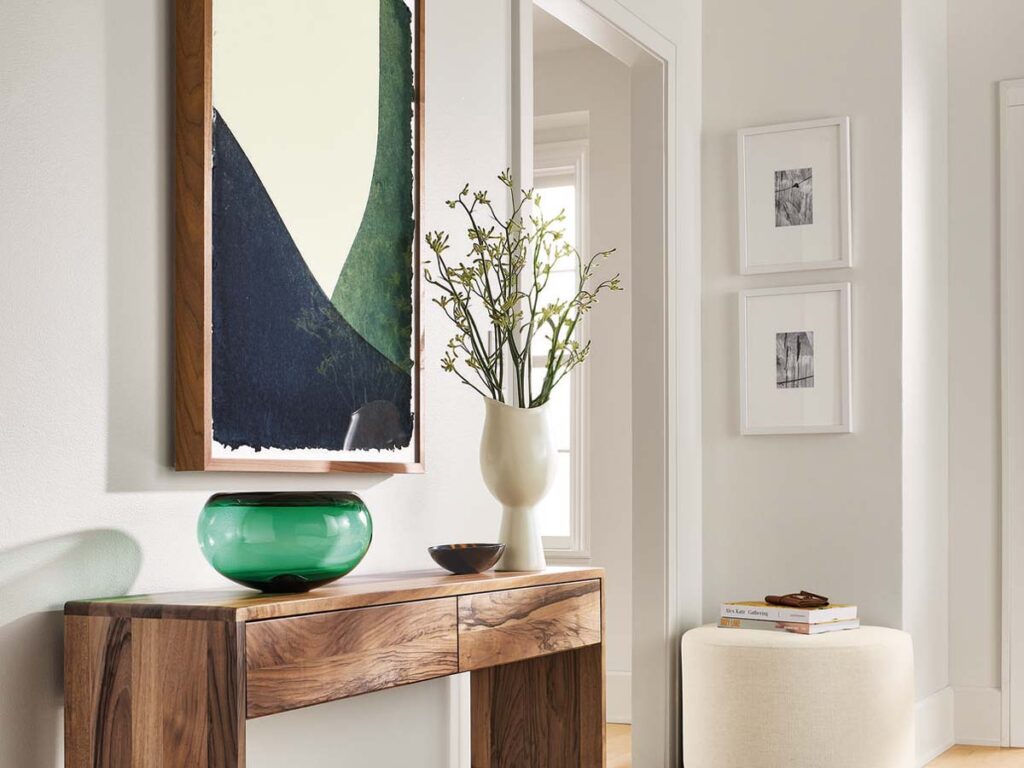
Room & Board also collaborates on sustainability with its vendors, like Duluth-based Loll Designs, which manufactures outdoor furniture from recycled materials. The two companies launched their partnership in 2009, when Room & Board began carrying Loll’s Adirondack-style Emmet chair. They’ve continued to collaborate on the design and manufacture of other products, which are sold under the Room & Board brand.
Loll vice president of sales Nate Heydt praises Room & Board’s dedication to its vendors. “I highlight that because it allows companies to invest,” he says. “As we’ve grown with Room & Board over the years, we’re always having conversations about what materials we’re using and the recycled content within them. Room & Board gave us a platform and a business boost to double down.”