

Settlement Caps Eli Lilly Insulin Prices at $35 Per Month
The partial settlement of a 2018 lawsuit against insulin manufacturer Eli Lilly means thousands of Minnesotans will pay only $35 a month for insulin for at least five years, the Minnesota Attorney General’s office announced Wednesday.
In addition to the price cap, the Indianapolis-based manufacturer will donate enough free insulin to 15 state clinics serving people in need of the life-saving drug that treats diabetes.
Attorney General Keith Ellison cited the settlement as an important step in the state’s fight against Big Pharma and rising medical costs. “Every Minnesotan deserves access to medicines they need to survive,” he said at a press conference at the Minnesota State Capitol on Wednesday.
Through the settlement, Eli Lilly has agreed to implement a texting system to assist pharmacists and patients to determine eligibility for low-cost insulin, and to alert patients about this low-cost alternative at pharmacy counters throughout the state. Minnesotans can go to MNinsulin35.org to learn how to get Eli Lilly insulin products. The website will also be updated to include the 15 clinics providing free insulin as soon as that information is available.
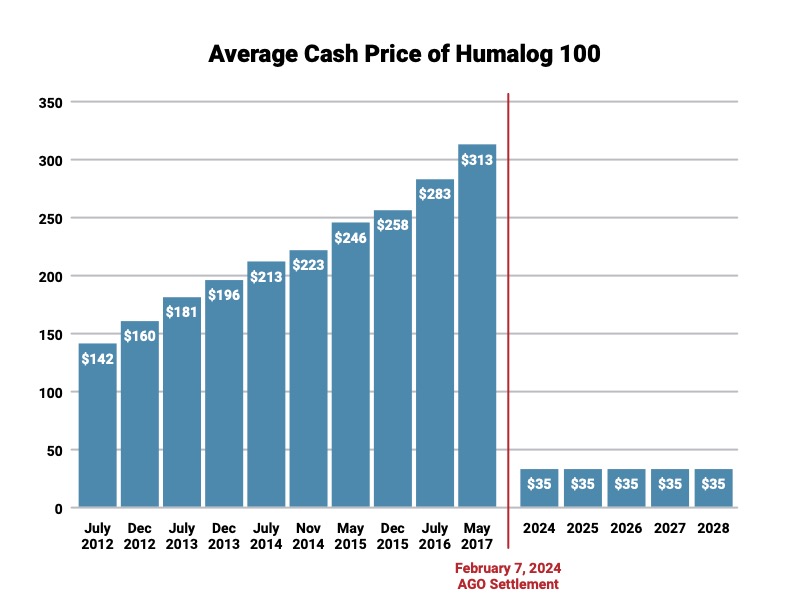
Source: Minnesota Attorney General Keith Ellison’s office
This is the first step toward a larger push by the attorney general’s office against insulin manufacturers’ skyrocketing prices. Eli Lilly is only one of three insulin manufacturers the attorney general’s office sued in 2018, alleging the companies deceptively priced their insulin products, making uninsured and underinsured Minnesotans pay incredibly high prices for insulin. Litigation against the other two defendants, Sanofi Aventis and Novo Nordisk, is ongoing.
Ellison noted during the conference that insulin was first discovered in 1921 by scientists and surgeons at the University of Toronto who sold it for only $1. One of those who discovered the drug, Frederick Banting, famously said: “Insulin does not belong to me, it belongs to the world.”
Since then, pharmaceutical companies have prioritized billions of dollars in profit over saving people’s lives, Ellison said. According to Ellison, those in need of insulin in recent years have paid an average of $6,000 per year for the life-saving drug. According to a 2020 report by Attorney General Ellison’s Advisory Task Force on Lowering Pharmaceutical Drug Prices, prices of some insulin products have risen 1,100% in two decades.
Nicole Smith-Holt, whose son Alec died of diabetic ketoacidosis after rationing insulin when he couldn’t afford more, spoke at the news conference about the toll high insulin prices take on families.
In 2020, three weeks after aging out of being on his mother’s insurance, Alec faced a $1,300 per month insulin bill. Unbeknownst to his mother, Alec began rationing his insulin.
“Rationing insulin is a very common practice among diabetics,” Smith-Holt said. “During Covid, I was hearing at least half of all diabetics were rationing at some point because everything in their life was costing more and they weren’t working as much so they weren’t making much. It’s scary because not only can rationing your insulin result in long-term health complications, but it can lead to death like it did for Alec.”
Since her son’s death, Smith-Holt has become an avid advocate for insulin affordability. In 2020, Minnesota passed the Alec Smith Insulin Affordability Act, which provides an emergency safety net to individuals with an urgent need for insulin, as well as a long-term assistance program.