


U of M Researchers Probe Impacts of ‘Wakesurfing’
The powerful boats used for the burgeoning sport of “wakesurfing” create wakes large enough that people can ride them without a tow rope. But the strength and height of those waves have also made the sport controversial, drawing complaints from people who say their crashing force can damage property and lake habitat, pester other boaters or even knock people off docks.
Now, the University of Minnesota has waded into the fierce debate over regulating the sport by measuring just how large waves from those wakes are.
New research from the UMN suggests wakesurf boats would need to run at least twice as far from shorelines, docks and other lake-goers for their waves to have the same impact as other common recreational boats used for sports like tubing, waterskiing and wakeboarding. The study is likely to inform legislative efforts to control the sport and also raises more questions about the impact of wakesurfing on shorelines and aquatic habitat.
“Two years ago I could have looked out and said ‘wow that’s a mighty big wave that just came off that boat’ but I couldn’t tell you how big it is,” said Jeff Marr, the associate director of engineering and facilities at the U’s St. Anthony Falls Laboratory, who helped lead the research. “We can now talk about how big they are.”
What the U found about wakesurfing
Currently, there are no state regulations specific to wakesurfing and the Minnesota Department of Natural Resources (DNR) has only a recommendation that motorboats stay at least 200 feet from shore or other structures to reduce the chance a wake will cause damage. “Boats that create an artificial wake may require more distance to lower the impact,” says the DNR’s website on “Wake Awareness.”
Two years ago, state lawmakers debated whether to require wakesurfing boats to stay 200 feet away from shore, docks and other watercraft. The legislation was supported by the boating industry, which has run promotional campaigns on conscientious wakesurfing.
But the idea drew backlash from some lake associations, environmental groups and others who said 200 feet wasn’t enough to protect habitat and people from dangerous or damaging waves. Large wakes can lead to shoreline erosion and impaired water quality, according to the DNR. One House DFLer briefly pushed for a 1,000-foot buffer, a distance that would effectively bar the sport from many lakes in Minnesota. And some lake associations have tried to ban wake boats entirely from their local waters.
A 2020 Minnesota survey of nearly 3,000 recreational boaters found 58 percent of respondents believe high wakes or wakesurfing are the most common problems they find on the water. Nearly half of respondents had only registered motorized watercraft and lived in Greater Minnesota.
Lawmakers in the end never set a wakesurfing regulation. But with little independent research on the subject, the U decided to launch a six-week crowdfunded study on waves from the controversial boats.
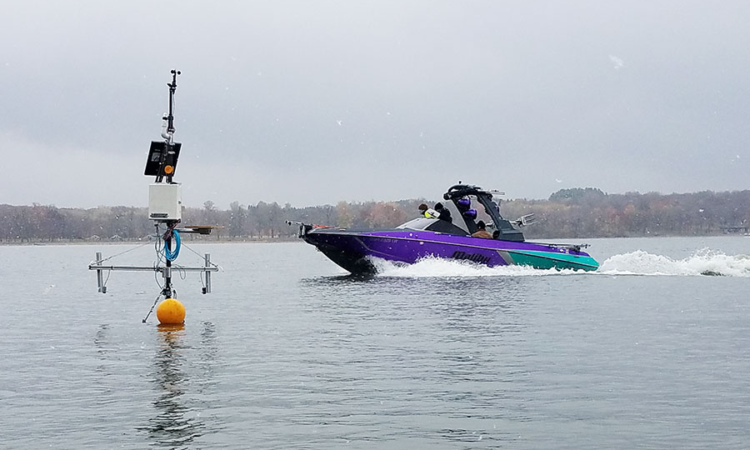
Researchers on Lake Independence in Maple Plain compared four boats under various conditions between September and October of 2020. The report was reviewed by two subject-matter experts with backgrounds in naval architecture and boat wake waves. They were chosen by an outside expert and are not affiliated with the U.
Two of the boats studied are used for more typical water recreation like tubing and two are specifically designed and used for wakesurfing. The wakesurfing boats move relatively slowly and plow water to create their signature large wakes.
The first task was simply to measure waves from the boats.
The researchers found the two wakesurf boats created maximum wave heights roughly two-to-three times higher than the other boats. The wakesurf waves reached as high as 20 inches when measured 100 feet away from the boat. The wakesurfing boats also created more powerful waves, meaning it took a longer time for them to dissipate.
Marr noted more typical motorboats can use equipment to create large wakes, and some people use wakesurf boats in more conventional ways without producing huge waves.
Still, in perhaps its most important finding, the research found that when operating in their usual formats, wakesurf boats needed a much larger buffer distance — 500 feet or more from shore — for the waves to diminish enough to match waves created by typical boats that are 200 feet from shore.
When operating both types of boats for maximum wave height, the wakesurfing boat needed more than 425 feet of distance for its waves to be similar to a typical boat at 200 feet. “Still twice as much as DNR would recommend,” Marr said.
Justification for new boating requirements?
Marr said the university is not making any recommendations for lawmakers who are debating whether to propose any new regulations or deciding what those regulations should be. The legislative session began on Monday. In 2020, the DFL-led House was more skeptical of the 200-foot buffer, while the GOP-led Senate endorsed the idea.
“We’re really trying – even from the very beginning here – to play our role,” Marr said. “The objective is to produce very robust data that’s been reviewed that can help different stakeholders. What we all know is this is a really contentious issue.”
The boating industry responded to the study skeptically on Tuesday. Brad Fralick, a spokesman for the Water Sports Industry Association, said in a statement that his organization is still reviewing the U study, but said the report “suggests a draconian regulation on wakesurfing.”
“If such a regulation were put in place it would have a chilling impact on wakesurfing and endanger Minnesota tourism in the most rapidly growing water sport activity,” Fralick said.
Jill Sims, manager of Great Lakes policy and engagement for the National Marine Manufacturers Association, said the research shouldn’t be used as justification for a large 500-foot or more setback requirement, especially considering it didn’t measure how wakesurfing waves actually impact shorelines when operated 200 feet away.
Both groups support the 200-foot setback rule, and efforts to educate boaters on water etiquette.
At least one environmental group, however, said it wasn’t pushing new distance regulations at the Minnesota Capitol. Jeff Forester, executive director the nonprofit Minnesota Lakes & Rivers Advocates said they’re focused on creating a certification for people to operate boats that would include education on best boating practices to limit damage to waterways and avoid conflicts with others.
Forester said Minnesota law already prohibits destroying aquatic plants or harming shorelines, but he said the rules are difficult to enforce. The state also generally prohibits boating that harasses others or causes property damage.
“So just the regulation doesn’t necessarily mean problem solved,” he said. A boating certification would mean people can’t deny knowing information on protecting lakes and said it creates “pride” in following the rules.
Still, Forester said the U’s study gives information on how far boats should be from shore or other boaters that policymakers can incorporate in boater education as “meaningful and appropriate best practices.”
Sims said Minnesota is one of a few states that doesn’t require boater education and said a mandatory boating safety program could move forward more successfully at the Legislature than other regulations. Her organization, along with Minnesota Lakes and Rivers, the Minnesota Coalition of Lake Associations and others sent a letter to top legislative leaders and Gov. Tim Walz’s administration on Tuesday endorsing the idea.
Rodmen Smith, director of DNR’s Enforcement division, said in a written statement Wednesday responding to the UMN study that the agency “is committed to protecting shorelines and aquatic vegetation while also balancing the interests of the wide range of motorized and non-motorized recreational boaters who enjoy our lakes and rivers.”
“This is a new report, so we will need some time to consider the findings and have conversations both internally and with our many stakeholders before deciding if the DNR will make any related policy recommendations to the Legislature,” Smith said.
What’s next for the U
Marr, like Sims, noted the U didn’t research how the waves might impact shorelines, or how “propeller wash” — water pushed downward in the lake from the motor — might dredge up lake bottoms in a way that can muddy water and lead to algae blooms. He said the U hopes to continue research on boat wave and wake impacts if it can get money in the future.
Marr said the U’s study also involved only four boats on one lake, meaning results could be different when measuring, say, a pontoon on a lake with different characteristics.
 This story is brought to you by MinnPost.
“All of it leads to, there really is a need for research here,” he said.
Still, Marr said their research is a good foundation for research on a topic that has drawn intense interest in Minnesota and around North America.
“I’ve been at the university in a professional engineering role for 20 years, and I’ve never seen anything quite like it where we get calls every week and the radius just grows and grows,” Marr said.
“I use lakes in all different kinds of ways really. I’m a walleye fisherman, I waterski, I drag my kids around,” Marr said. “So I don’t want activities to be limited but I think that there are ways with information we can use the lakes properly. There are some lakes certain activities don’t work, but if we’re smart about it we can understand what those activities are.”