

2026 Giving Guide: How to Help With the Housing Shortage
It doesn’t seem like an outrageous aspiration that everyone have access to safe housing, suited to their basic needs, at a price that is affordable for their income level. But the truth is that Minnesotans are far from making that aspiration a reality.
Current data shows that Minnesota is about 100,000 units short of the affordable housing needed for the existing workforce. That number will grow as the state’s population grows and the economy expands.
“In fact,” says Alfonso Wenker, senior vice president of community impact at the Saint Paul & Minnesota Foundation, “most of us live near people who are only one step away from losing their housing.”
This is not a metro-only shortage by any means. Smaller cities and towns—and rural areas—face the same shortages, which hold back economic growth and force employers into the role of housing advocates (and, sometimes, housing providers). The service sector, in particular, is pinched, because workers find it difficult to find housing they can afford near their jobs.
About 220,000 households earn less than $20,000 per year, according to Minnesota Housing Partnership’s housing affordability data. While many state residents live in poverty, the lowest-income people aren’t the only ones facing a housing access and affordability problem. The state has unmet housing needs across the entire income continuum.
“Minnesota has a track record of coming together around critical issues in a coordinated way. We’ve done it around things like education. I am seeing that kind of ‘all-in’ energy on housing right now,” Wenker says.
The Greater MSP Regional Indicators’ Dashboard for 2026 shows that a third of Minnesota households are considered “cost-burdened,” which means they pay 30% or more of their income on monthly housing costs.
With median home prices now topping $400,000, homeownership is out of reach for many middle-income workers. Average rent is hovering at almost $1,700 per month, so it doesn’t take a lot of fancy math to see the ways people are squeezed. Many people are struggling to cover the costs of rent, food, child care, health care, and other basic needs.
If Minnesotans want more jobs and greater business vitality, a growing workforce needs places to live. Yet the Minnesota Housing Partnership reports, “None of Minnesota’s top five in-demand jobs pay enough for workers to afford homeownership, and, of the five, only registered nurses earn enough to afford quality rental housing.”
As business leaders rally to promote economic growth, they also need to think about housing growth, including for people at the income levels where the most jobs are being created.
Minnesotans need to rethink what they mean by “affordable housing.” A broader definition would include housing that not only the most vulnerable people can afford, but also those who work in critical fields such as health care, education, retail, restaurants, and many other businesses that pay competitive wages but whose workers are finding housing prices out of reach, if they can find housing at all. Minnesota leaders need to think not only about new housing construction but also keeping the state’s existing housing stock in good shape.
Minnesota has a robust nonprofit housing sector that is committed to easing the housing shortage. These organizations offer a variety of pathways for involvement—as an individual, as a business, neighborhood association, church, elected representative, or investment manager. Here are four ways people can contribute to solutions. It’s going to take many Minnesotans working together to address the need.
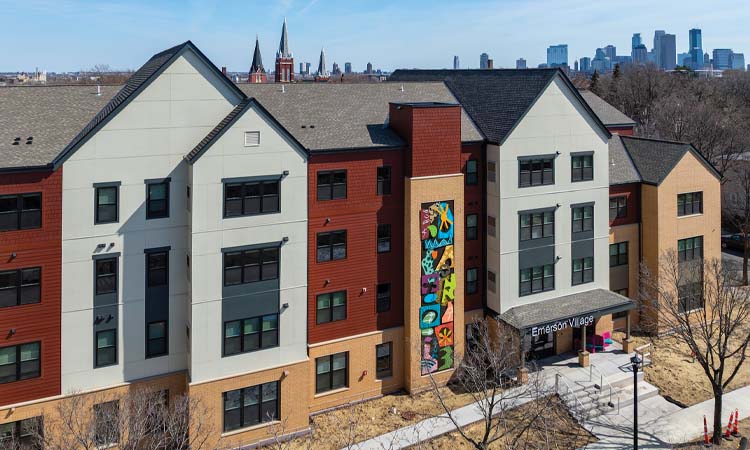
1. Inform Yourself
The best thing people can do to support the expansion of affordable housing in Minnesota is to learn about the situation, the potential solutions, and the players involved in accelerating responses. That way people can be ready to provide support according to their personal circumstances and interests.
There are multiple sources of information, from business groups like Greater MSP to advocacy groups like HOME Line to housing organizations like Project for Pride in Living. Try these three diverse organizations for up-to-date information. They provide e-newsletters and regularly post on social media sites.
Minnesota Housing Industry News is published by Minnesota Housing First and offers news and information about developments in the housing industry across the state. Housing First is an organization supporting developers.
Minnesota Housing Partnership (MHP) is a research, policy, and advocacy organization that supports housing advocates, builders, and lenders. MHP publishes an annual state profile that functions as a report card on Minnesota housing.
Read more from this issue

Housing Justice Center (HJC) is an advocacy and legal organization that supports renters and works to preserve and expand affordable housing in Minnesota. HJC provides legal information to tenants and landlords, connects organizations that support tenants’ rights, and uses strategic litigation to enforce housing laws and protect tenants.
2. Consider Nontraditional Solutions
Organizations and people working on Minnesota’s housing shortage are inventive, looking at all the ways that housing can be created and sustained. Some groups, like Aeon in the metro, and the Southwest Minnesota Housing Partnership, based in Slayton, work to ensure that existing structures get the maintenance attention they need. Others are advocates for accessory dwelling units (ADUs) like garage apartments, in-law units, or tiny homes that can face restrictive zoning ordinances but allow a variety of infill housing possibilities when homeowners or landowners build them or make room for them on their property.
Perhaps surprisingly, groups focusing on manufactured housing are gaining traction, supported by a 2025 report from the Federal Reserve Bank of Minneapolis that concluded that manufactured homes represent the fastest and least expensive new housing construction. A report about the Fed study concludes with a quote from its authors, “Our analysis strongly supports those who have argued since the 1930s [at least] that the only chance of building homes that are ‘affordable’ is in a factory.”
In Minnesota, a surge in manufactured housing units could have the double benefit of providing an affordable point of entry for new homeowners and renters, as well as supporting the businesses that build manufactured homes.
CoNorth is a nonprofit leader in the manufactured home arena. The organization helps resident communities finance and create owned communities of manufactured housing, including creation and financing of new communities. In August, CoNorth announced that the city of St. Peter approved a new project that adds 60 new manufactured homes, a neighborhood park, and community center to the city’s housing stock. The only downside? It took several years of planning to make it happen.
MPR News recently visited the city of New Ulm, where vacancy rates are below 1%. There, the city is embracing nontraditional housing options like “shouses” (a shed becomes a house), “barndominiums” (pole-barn homes), and tiny homes that might not be much bigger than a hotel room. These kinds of new housing adaptations often require changes in zoning or modifications to building standards, and regulatory agencies are not accustomed to moving quickly. To solve the housing shortage, Minnesotans will need to get used to new places and ways to find a home.
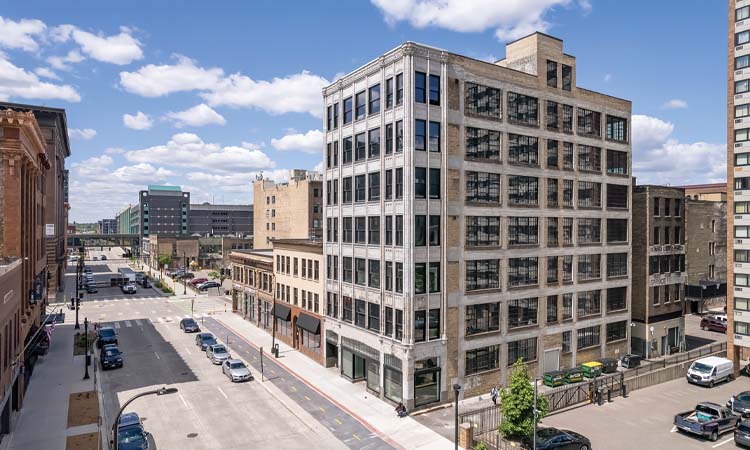
3. Support Affordable Housing Organizations
There is absolutely no shortage of quality organizations working in the affordable housing arena that deserve a piece of the philanthropic giving pie. Many of these organizations are addressing Minnesota’s most discouraging housing facts: The state lags significantly in rates of homeownership by people of color, and people of color are overrepresented in the percentage of households that are cost-burdened in both rental and home ownership rates. Both data points have been documented and amplified, yet the trend line is not really budging.
Minnesota Housing Partnership reports that between 57–60% of Black renter households are cost-burdened, compared to 43–45% of white renter households. The disparities are greater for homeownership, with 78% of white households and only 31% of Black households owning their homes.
Twin Cities Habitat for Humanity offers a Black Homeownership Program with proven results. Project for Pride in Living has increasingly invested in housing stability for BIPOC communities, opening more than 200 units last year and helping another 200-plus people become homeowners (almost 80% were people of color).
Beyond individual giving, there are other ways to get involved.
Beacon Interfaith Housing Collaborative, based in St. Paul, engages with faith communities to raise funds for and make new affordable housing projects possible. Currently partnering with 70 congregations in Minnesota, Beacon provides education and advocacy that helps faith communities get involved and commit to advancing its mission that “all people have a home.” A project in Maplewood will provide 40 new apartment homes and a support team for residents. This new development will join more than 20 other new or renovated buildings Beacon has created in recent years.
People with sufficient assets on their personal, business, or philanthropic balance sheets can consider equity-side investments in development of both affordable and market-rate housing.
Several Minnesota foundations are investing in affordable housing development. The Pohlad Family Foundation has shifted its entire focus to affordable housing “so that everyone in the Twin Cities has access to safe, stable, and affordable housing,” largely through philanthropic grants but also through a limited number of impact investments. And the McKnight Foundation, among the state’s largest philanthropies, has invested its assets broadly in several organizations, including the Greater Minnesota Housing Fund, that provide financing and project development for affordable housing.
4. Cultivate Neighborliness
Minnesota is known as a state where neighbors help neighbors and where tight-knit communities celebrate together, look out for each other, and help each other in a pinch. Minnesota’s housing shortage also isn’t news to anyone paying attention to the growing unhoused population, to any parent watching their young adult child try to buy a home, or to seniors who might like to sell their home and move to an apartment or condo but can’t find one they can afford. Housing solutions are available—but not without challenges.
Chad Schwitters, senior program officer at the McKnight Foundation, says, “Minnesota has one of the more sophisticated housing systems as far as organizations doing the work; intermediaries helping to broker financing; application of those dollars; and intervening between philanthropy and government to make things work.” He says Minnesota is better off than many states that lack the infrastructure to make progress on housing.
What’s stopping Minnesotans from more progress? Observers say that everyone wants affordable housing projects unless it is near them. They don’t want to be where the housing happens, even though they know it is important.
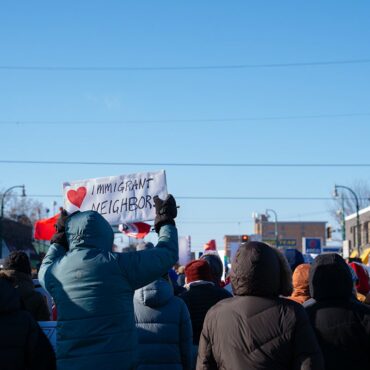
Community members often oppose rezoning or building permit changes. “We need kindness and welcoming of neighbors. We need to energetically be a place where we believe in the goodness of other people,” says Heidi Goldman-Gray of Beacon Interfaith Housing Collaborative. With that attitude and concerted effort, we can tackle the state’s housing shortage.