

Dunwoody Seeks to Fill the Trades Gap—Virtually
It’s not news that construction companies, manufacturers, and other businesses that employ people in the trades are having trouble filling their many open positions.
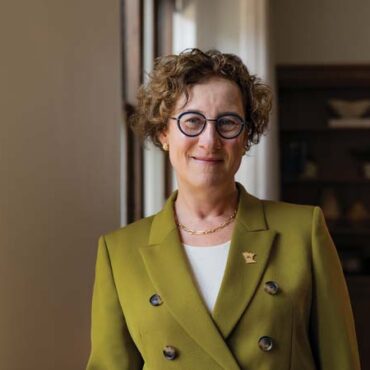
“Trades careers are lucrative, and they have high job satisfaction,” says Scott Stallman, president of Dunwoody College of Technology in Minneapolis. “We asked ourselves, ‘What is keeping students from these careers?’ And it seemed to us that there was a gap”—one that begins opening up in high school.
To help close that gap, the technical college has introduced a new way to reach high school students and teach them what the trades can offer. The Dunwoody Immersive program is similar to existing postsecondary enrollment options (PSEO) programs. PSOE offerings let high school students take college courses for free, thus earning both high school and college credits. In recent years, PSEO programs have been available online.
But Stallman notes that these courses “tend to be in every area—except the skilled trades.” One big reason he cites: “High schools just don’t have the labs associated with these courses” that can give students hands-on experience with, say, electrical components or HVAC equipment.
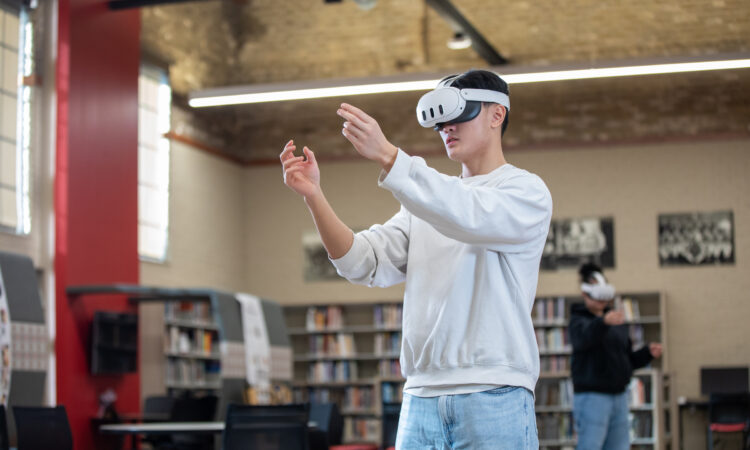
The Dunwoody Immersive program has been designed to bridge that gap. The program equips each student with a virtual reality headset programmed to recreate the lab experience. Many technical colleges have introduced VR into their classrooms. But using VR remotely is “new, as far as we know,” Stallman says.
Dunwoody Immersive courses run 10 to 14 hours per week, including both class and lab time. The scheduling is designed to conform to both Dunwoody’s semester and each high school’s calendar. Students learn at their own pace, but to earn college credit, they need to demonstrate that they’ve met the course’s learning objectives. Dunwoody uses Canva, an online learning management software, to track each student’s progress.
Four public school districts are participating in the first year of the Dunwoody Immersive program—Hermantown, Eden Prairie, White Bear Lake, and Wayzata. In addition, Edina Virtual Pathway (an online high school) and Avalon School (a charter middle and high school in St. Paul) have signed up. The program’s first cohort is expected to number around 150 juniors and seniors.
“We wanted a good selection set of students from both smaller and larger communities, as well as charter schools in larger districts,” says Cindy Olson, Dunwoody’s vice president of enrollment management. These were schools interested in offering expanded college-credit options for students and that were eager to participate in the Dunwoody Immersive program.
That program is offering two “beta” courses this school year: DC Circuit Fundamentals and Early Global Architecture. “The courses we’ve selected can lead directly to career pathways,” Olson says, including pathways that students “may not know exist.” These also are areas “where industry has come to us and asked us to strengthen the pipeline into these positions,” Olson adds.
Examples of pathways that the Early Global Architecture course can open up include drafting and construction, as well as architecture. Careers associated with the DC Circuit Fundamentals course include electrician, automotive technician, and advanced manufacturing (particularly in electronics).
“These two courses are helping us understand what is needed in the next courses,” says Brad Hosack, COO of the Dunwoody Immersive program. “We wanted to use this first year to learn what we need to learn and understand what’s going to make this successful. We also wanted to understand the types of things that were attractive to high school students.”
The program incorporates VR in ways that can both teach and astonish tech-conversant young people. In the DC Circuit Fundamentals course, students can “use” electrical technicians’ tools and materials to learn concepts such as Ohm’s law. They also can “virtually use their hands and wire up circuits, solve problems, diagnose broken circuits—where they’re actually getting practical experience,” Hosack says. Students in the Early Global Architecture course can take virtual “field trips” to Ancient Egypt and Renaissance Europe to learn about the architecture of those areas and what influenced their development.
“The other piece in these courses that we think is so valuable is the career exploration that’s built into them,” Hosack says. Students can meet current trades practitioners and learn what their workdays involve. “We’re exposing students to numerous possibilities so that they can decide what fits with them and what doesn’t,” he adds. The long-term goal is to take the credits “and move down a pathway that ultimately leads to a trades career.”
Dunwoody now is contemplating several new courses for next year, and it plans to add more school districts to the Dunwoody Immersive program. “This isn’t about getting more students to Dunwoody, specifically,” Hosack says. “This is about introducing students to skilled trades and helping them transfer those credits to schools near them.” And, it’s hoped, helping employers fill some big gaps.