

Why Mesabi Metallics Is a Big Deal for Minnesota
Metro-area residents attuned to Minnesota’s broader economy undoubtedly have heard about a new Iron Range company called Mesabi Metallics.
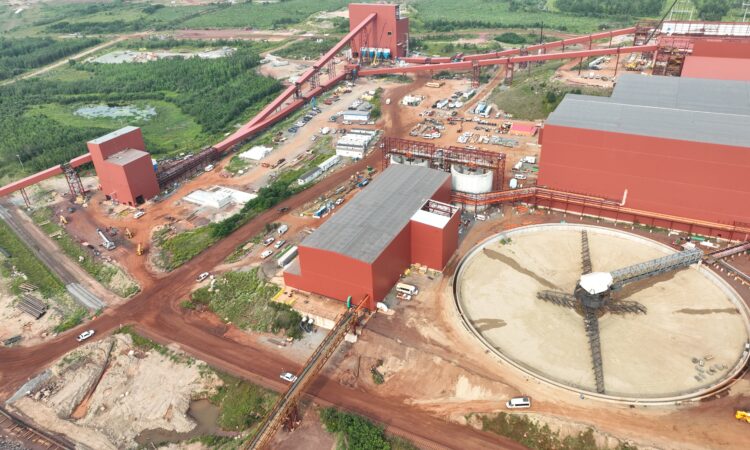
The Star Tribune recently described the Nashwauk iron mine and processing plant as “one of Minnesota’s biggest economic development projects ever,” citing the facility’s $2.5 billion price tag. Interestingly, the state isn’t chipping in any funds. The project’s developer, India-based Essar Group, has been raising the money itself. In March, for instance, the project received $10 billion in loans from the U.S. Export-Import Bank. The company plans to begin commercial production of iron pellets within the next few months.
Mesabi Metallics would be the first iron ore mine to open in Minnesota in about five decades. And it could provide a significant boost to northern Minnesota’s extraction sector, which remains a critical pillar of the region’s economy.
Still, the Iron Range’s recent history has been littered with failed projects. Is there reason to believe Mesabi Metallics will succeed and thus bring needed jobs and development to the region?
An ever-changing industry
One key justification for optimism is that Mesabi Metallics plant won’t be producing taconite pellets.
In the past couple of years, the Iron Range’s ebb-and-flow economy has been in something of a downturn. In March 2025, Ohio-based steelmaker Cleveland-Cliffs idled two of its four Minnesota mining and pelletizing operations: Hibbing Taconite in Hibbing and the Minorca Mine in Virginia. These shutdowns put 600 employees out of work. Cliffs blamed decreased domestic steel demand experienced in 2024, which resulted in a taconite glut.
One of Minnesota’s great innovations, taconite pellets were developed to make up for played-out natural ore mines. They were intended specifically for the massive blast furnaces that once produced all American steel. Now, only eight blast-furnace mills remain, all owned by either U.S. Steel or Cleveland-Cliffs.
These days, more than 70% of domestic steel is produced by electric arc furnaces, also called mini-mills. Electric arc furnaces, which melt down scrap to make new steel, can’t use taconite pellets. But they do require some newer iron sources to improve the quality of the steel they produce. Pig iron from overseas has long been that source.
This is where direct reduced iron (DRI) and hot briquetted iron (HBI) enter the picture. This newer type of iron stock can replace pig iron in mini-mill production—and do so domestically. In addition, DRI and HBI allow mills to make steel while generating significantly lower carbon emissions than blast furnaces.
Overall, the U.S. steel industry has been doing well lately, and there are reasons to believe it might be poised for an extended boom. Charlotte-based mini-mill giant Nucor, the largest steel producer in the U.S., just reported a second straight record quarter for its steel shipments. The company cites continued demand from the energy, data center, and advanced manufacturing sectors as drivers in its bullish forecast for the remainder of 2026 (and beyond).
Taconite mines haven’t shared in this boom. For one thing, the steel mills that they feed are focused on the automotive and commercial construction industries. Both sectors were hit hard during Covid, and both have yet to recover. While vehicle production has been climbing the past few years, it’s still millions of units off from its pre-pandemic highs.
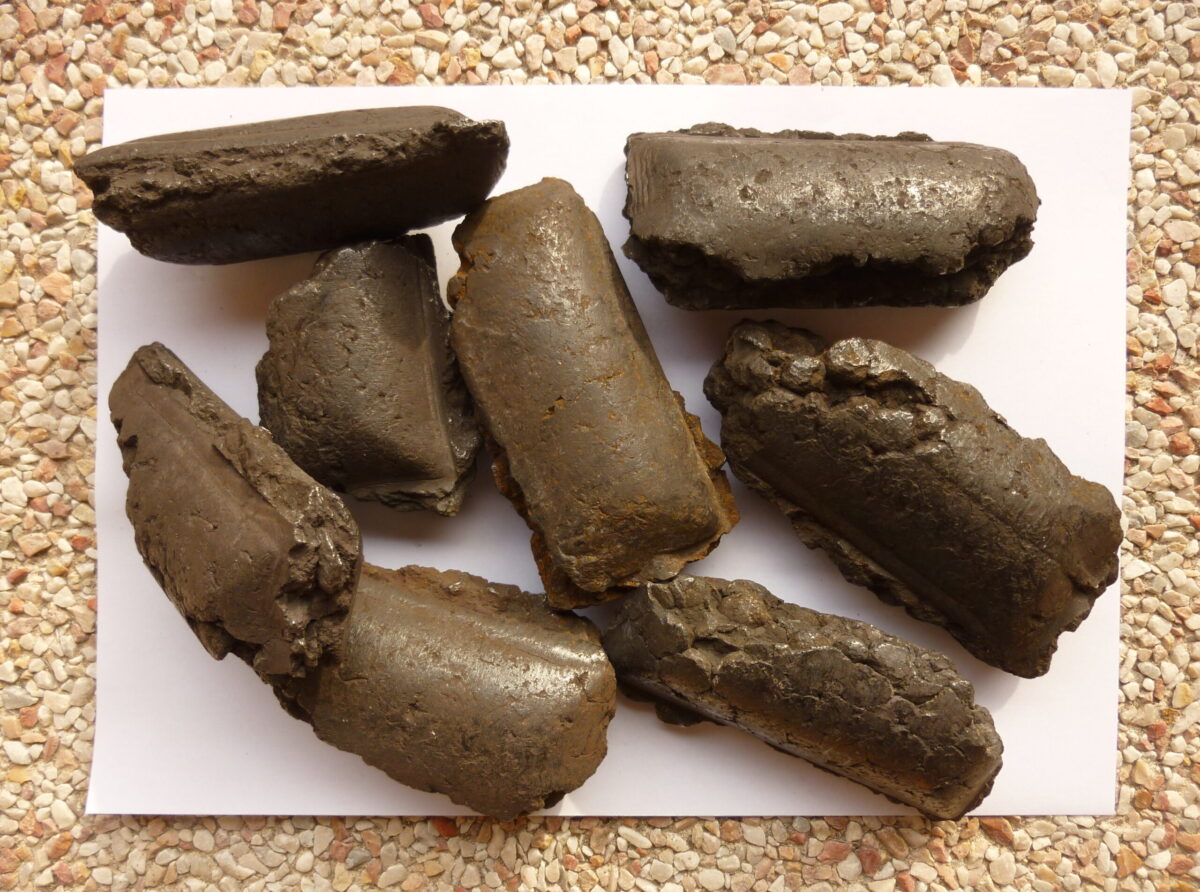
What Mesabi Metallics is producing is direct reduction-grade pellets. DR-grade pellets, which have an iron content of 67% or higher, can be processed into direct reduced iron (DRI) and hot briquetted iron (HBI). The DRI process takes DR-grade pellets and forms them into pellets or lumps with 90% iron content or higher. HBI plants convert DR-grade pellets into pillow-shaped briquettes with a similarly high iron content.
All this suggests that Mesabi Metallics is well positioned to meet current U.S. steel industry demand.
DR-grade pellets up north
The Mesabi Metallics project dates back to 2018, when India-based Essar Steel proposed building a plant to produce both taconite and DR-grade pellets. Despite millions in funding, the plant never opened. In 2017, Essar Steel Minnesota declared bankruptcy, and the project languished.
A few years back, members of the family that founded Essar Steel reorganized their business as The Essar Group. With massive injections of new investment, a company now called Mesabi Metallics began vigorously constructing the conjoined mine and DR-grade production facility. It appears that Nashwauk’s long-delayed dream will finally be coming true.
Mesabi Metallics won’t be the only DR-grade pellet producer on the Range. A few years back, U.S. Steel’s Keetac plant in Keewatin reconfigured one of its taconite lines to make DR-grade pellets. U.S. Steel is building an electric arc mill in Arkansas that’s likely become the main “customer” for Keetac’s DR-grade production. In Silver Bay, Cleveland-Cliffs’ Northshore facility began producing DR-grade pellets in 2019. Cliffs ships these pellets to its HBI plant in Toledo.
Unlike those facilities, Mesabi Metallics will sell all its DR-grade product on the open market. Its customers, which would process the pellets into DRI or HBI, could be both domestic and international.
Though it has understandably garnered a lot of attention, Mesabi Metallics isn’t the only extractive-industry action in the Iron Range region. Some have earned statewide press. Others have been mostly flying under the radar.
Northern explorations
For instance, several startups are pursuing projects involving scram mining, the extraction of iron ore from old tailing basins and disused mine workings. These projects, if developed, would also produce DR-grade pellets.
Hibbing-based Scranton Holding has proposed processing waste from a long-closed mine near Calumet that from 1988 to 2024 was the Hill-Annex Mine State Park. Another company, MagIron, is seeking to restart the scram mining and processing facility near Grand Rapids. This operation was previously owned by Magnetation, a company launched with great fanfare in 2016—then shut down 10 years later.
Then there are the seemingly interminable struggles to develop copper-nickel mining. Efforts to open these mines have been going on for more than two decades, slowed largely because of their proximity to the sensitive ecology of the Boundary Waters Canoe Area Wilderness.
Last year, the federal government made major moves intended to speed up the approval processes for the Twin Metals and NewRange (formerly PolyMet) mining projects. This past Wednesday, NewRange announced a new approach to storing leftover mining tailings at its proposed facility near Hoyt Lakes. The company hopes that this amended design will meet state water-safety requirements.
(Another copper-nickel mine is being developed in northern Minnesota by Canadian firm Talon Metals. It’s located near Tamarack, a tiny town in Aitken County that’s far from the controversial locations of the other projects.)
Not all the extraction development activity in the region involves minerals.
Portugal-headquartered Pulsar Helium has been exploring helium extraction near Babbitt. Helium’s industrial applications include semiconductor manufacturing, fiber optics, medical equipment, and electric vehicles. In May, Pulsar completed the purchase of surface land in Lake County.
Pulsar is also looking into the extraction of industrial-grade hydrogen in the region. Hydrogen is being touted as a carbon-free fuel for vehicles and power plants. In March, Pulsar acquired 80% of Texas-based Quantum Hydrogen, which owns rights for non-hydrocarbon gases on land in St. Louis and Itasca Counties. Pulsar Helium is expected to absorb the rest of Quantum next year.
Other companies also are looking into hydrogen “mining” in northeastern Minnesota. One is Quebec Innovative Materials, which is focusing on land in St. Louis County. Another is Denver-based Koloma, whose funders include Bill Gates’ Breakthrough Energy Ventures and Amazon’s Climate Fund. Koloma has conducted survey work in Lake County.
Finally, on the long-dormant Cayuna Iron Range in Crow Wing County, an entrepreneur has proposed mining manganese, a crucial element for producing lithium-ion batteries.
In short, the Iron Range and other nearby parts of northern Minnesota are humming with exploratory activity. Outside of the copper-nickel projects, none promise the scale and impact of Mesabi Metallics. Residents who’ve experienced the Nashwauk plant’s ups and downs over the years have reason to be optimistic—and cautious.
After all, the region saw Essar Steel’s original vision fall through, even with millions in investment (which The Essar Group has been paying back). It watched the failure of Magnetation and its short-lived successor, Prairie River Minerals. Even with Washington’s aggressive support, active copper-nickel mining is still not a slam dunk. And with the region also heavily reliant on Great Outdoors tourism, two Iron Range economic drivers could become engaged in extended road rage.
But despite their relative decline in importance, extractive industries remain crucial to the region’s well-being. Mesabi Metallics could presage at least a modest revival of those sectors.