

Aer Lingus Flies Away
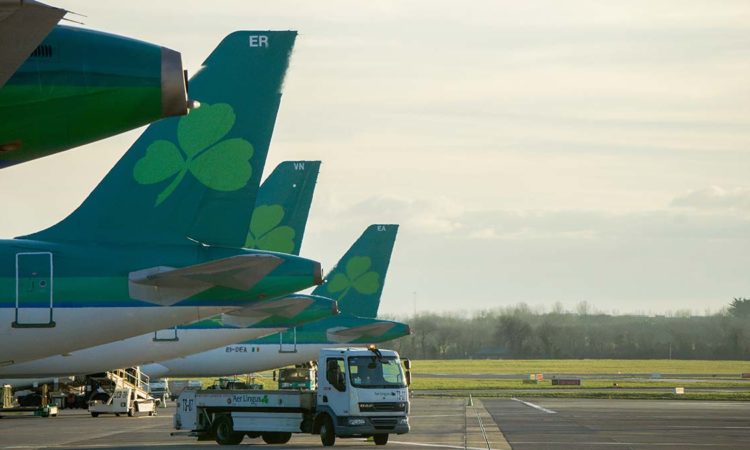
The July news that Irish flag carrier Aer Lingus was ending flights to MSP Airport this October proved the latest in a series of disappointing recent developments in local air service. The carrier had been serving MSP since 2019 (with a pandemic pause) and was the poster child for the Regional Air Service Partnership (RASP), a joint effort of Greater MSP, the Metropolitan Airports Commission (MAC), which owns and operates MSP, and the 30 largest local companies.
RASP’s first big win was Aer Lingus. The carrier had purchased smaller A321XLR aircraft designed to exploit secondary markets overseas, and the Twin Cities was in the running. The carrier sent an RFP to several airports including MSP. As the story goes, RASP connected Medtronic—with operational headquarters in Fridley and corporate headquarters in Dublin—with the airline. Medtronic regularly sent executives between MSP and Aer Lingus (some in business class), which at the time required a connection in Chicago or on the East Coast. Medtronic’s promise of support was sufficient for the airline to select MSP for new service.
The MAC’s director of air service development, Brian Peters, has been working on bringing new airlines and new airports to MSP’s flight schedule since 2010. He considers RASP a success and notes MSP is at an all-time high of 35 international nonstop destinations. The bulk of those are North American destinations flown by Sun Country and Delta, but they include many European destinations. “We try to show [airlines] opportunities,” he notes.
Though recent European wins are notable, a few have turned into losses. The MAC had been working for years to attract overseas flag carriers not affiliated with Delta, such as British Airways, Iberia, and Lufthansa. The latter came to MSP with service to Frankfurt but departed after just a year, citing aircraft shortages. Lufthansa substituted seasonal service with its leisure affiliate, Discover Air. (Icelandair is the airport’s longest-standing European flag carrier, but its service is also seasonal.) Seasonal carriers tend to appeal to leisure travelers, whereas business travelers gravitate to airlines and services they can use year-round.
So why did Aer Lingus depart? A lot of it appears to be due to competition from Delta. The U.S. government requires airlines to post passenger loads and destinations for their services. Apparently noting Aer Lingus’ success in the market, Delta in 2024 announced seasonal nonstops to Dublin. It then made the service year-round—in a widebody aircraft far larger than what Aer Lingus was using.
Media reports stated that Aer Lingus’ load factors were low—less than 70%—when it announced its departure from MSP and several other U.S. markets.
Peters says only six U.S. markets, all larger than MSP, host dual airline service to Dublin. He says that at the time Aer Lingus arrived, the MAC considered Dublin among the largest unserved air markets, based on Twin Cities travel patterns. But Aer Lingus’ departure was not a surprise either. “Fuel costs are up, travel to the U.S. is down, Delta’s competing service affected them,” he notes.
Peters had no idea if Medtronic was still using Aer Lingus business class cabins with regularity or had switched to Delta, saying the agency has “no knowledge” of international corporate travel agreements under RASP. Numerous emails to Medtronic went unreturned.
For business travelers, “it’s helpful to have other flag carriers,” explains Jude Bricker, former Sun Country CEO. “Delta brings the Twin Cities higher connectivity, but we pay more,” due to the lack of competition.
Though Peters says the view of MSP in the airline industry is as a “business travel-centric market,” the flag carriers who cater to those business travelers mostly shun MSP due to a perception that we remain steadfastly loyal to Delta and SkyMiles. All the year-round transatlantic or transpacific service from MSP is with Delta. This means there is little competition for the types of premium fares/cabins that business travelers purchase. That leads to higher business fares.
Many industry observers believe Lufthansa, too, was disappointed with its MSP experience, but Peters expects it to return when it has a right-sized fleet. (Currently, airlines are experiencing half-decade-long delays in new aircraft deliveries.) Peters notes the biggest current demand gaps on the MAC’s global map are Nairobi and Barcelona/Madrid. (Spanish flag carrier Iberia is a subsidiary of IAG, the corporate parent of Aer Lingus.)
Delta/Sky Team European nonstops
Amsterdam
Dublin
London
Paris
Copenhagen (seasonal)
Reykjavik (seasonal)
Rome (seasonal)
Other Europe Nonstops
Frankfurt (Discover Air, seasonal)
Reykjavik (Icelandair, seasonal)