


Duluth’s Paper Chase
If you’ve ever come into Duluth on Interstate 35 from the south, you’ve probably noticed the prominent industrial building where the freeway bends to the left toward downtown. And if you’ve been coming up this way regularly for a while, you’ve likely noticed that the company name on the structure has changed numerous times over the years.
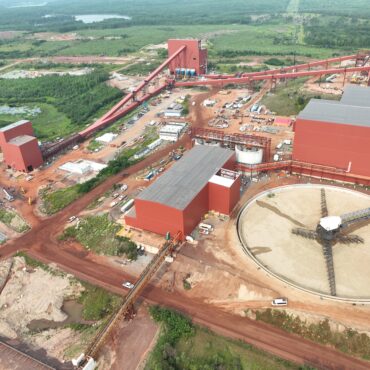
This large manufacturing facility is a paper mill. And in many respects, its history reflects the disruptions the U.S. paper industry has experienced the past few decades.
In January 2024, the mill was bought by Sofidel, an Italian company that’s one of the world’s biggest producers of tissue paper, a category that includes paper towels, facial tissues, and toilet paper. Since purchasing the Duluth mill, Sofidel has spent $200 million to more than double the size of what had been a 476,000-square-foot facility. The additions include a converting facility and increased warehouse space. With the expansion soon to be completed, Sofidel has been ramping up production and hiring.
To encourage the expansion project, the city and the state have provided nearly $20 million in incentives. The Duluth mill has had seven different owners since opening in 1987. Duluth is betting that this time, its current ownership will stick around. Though the U.S. paper industry has been unsettled for some time, the city has reason to be optimistic.
Paper shuffling
The plant originated as a joint venture between Duluth-based utility Minnesota Power and Twin Cities-based Pentair, which back in the 1980s owned significant paper manufacturing operations. The city of Duluth provided an incentive package of about $48 million to get the $400 million project built. Lake Superior Paper specialized in supercalendered paper, a high-gloss uncoated product whose applications include printed materials such as newspaper supplements and direct advertising pieces. Supercalendered paper is a cheaper alternative to coated paper, which is used in magazines, art publications, and glossy reports.
In 1995, Minnesota Power sold Lake Superior Paper to Wisconsin-based Consolidated Paper—the first of what would become six ownership changes over 30 years:
- 2000: Finnish paper maker Stora Enso acquires all Consolidated’s operations, including the Duluth plant.
- 2007: Stora Enso sells its North American operations to NewPage Holdings, an Ohio paper company formed just two years earlier by New York-based investment firm Cerberus Capital Management.
- 2015: NewPage, which filed for bankruptcy protection in 2011, is acquired by Verso Corp., another Ohio-based paper company assembled by a New York City investment firm (in this case, Apollo Global Management).
- 2020: Verso, in financial trouble itself, closes its plants in Duluth and Wisconsin Rapids, citing weakening demand for supercalendered paper during Covid.
- 2021: Wisconsin-based ST Paper buys the Duluth facility from Verso, converting the mill to the production of tissue paper, which it commences in January 2023.
Opportunities in a mature industry
ST’s conversion certainly made market sense.
Thanks mostly to the increasing dominance of digital communications, demand for paper used in printing and writing has been plummeting. According to an industry survey released this summer by the American Forest & Paper Association (AF&PA), U.S. production of these paper types fell 13.9% in 2025 to 7.7 million tons. Just 10 years earlier, U.S. mills produced nearly 18 million tons of graphic paper.
The AF&PA report also notes that two industry sectors have stayed relatively stable. Not surprisingly, one is packaging paper, which remains in high demand even after the end of the Covid pandemic. The other stable sector (also no surprise): tissue paper products.
ST Paper’s successful conversion attracted the attention of a much larger industry player. One year after ST began production, the Duluth paper plant experienced yet another ownership change. The mill’s acquisition wasn’t Sofidel’s first foray into what the company calls the world’s largest tissue paper market. In 2012, it bought three U.S. mills, including one in Green Bay. Sofidel America now owns 14 production sites across 11 states. In 2021, it introduced the Nicky brand for its U.S.-made paper towels and bath tissue.
In addition to the market opportunity the Italian company sees, Sofidel’s acquisition of the Duluth facility represents another instance of foreign ownership of Northern Minnesota paper mills.
In 1997, Finnish forestry company UPM acquired Blandin Paper Co. in Grand Rapids, a mill that dates back to 1901. UPM Blandin continues to make coated papers for magazines, catalogs, and other graphics applications.
In 2002, South Africa-based Sappi purchased the pulp and paper mill in Cloquet, which was then owned by Washington-based Potlatch Corp. (and which had begun production in 1898). Like UPM, Sappi still manufactures coated papers at its Northern Minnesota facility. But in 2013, it converted part of the mill to the production of dissolving pulp, a cellulose-based material used in textiles (such as rayon), pharmaceuticals, and various specialty applications.
In another sign that the paper industry remains in flux, UPM and Sappi announced late last year the formation of a joint venture that would combine the two companies’ global graphic paper operations. The Blandin mill is included in this deal, which is expected to be finalized at the end of this year.
The U.S. paper industry will undoubtedly continue to experience more disruptions. But even amid the uncertainty, Duluth is hopeful that the Sofidel name will remain affixed to its local paper mill’s exterior for a long time to come.